
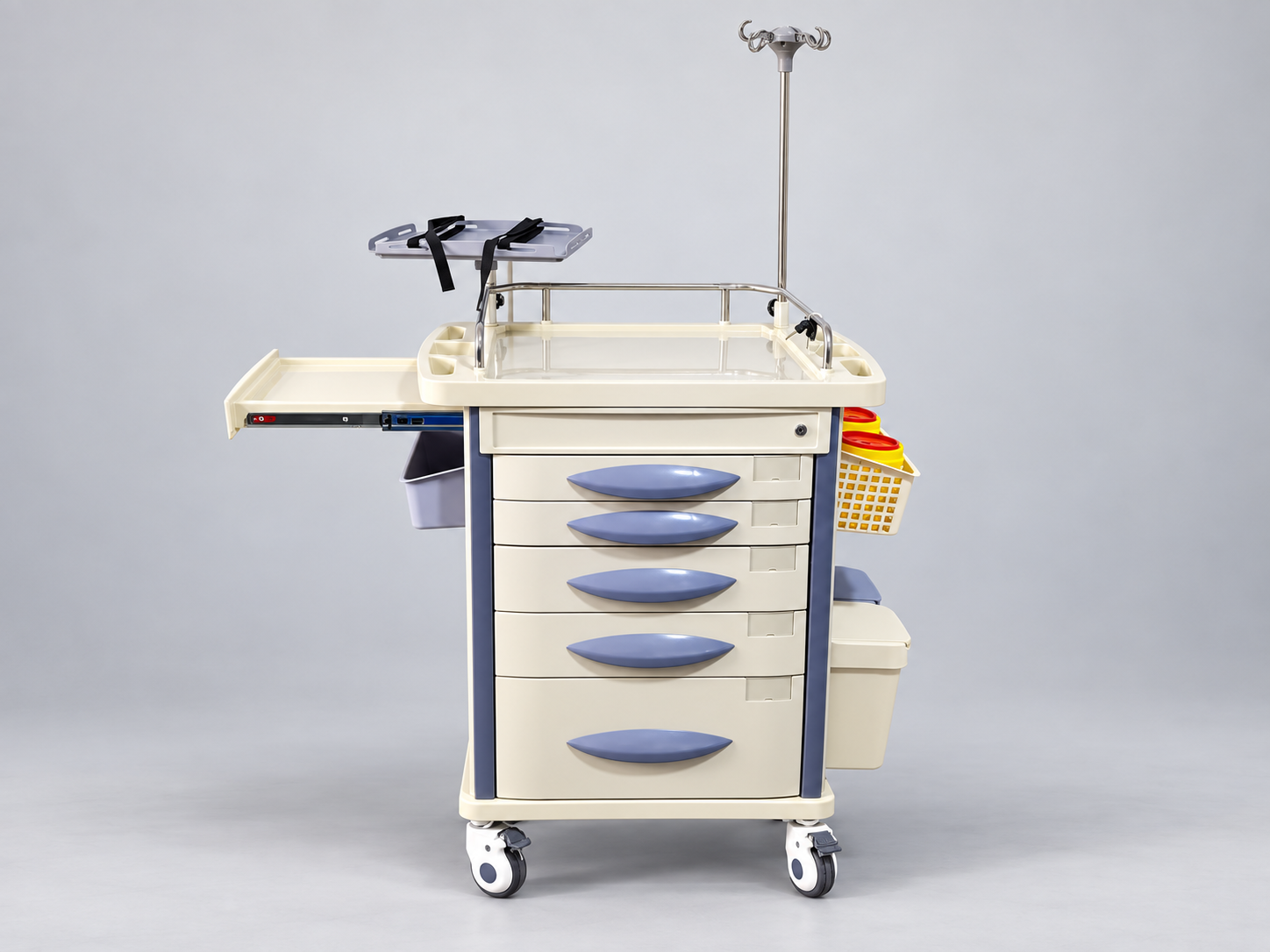
Crash Cart Quality Control: What Should Be Checked Before Shipment?
Crash cart quality control before shipment checks whether the finished order matches what the buyer approved. Buyers may also call a crash cart an emergency trolley. The inspection covers the cart model, accessories, quantity, visible condition, agreed functions, and shipping marks. Clear photos, videos, and records help buyers review the results before dispatch.
This check is different from preparing a cart for hospital use after delivery. For a basic overview, see What Is a Crash Cart?.
What Does Crash Cart Quality Control Cover Before Shipment?
Pre-shipment inspection is one part of quality control. It answers a practical question: does the finished order match the agreed requirements?
Buyers should separate three tasks:
- Agree on specifications before purchase.
- Check the finished goods before shipment.
- Prepare the cart for clinical use after delivery.
This guide focuses on the second task. It covers the cart and the ordered shipment. It does not cover drug lists, treatment steps, or hospital readiness routines.
SGS describes pre-shipment inspection as checking areas such as quality, quantity, marking, packing, and loading. This is a general inspection reference. It is not a crash cart standard.
Start With the Approved Order
Use the approved order as the reference for the check. Keep the main details together:
- Cart model and configuration
- Drawer layout and lock type
- Casters and brake arrangement
- Included accessories
- Order quantity
- Customer shipping marks
- Packing requirements
- Approved drawings and their revision dates, where used
A catalogue photo may show optional items. Check the written order to see what is included.
For help preparing these details, see the hospital crash cart buying guide.
For a custom order, use the final approved version. The OEM crash cart customization guide explains how to record agreed changes.
What Should Buyers Check on a Finished Crash Cart or Emergency Trolley?
Agree on the inspection scope before the check. State which units will be inspected and what evidence is needed. Use the agreed specifications and the instructions for the exact model.
Model and Configuration
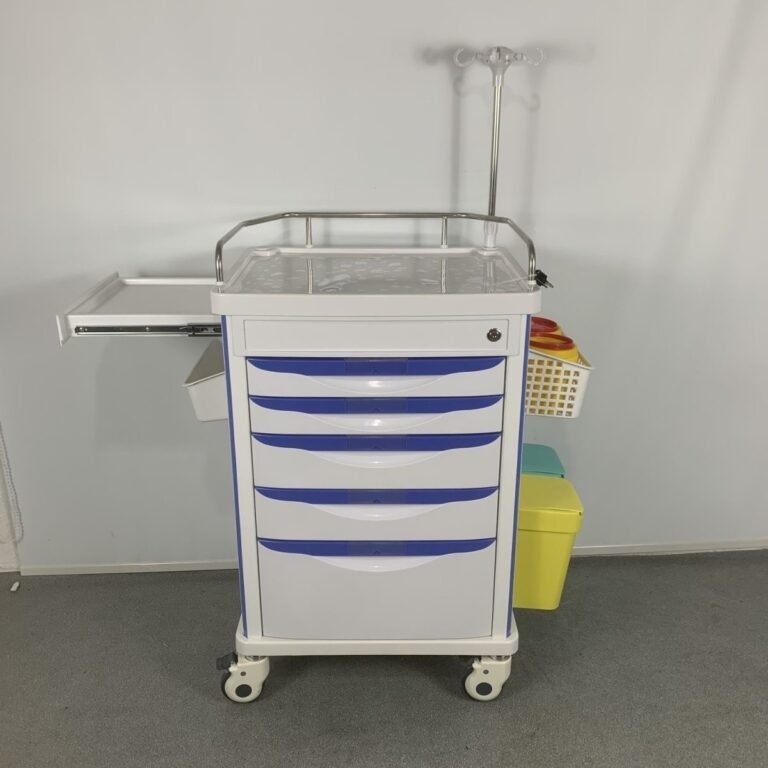
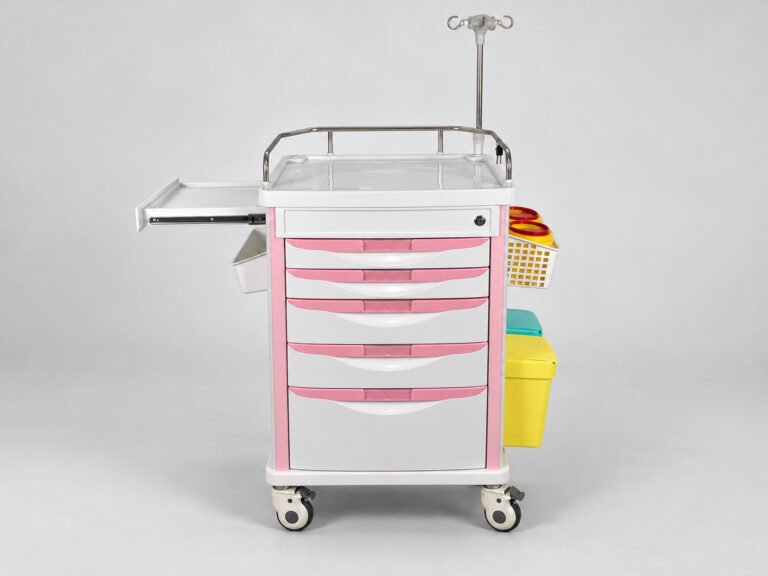
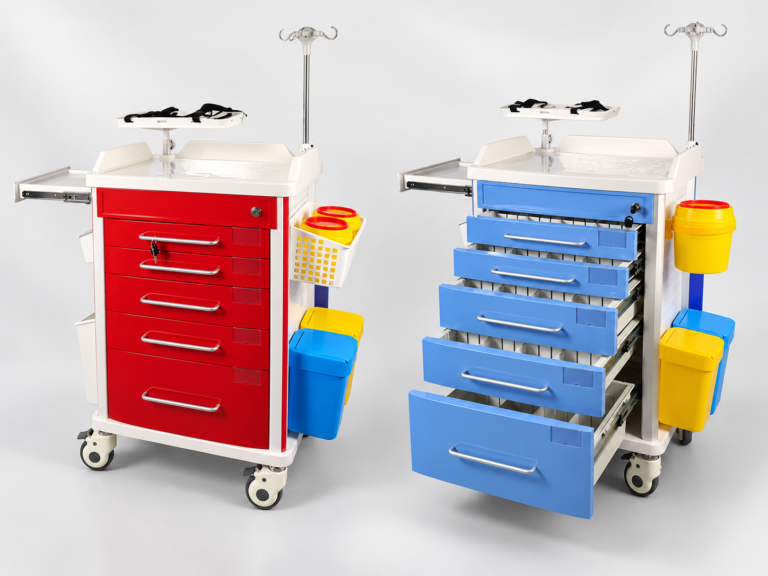
Confirm the model code and finished setup. Check the drawer layout, handles, worktop, and ordered options.
A similar appearance does not prove that two carts have the same features. Compare the finished cart with the approved order.
Surface Condition and Assembly
Look for dents, cracks, damaged finishes, sharp edges, and loose parts. Check visible joints and fasteners where they can be viewed safely.
Photos should show the full cart and any areas that need closer review.
Appearance alone cannot prove material grade, load capacity, or long-term durability. Ask for relevant documents or test evidence when these are part of the order requirements.
Drawers and Lock System
Check the drawer count, layout, and agreed dimensions. Confirm that the specified lock is fitted.
Ask for an operation check showing that drawers open and close smoothly. The check should also show how the lock works on the inspected cart.
A photo can show the lock type. It cannot show whether the lock works.
Casters and Brakes
Confirm the caster type and brake arrangement against the order. Check that the parts are fitted as agreed.
Installation and function are separate checks. A photo can show which brakes are fitted. A suitable demonstration can show rolling, steering, and brake operation.
Agree on the method with the supplier. Follow the instructions for the exact model, including any stated load limits.
Accessories and Mounting
Check every ordered accessory against the agreed list. Confirm the mounting position where the item is supplied fitted.
An oxygen cylinder holder is different from an oxygen cylinder. A device shelf is different from the device itself. Do not assume both are included.
If an accessory is packed separately, record its packing location.
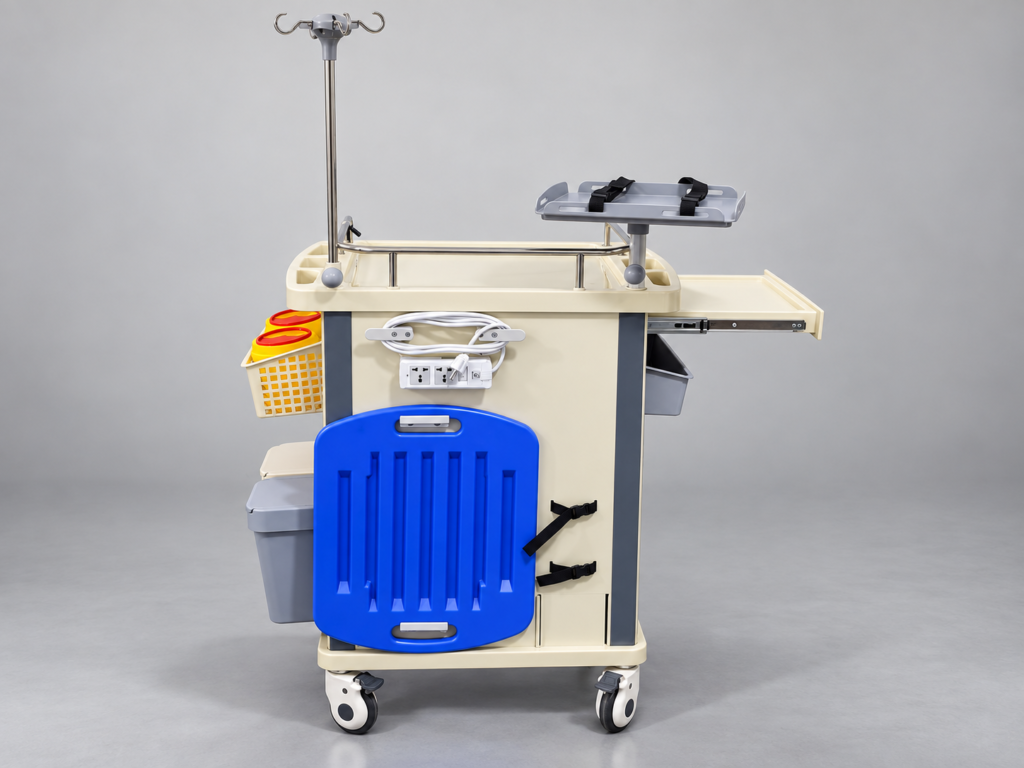
Finished Cart Inspection Table
| Check item | What to verify | Useful evidence |
|---|---|---|
| Model and setup | Matches the approved order | Identified whole-cart photos |
| Surface and assembly | No damage or loose parts outside agreed limits | Close-up photos and inspection notes |
| Drawers and lock | Correct layout, dimensions, and operation | Photos, measurements, and operation records |
| Casters and brakes | Correct parts, installation, and agreed function | Close-ups and a suitable demonstration |
| Accessories | Correct items, quantities, and mounting | Accessory photos and packing records |
Record any mismatch and arrange a correction. Repeat the relevant check before accepting the result.
Check Quantity and Shipping Marks
Count carts and accessories against the order and packing list. Keep the cart count separate from the package count. One cart may use more than one package.
For mixed orders, record quantities by model. Note where loose accessories are packed so the receiving team can find them.
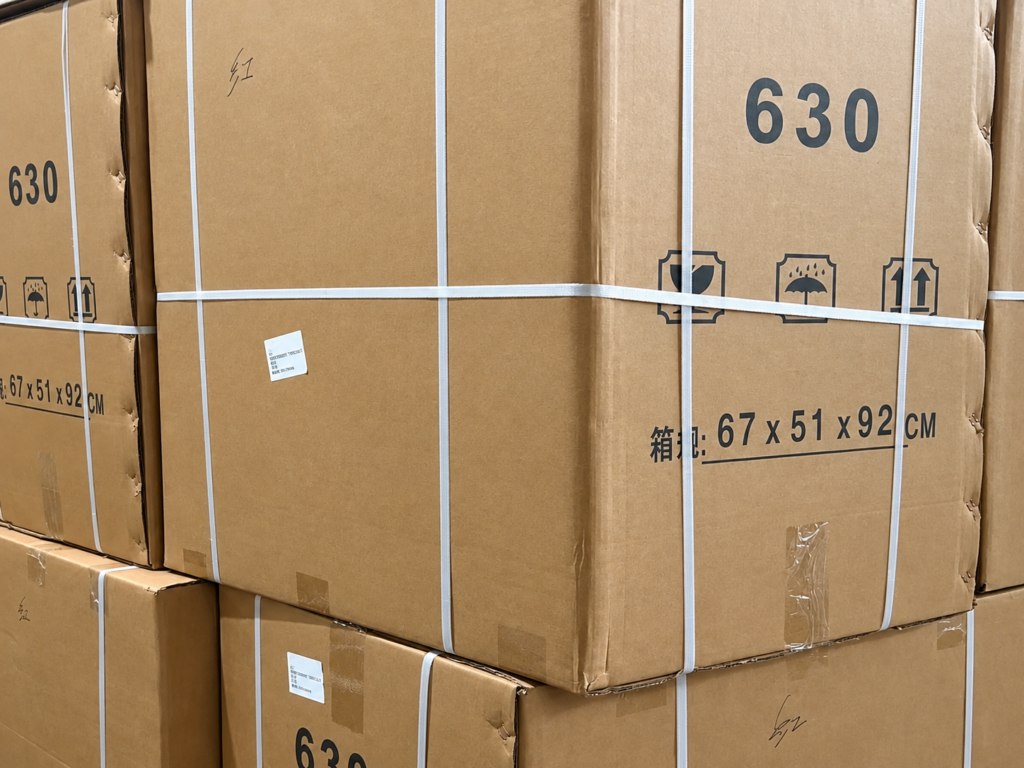
Shipping marks are labels or printed details on the outer packaging. They help identify the shipment.
Compare them with the customer’s approved instructions. Check the customer reference, model details, and package numbers where required. Make sure labels are readable and attached as agreed.
Keep packing checks focused on the approved requirements. Confirm that separately packed items are identified and that the outer packaging has no visible damage.
What Photos, Videos and Records Should Buyers Request?
Match the evidence to the question being checked.
| Evidence | What it can show | Its limit |
|---|---|---|
| Whole-cart photos | Visible setup and condition | Do not show every function |
| Accessory photos | Visible items and mounting | May not show the full order count |
| Operation videos | Function of the cart shown | Do not prove every unit was tested |
| Quantity and packing records | Counts and packing locations | Must be checked against the order |
| Shipping-mark photos | Visible label details | Do not show all contents inside |
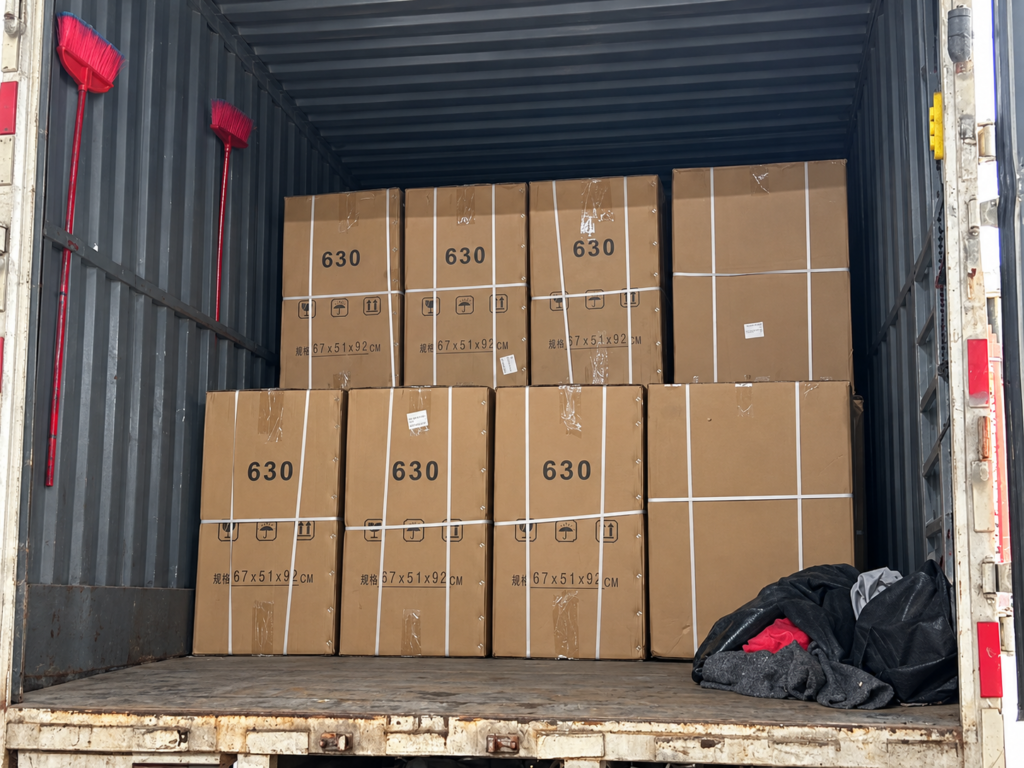
| Truck-loading photos | Loading progress and visible package condition | Do not prove final delivery condition |
Where practical, identify the order, model, and inspected unit or carton in the records.
Ask whether the evidence covers selected units or the full order. A video of one cart does not show the condition of every cart in the batch.
For orders that require an independent inspection, agree on the scope and reporting method in advance.
How Should Problems Be Handled Before Shipment?
Use a clear process when a mismatch is found:
- Record the issue and identify the affected unit or package.
- Agree on the correction.
- Request new evidence or a repeat inspection.
- Record the final result.
- Follow the agreed shipment approval process.
For example, an order requires twenty carts, each with one specified accessory. The photos show eighteen accessories.
This does not yet prove a shortage. Ask whether the other two are packed separately. Compare the packing locations and count records with the order.
If a shortage is confirmed, correct it and check the count again before shipment.
The same approach applies to a wrong shipping mark or a faulty part. Record the issue, correct it, and verify the result. Follow the payment and approval terms agreed for the order.
Airomay’s Pre-Shipment Checks
Airomay checks accessory completeness, brake installation, customer shipping marks, and shipment quantities before dispatch.
Product photos and videos are sent to the customer. Photos are also taken during loading onto the truck and shared to show the dispatch process.
Buyers who need specific function checks or inspection records should agree on the scope with Airomay in advance.
Truck-loading photos provide a record of loading. They do not replace product checks or an inspection when the goods arrive.
Frequently Asked Questions
What Is a Pre-Shipment Inspection?
It is an inspection of goods before dispatch. It checks whether the products and shipment details match the approved order and agreed requirements.
What Is the Purpose of a Pre-Shipment Inspection?
It helps find mismatches while there is still time to correct them before shipping.
Are Photos Enough to Confirm Crash Cart Quality?
Photos are useful for visible checks. Function checks may need videos, inspection records, or suitable tests. Quantity checks also need clear count and packing records.
Should Installation and Function Be Checked Separately?
Yes. Installation checks show that the correct part is fitted. Function checks show how it works under the agreed checking conditions.
Next Steps for Buyers
Keep the approved order, accessory list, and shipping-mark instructions together. Agree on inspection coverage and request evidence that matches it. Resolve any confirmed mismatch before shipment.
To discuss an order, review the Airomay crash cart range. Send the preferred model, quantity, accessory list, destination, and inspection needs to sales@airomay.com.

[…] For more on shipment checks, see Crash Cart Quality Control. […]