
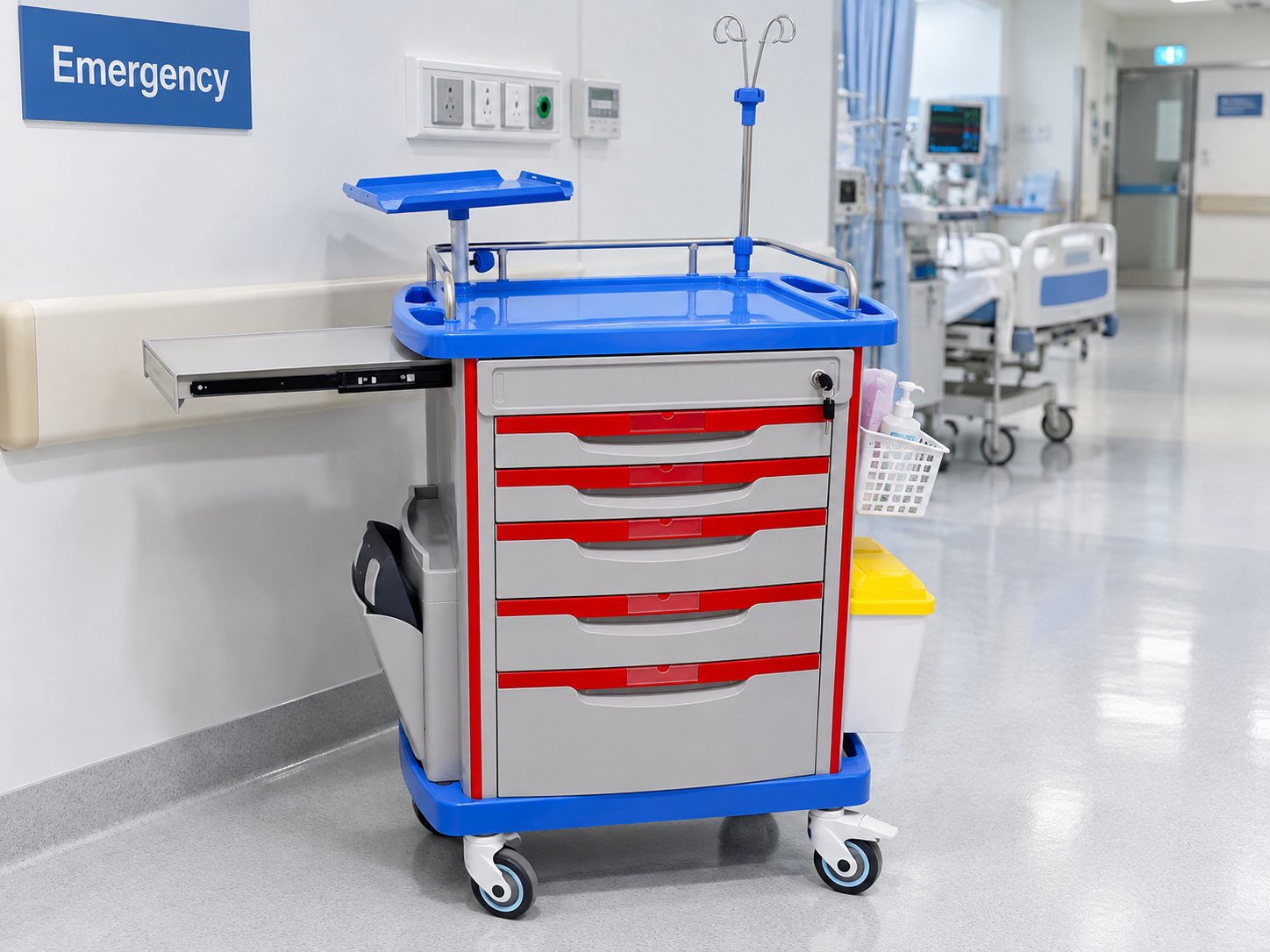
What Is a Crash Cart?
A patient stops breathing. You run for the trolley. It is empty or jammed. That delay can cost a life.
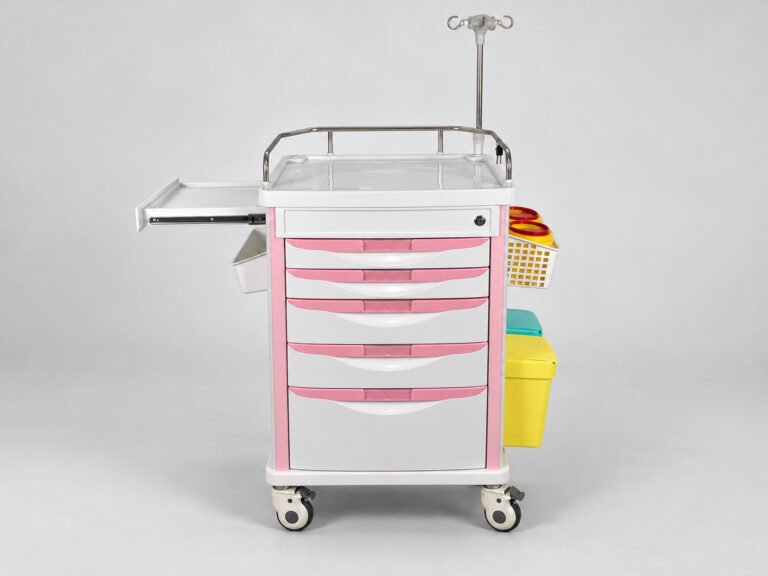
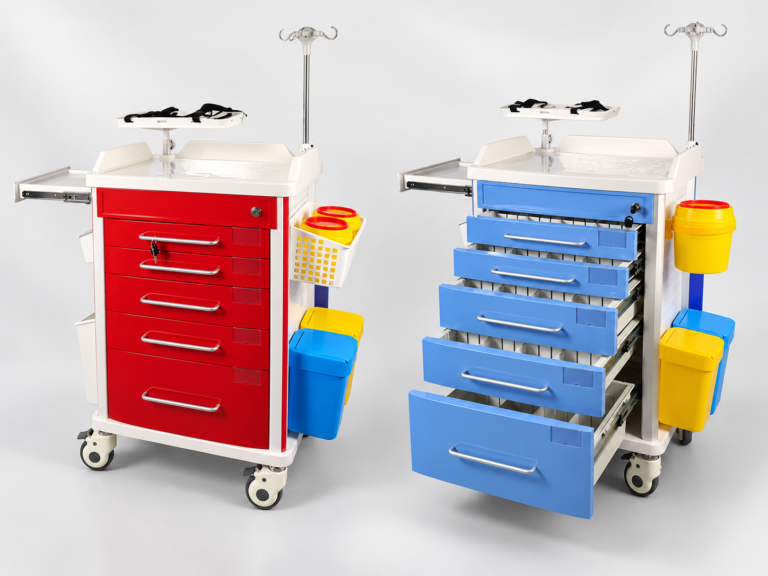
So, what is a crash cart? A crash cart is a mobile trolley that stores and carries emergency equipment and medicines. Crash carts are commonly placed in clinical areas where patients may deteriorate rapidly, including emergency departments, ICUs, operating theatres, recovery rooms, general wards and procedure areas.Medical staff push it to the patient during a life-threatening event. It gives fast, organised access to resuscitation tools at the bedside.
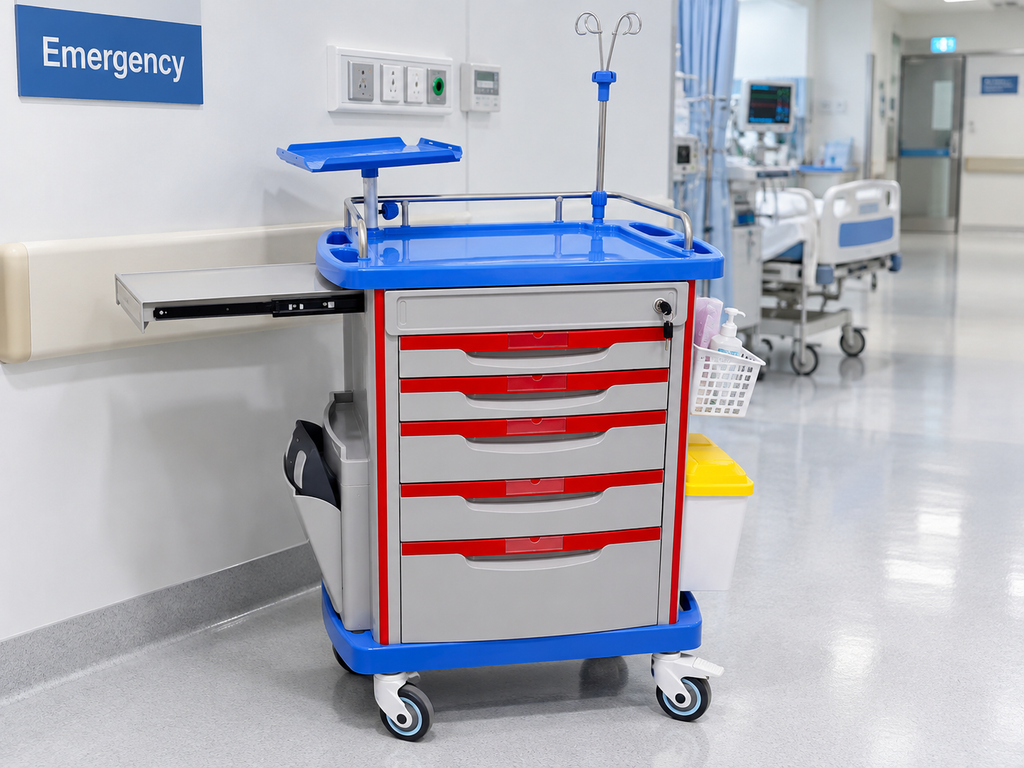
What Does a Crash Cart Include?
A nurse reaches for a drug during a code. The drawer is a mess. Nobody labelled the vials. This is a layout problem, not a supply problem.
A crash cart usually holds airway tools, IV supplies, emergency medicines, a defibrillator and a CPR board. The exact items follow hospital protocol. The cart itself is the organised frame that holds those separate supplies.
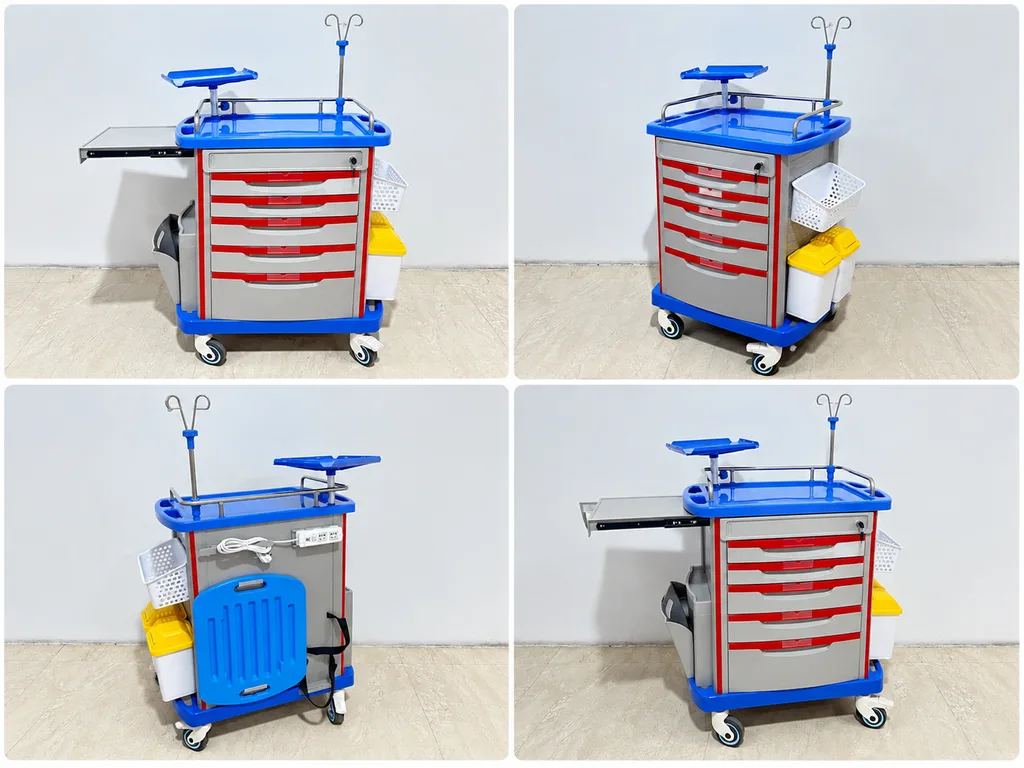
Drawer Setup Follows the Clinical Workflow
In the daily work, The top surface holds the defibrillator and a sharps box. The first drawers hold emergency medicines. Deeper drawers hold airway sets, IV fluids and a CPR board. A good cart keeps every item in the same place. Staff do not need to search. They just reach. The cart is the organiser. It is not a fixed box of medical goods
| Cart Area | What Usually Goes Inside | Hardware Point to Check |
|---|---|---|
| Top surface | Defibrillator, suction unit, sharps box | Raised edge, defibrillator shelf |
| Shallow drawer | Emergency medicines in vials | Clear dividers, breakaway lock |
| Medium drawer | Syringes, needles, cannulas | Full extension slides |
| Deep drawer | IV fluids, tubing, CPR board | Strong base, high load rating |
Hardware Details I Always Check
The casters and the lock. Crash carts may use stainless steel, coated steel, aluminium alloy or ABS components, depending on durability, cleaning and budget requirements. It also survives strong cleaning agents. Crash carts commonly use medical-grade casters selected according to cart size, load requirements and hospital flooring conditions. They must roll over door strips and lift edges.Depending on the design, braking casters can help keep the cart stable during emergency procedures. The lock should open fast in an emergency. A breakaway seal does this well. It also stops supply loss on normal days. I also check the bumper corners and the IV pole mount. These small parts decide if the cart stays useful for years.
Why Is It Called a Crash Cart?
A patient’s heart stops in the hallway. The team shouts for the cart. Everyone knows what that word means. There is no time for a second question.
The name comes from the hospital word “crash.” A crash means a patient’s heart or breathing suddenly fails. The cart carries resuscitation gear to that emergency. In North America, staff also call it a code cart[1].
The name may be different, but the purpose is the same: to keep emergency equipment organised and ready to use.
Different Names in Different Markets
The name changes by country. In the United States, staff say crash cart or code cart. In the United Kingdom and Australia, buyers write resuscitation trolley[2] in tender files. In Southeast Asia and Latin America, many hospitals say emergency trolley[3]. The name does not change the job. It only changes how you search for the product.
| Market Name | Common Regions | Common Build Request |
|---|---|---|
| Crash cart | North America, Middle East | Breakaway lock, defibrillator shelf |
| Resuscitation trolley[4] | UK, Australia, South Africa | Stainless steel body, tray baskets |
| Emergency trolley[5] | Southeast Asia, Latin America | Plastic drawers, side bins |
| Code cart[6] | Private hospitals worldwide | Red colour coding, IV pole mount |
Why the Word “Crash” Shapes the Design
The word “crash” tells you the cart is built for the worst moment. A patient crashes when the heart or breathing stops. The cart must arrive in seconds. That single word shapes the whole design.
Conclusion
A crash cart is a mobile emergency station. Treat the trolley and the supplies as two separate purchases. Good hardware saves seconds when seconds matter.
[1]: “Crash cart – Wikipedia”, https://en.wikipedia.org/wiki/Crash_cart. The term ‘code cart’ is commonly used in North America to refer to a crash cart, emphasizing its role in emergency situations where rapid response is critical. Evidence role: definition; source type: encyclopedia. Supports: In North America, staff also call it a code cart.. Scope note: The term may vary by region, but its function remains consistent across different healthcare settings.
[2]: “Nomenclature of medical devices”, https://www.who.int/teams/health-product-policy-and-standards/assistive-and-medical-technology/medical-devices/nomenclature. The term ‘resuscitation trolley’ is commonly used in the UK and Australia to refer to a crash cart, emphasizing its role in emergency medical situations. Evidence role: definition; source type: encyclopedia. Supports: In the United Kingdom and Australia, buyers write resuscitation trolley in tender files.. Scope note: The term may vary by region but serves the same purpose in emergency care.
[3]: “Latin America Medical Emergency Trolley Market … – LinkedIn”, https://www.linkedin.com/pulse/latin-america-medical-emergency-trolley-market-wjsbc. The term ’emergency trolley’ is commonly used in various regions to refer to a mobile unit equipped with emergency medical supplies, emphasizing its role in urgent medical situations. Evidence role: definition; source type: encyclopedia. Supports: The term ’emergency trolley’ is used in Southeast Asia and Latin America to describe a crash cart.. Scope note: The term may vary by region but refers to similar equipment.
[4]: “Emergency Resuscitation Trolley – Distinctive Medical”, https://www.distinctivemedical.com/product/emergency-resuscitation-trolley/. The term ‘resuscitation trolley’ is commonly used in the UK and Australia to refer to a crash cart, emphasizing its role in emergency medical situations. Evidence role: definition; source type: encyclopedia. Supports: In the United Kingdom and Australia, buyers write resuscitation trolley in tender files.. Scope note: The term may vary by region but serves the same purpose as a crash cart.
[5]: “Emergency rooms in Southeast Asia have different styles”, https://www.facebook.com/groups/1560988444049476/posts/3484906374990997/. The term ’emergency trolley’ is commonly used in various regions to refer to a mobile unit equipped with emergency medical supplies, similar to a crash cart. Evidence role: definition; source type: encyclopedia. Supports: The term ’emergency trolley’ is used in Southeast Asia and Latin America to describe a crash cart.. Scope note: The term may vary by region but refers to the same concept of emergency preparedness.
[6]: “Crash cart – Wikipedia”, https://en.wikipedia.org/wiki/Crash_cart. The term ‘code cart’ is commonly used in North America to refer to a crash cart, emphasizing its role in emergency medical situations. Evidence role: definition; source type: encyclopedia. Supports: In North America, staff also call it a code cart.. Scope note: The term may vary by region, but its function remains consistent across different names.

[…] you are new to emergency carts, read our guide What Is a Crash Cart? for an overview of typical contents, drawer organization, and common […]
[…] a general overview of what a crash cart is and what it usually holds, see our guide What Is a Crash Cart?. This article focuses on checking the cart and keeping it […]
[…] accessories, and physical design of the cart. If you are new to emergency carts, read our guide What Is a Crash Cart? for a general […]
[…] you are new to emergency carts, read our guide What Is a Crash Cart? for a basic […]
[…] If you are new to emergency carts, read our guide What Is a Crash Cart?. […]
[…] If you are new to emergency carts, read our guide What Is a Crash Cart?. […]
[…] If you are new to emergency trolleys, read our guide to What Is a Crash Cart?. […]
[…] For a basic overview, read What Is a Crash Cart?. […]
[…] This check is different from preparing a cart for hospital use after delivery. For a basic overview, see What Is a Crash Cart?. […]
[…] For a basic overview, see What Is a Crash Cart?. […]
[…] Before comparing quotes, ask what the body, frame, drawers and worktop are made from. For a basic introduction, see What Is a Crash Cart?. […]
[…] A product photo shows the outside. It does not show how the loaded cart moves or how its brakes work. For a basic overview, see What Is a Crash Cart?. […]
[…] The best choice is the model that meets the buyer’s needs. For a basic overview, see What Is a Crash Cart?. […]
[…] For a basic guide, read What Is a Crash Cart?. […]
[…] you are new to emergency carts, see What Is a Crash Cart?. This guide explains the differences between cart colors, drawer labels and pediatric coding. It […]
[…] For a basic overview, see What Is a Crash Cart?. […]
[…] For the basics, see What Is a Crash Cart?. […]