Crash Cart Setup for ER, ICU and Operating Rooms
A good crash cart setup starts with the department’s needs. ER, ICU and operating rooms may use the same base cart. But they may need different drawers, locks, mounts and materials.
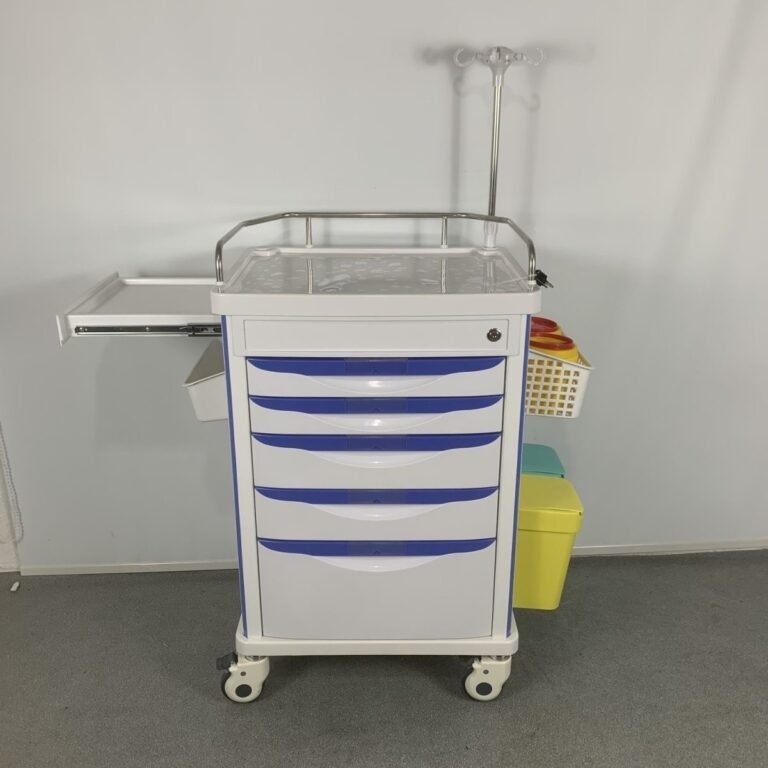
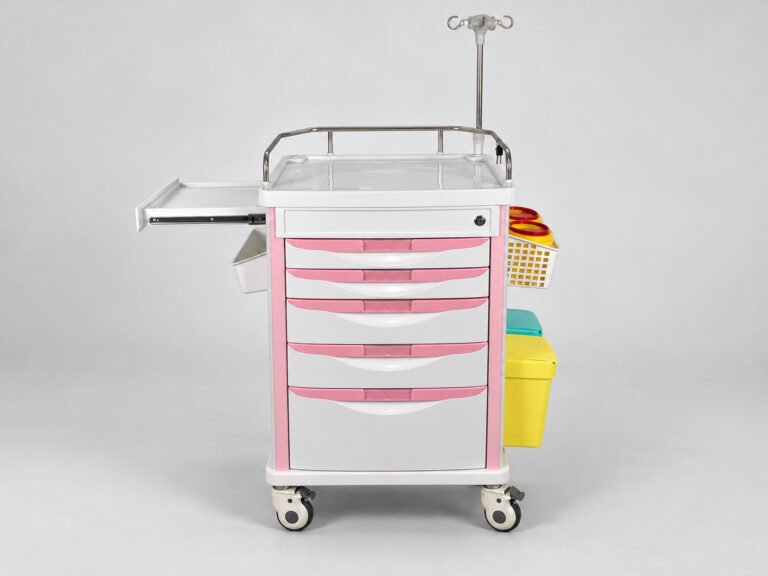
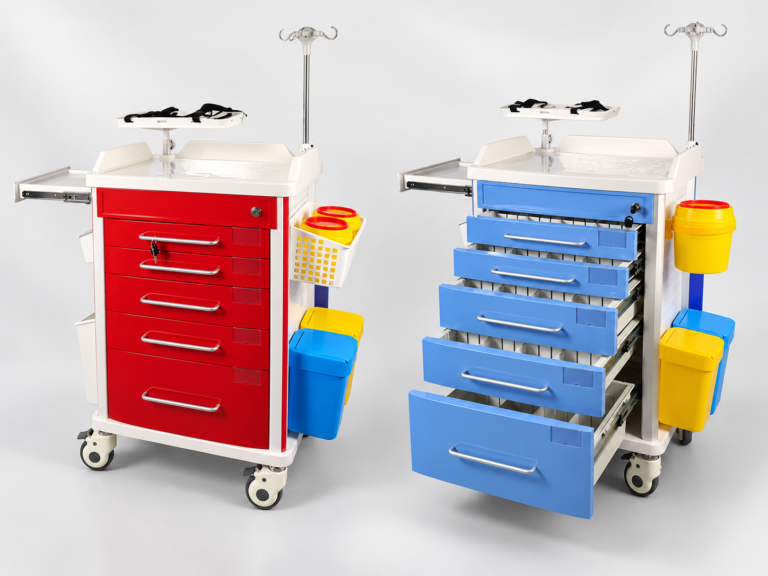
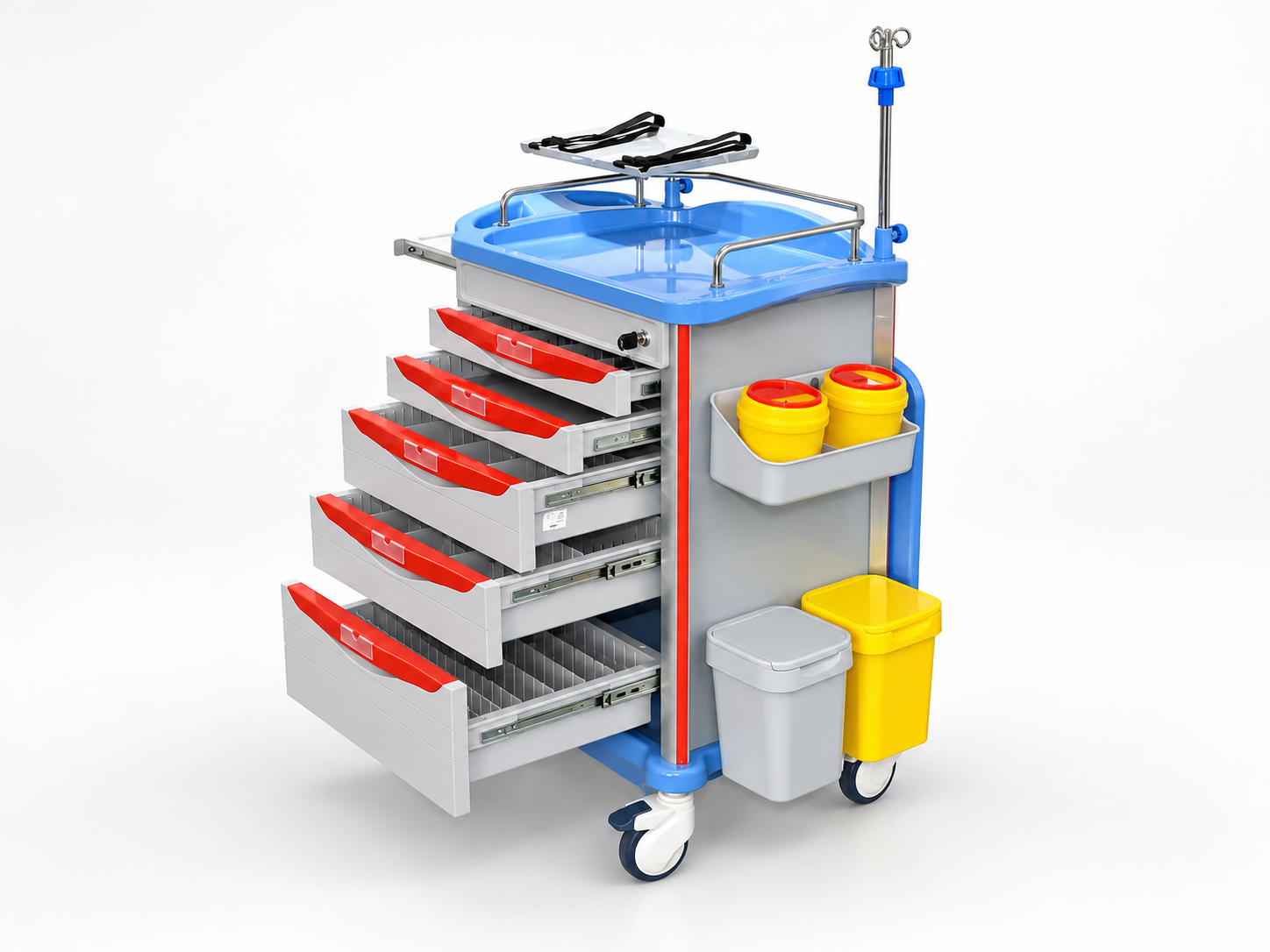
Check these details before choosing a model. A photo shows how a cart looks. It does not show all the parts or the space inside.
For a basic guide, read What Is a Crash Cart?.
How Does Crash Cart Setup Differ by Department?
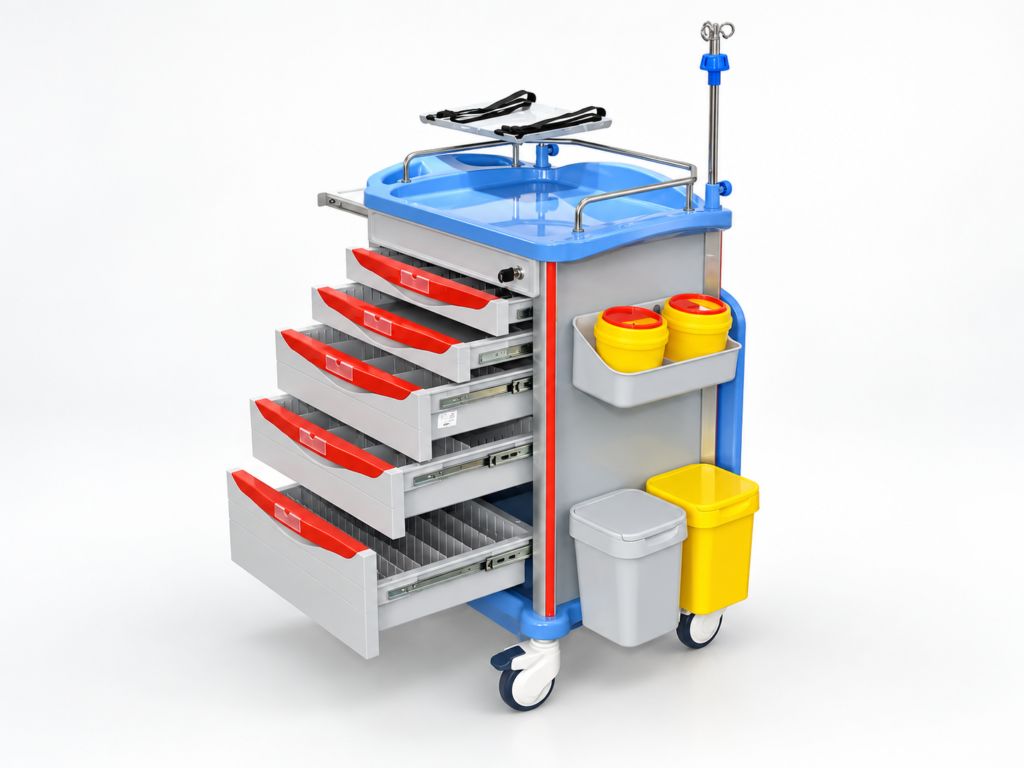
At Airomay, buyers from these three areas often ask for different features.
ER buyers tend to want more storage and more mounted parts. ICU buyers often focus on drawer sections and locks. OR buyers may ask for a set steel grade, sheet thickness and weld finish.
These are customer preferences. They are not fixed rules for every hospital.
| Department | Common Requests | What to Check |
|---|---|---|
| ER | Five or six drawers, dividers and device mounts | Space inside drawers and fit of mounted parts |
| ICU | Central lock, clear drawer sections, standard or compact size | Opening steps, storage needs and space beside beds |
| Operating Room | 304 stainless steel, sheet thickness above 1.2 mm, smooth welds | Which parts meet the request and how the whole cart can be cleaned |
A shared layout can help staff find items in familiar places. Some departments may still need changes. The hospital should approve those changes.
The Resuscitation Council UK advises hospitals to use standard equipment and layouts. It also calls for a local risk review and trials before purchase. This is UK guidance, not a rule for every market.
Crash Cart Setup for Emergency Departments
At Airomay, ER customers often choose five or six drawers. They also ask for adjustable dividers and more storage space.
Common requests include:
- An oxygen cylinder holder.
- A defibrillator mount.
- Parts mounted on several sides.
- Quiet-running wheels.
Start with the hospital’s approved storage list. Check that the chosen drawers can hold the planned supplies.
More drawers do not always mean more space. Five deep drawers may hold larger packs than six shallow ones. Ask for the usable width, depth and height of each drawer.
Dividers also take up space. Check their positions and whether they can be moved to fit the storage plan.
Next, review the mounts. Send the size and weight of the planned device to the supplier. Ask how it will fit and how it will be held in place.
A defibrillator mount is not a defibrillator. An oxygen cylinder holder is not an oxygen cylinder. The quote should state which parts come with the cart.
Check the cart with all planned parts fitted. Side mounts can make it wider or deeper. They should not block handles or drawers.
The route matters too. Review doors, lifts, corners and the parking space. Quiet-running wheels are a common request. How the cart moves still depends on its load and the floor.
Crash Cart Setup for ICUs
ICU customers often ask for a central lock and clear sections inside the drawers. At Airomay, they may choose a standard cart or a compact model.
A compact cart can suit a small area. It must still hold the items in the hospital’s approved plan. Check drawer space before choosing it.

Some ICU buyers need fewer side parts. The hospital should confirm which ones can be left out.
Equipment at the bedside does not remove the need to plan the cart. Staff need to know which items stay by the bed and which stay on the cart. The hospital should also confirm what is available if a device is in use or out of service.
A central lock can control several drawers at once. It does not always allow access without a key.
Ask the supplier to show:
- Which drawers the lock controls.
- Each step needed to open them.
- Whether a key is still needed after a seal is broken.
The hospital should decide how staff will reach the key when needed. For more details, read Crash Cart Locks and Security Seals Explained.
The hospital sets the storage layout. The supplier checks whether the model can support it.
Crash Cart Setup for Operating Rooms
At Airomay, OR customers often prefer 304 stainless steel. They may also ask for sheet thickness greater than 1.2 mm and welds that are ground and polished.
These are requests we see from customers. They are not rules for every operating room.
State which parts must meet the thickness request. The body panels, shelves and drawer interiors may use different thicknesses.
“Greater than 1.2 mm” means more than 1.2 mm. It does not mean “at least 1.2 mm.” Keep the wording clear in the order.
Thickness alone does not show how much the cart can carry. The frame, joints, mounts and drawer slides also matter. Ask for the load limits of the chosen model.
Grinding and polishing can smooth rough weld areas. Check the finished joints for gaps and places that are hard to clean. A smooth finish does not mean the cart is sterile.
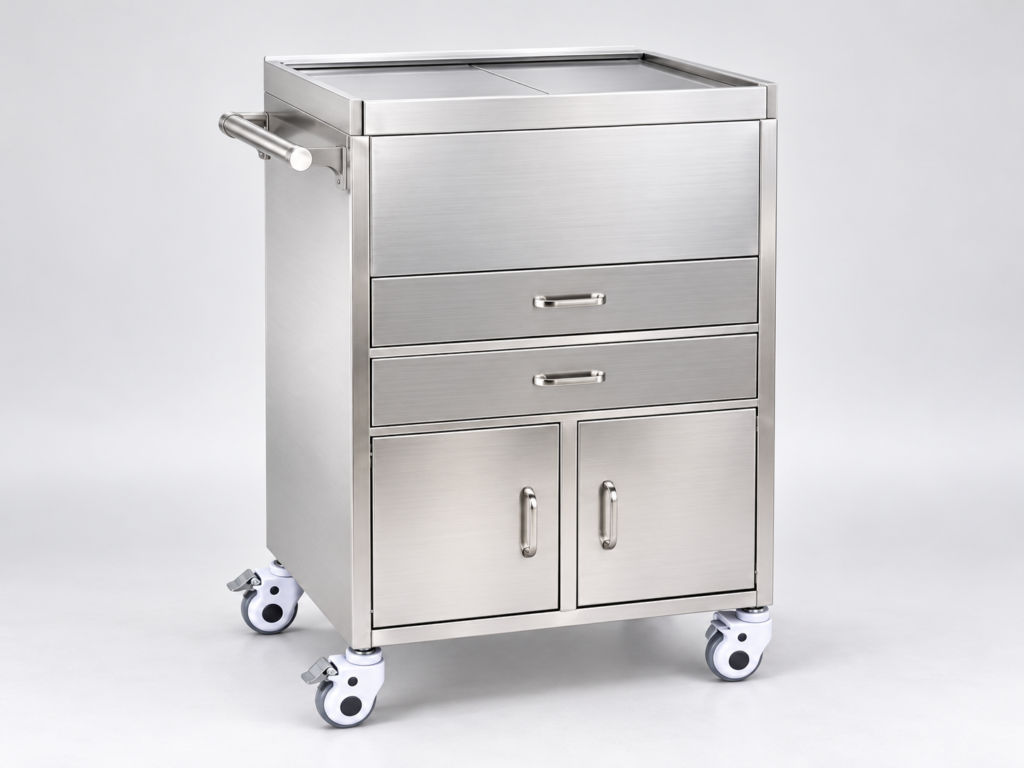
Check the cleaning method for the whole cart. A 304 steel body does not prove that the wheels, locks and slides can take steam cleaning or a cart washer.
Share the hospital’s cleaning products and method with the supplier. Confirm that they suit the exact model.
For more on material choice, read ABS vs Stainless Steel Crash Carts.
Also define the cart’s role beside the anesthesia workstation. Confirm what each one stores. Check where the crash cart will park and how staff will reach it during a procedure.
What Should Buyers Confirm Before Requesting a Quote?
Many Airomay inquiries start with a photo and a short message. The buyer wants a model suggestion and a price.
That is a useful first step. But a photo cannot confirm steel grade, sheet thickness, drawer space or every included part.
Large hospital projects often send a full list of required features. The supplier should quote against each item on that list.
If the offered model differs, the supplier should state the difference. Any proposed change needs the buyer’s approval before the order is confirmed.
| What to Send | Why It Helps |
|---|---|
| Department of use | Shows the main needs |
| Approved storage list | Helps check drawers and dividers |
| Required mounts and device sizes | Helps check fit |
| Space limits | Helps check parking and access |
| Project requirements | Shows which features must be met |
For a photo-based inquiry, first confirm the department and storage needs. Then check mounts and space limits.
For a large project, use the approved list as the order reference. Record each agreed change. The quote and final order should show the same setup.
Send your department, photos or project list, quantity and destination to sales@airomay.com. Airomay can help review the available models and options.
You can also view the Airomay Crash Cart Range.