Crash Cart Color Coding: Cart Colors, Drawer Labels and Pediatric Systems
Crash cart color coding depends on the facility and its purpose. Hospitals choose body colors to identify carts. They may also use drawer colors to group supplies. Pediatric systems, such as Broselow, serve a different purpose. Their colors link to patient-size zones, so the cart layout must match the system used by the clinical team.
If you are new to emergency carts, see What Is a Crash Cart?. This guide explains the differences between cart colors, drawer labels and pediatric coding. It also covers what buyers should confirm before ordering.
Is There a Universal Standard for Crash Cart Color Coding?
There is no single global color scheme for all crash carts. Buyers should separate three uses of color.
Body color identifies the cart. A hospital may choose red, blue or another color to help staff recognize a cart. Its meaning depends on the facility’s own plan.
Drawer colors help organize supplies. A facility may assign colors to different groups of items. There is no universal adult-cart table that gives each drawer color a fixed meaning.
Pediatric colors can link to a size-based system. In a Broselow system, colors relate to patient-size zones. They help organize the matching supplies. This differs from using colors to separate general supply categories.
Hospital emergency announcement codes are also separate from cart colors. A “Code Blue” announcement does not mean that every emergency cart must be blue.
Innerspace’s guide to hospital cart colors discusses general cart colors and pediatric drawer coding separately. Buyers should do the same: define the purpose of the colors before choosing a scheme.
What Do Crash Cart Body Colors Mean?
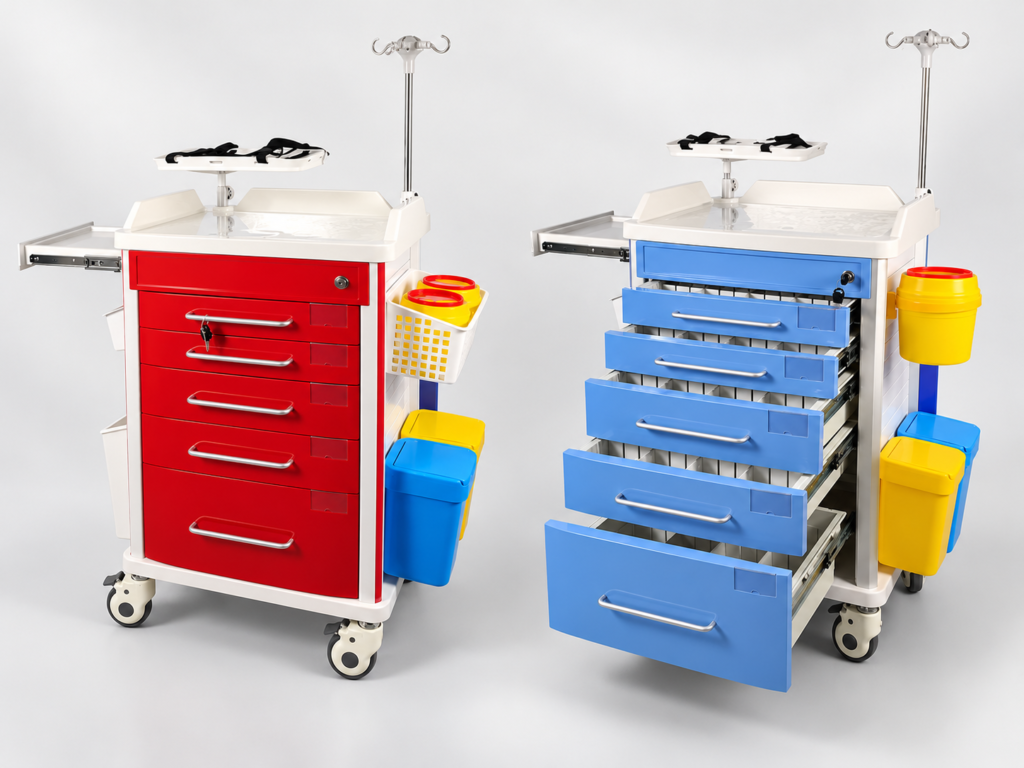
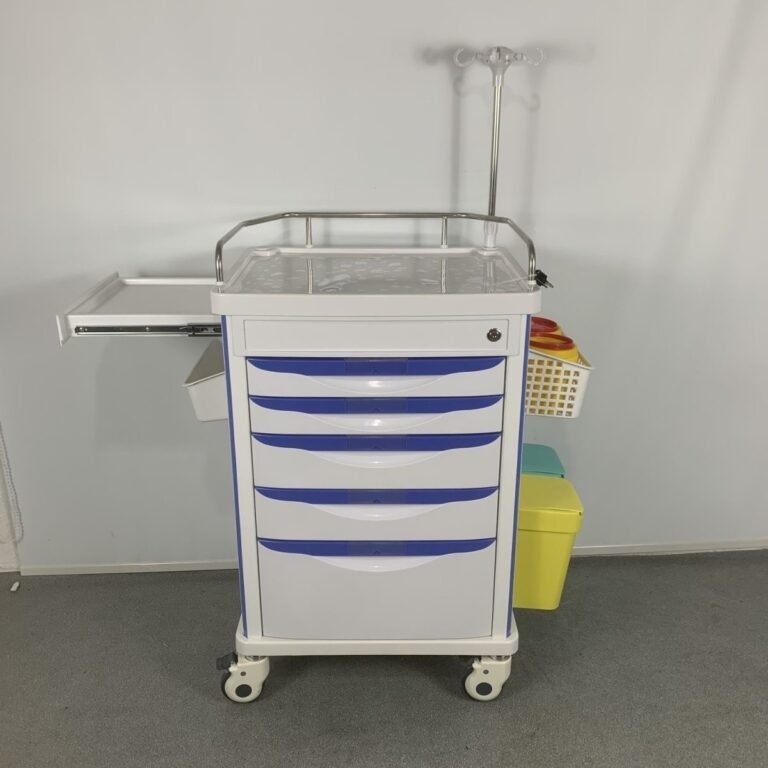
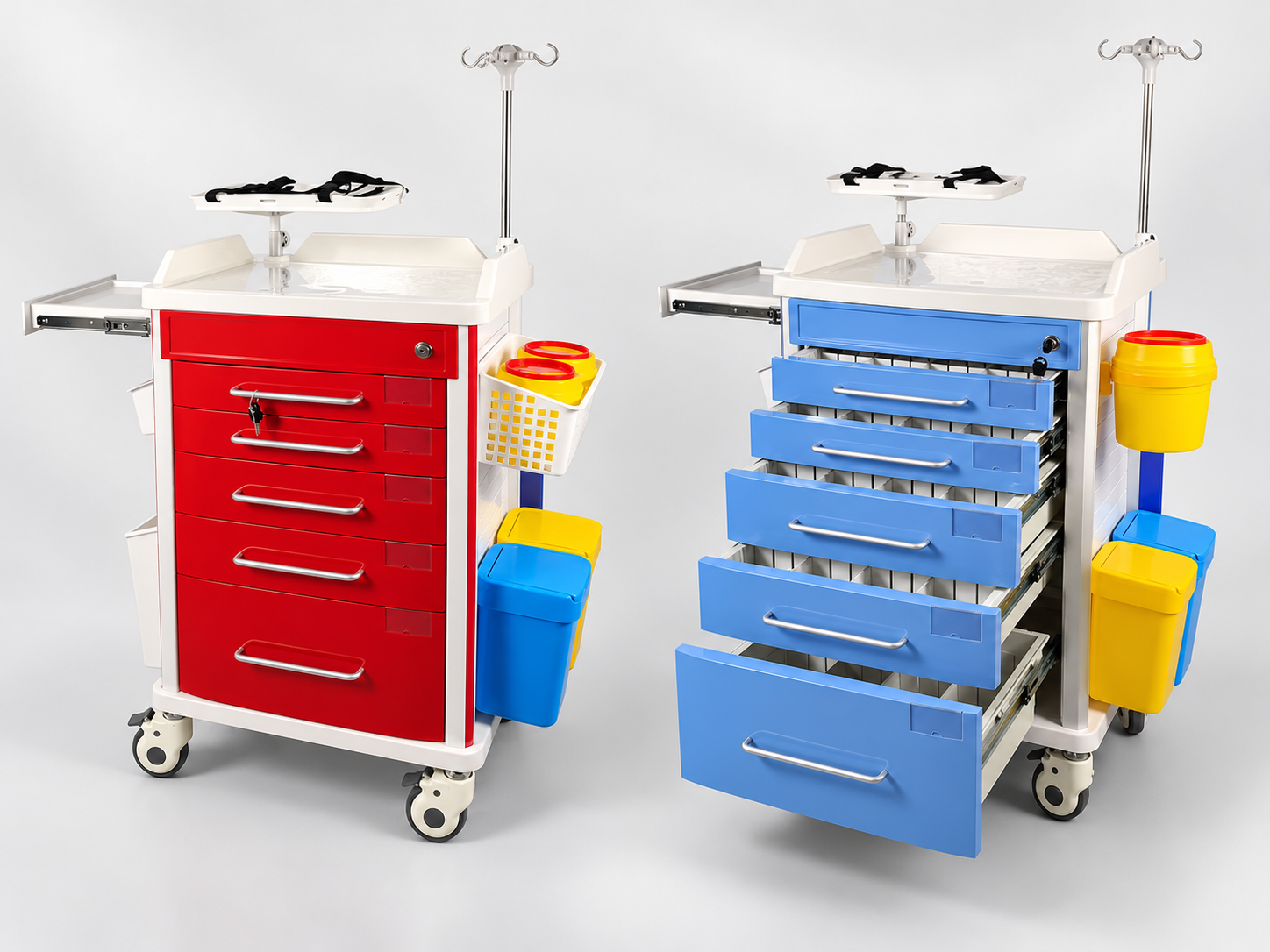
Red and blue are common crash cart colors. They are also Airomay’s best-selling color choices. In our sales experience, red is often associated with emergency use.
These are common choices, rather than rules for every hospital. A red cart does not always carry the same supplies. A blue cart does not always serve the same purpose. Staff need to understand the color scheme used in their facility.
Consistency matters more than choosing a particular color. If a hospital uses red to identify its emergency carts, keeping that choice across the facility can make the carts easier to recognize. Clear cart labels should support this visual system.
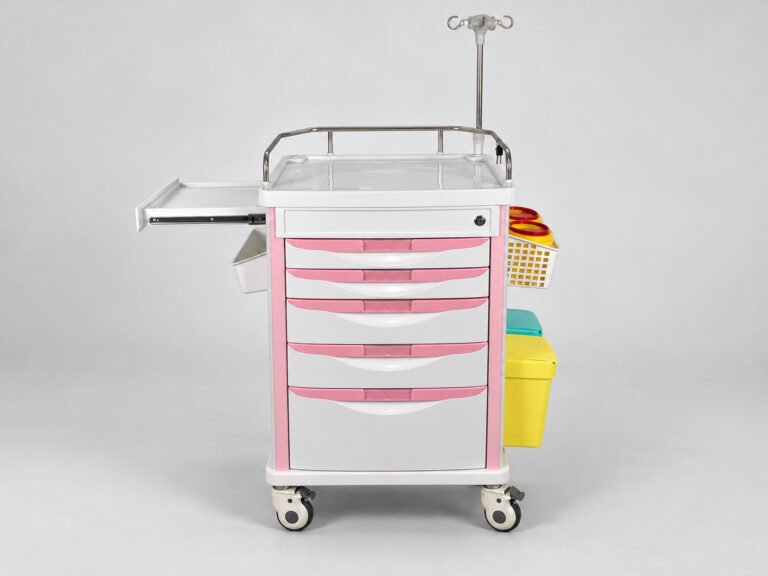
Buyers should also state which parts need a specific color. A request for a “red cart” may mean red drawer fronts or a red body. These are different specifications. Confirm the available options with the supplier before ordering.
For an existing hospital project, start with the approved color scheme. For a new project, agree on the scheme with the hospital team before placing the order.
How Are Drawer Colors and Labels Used?
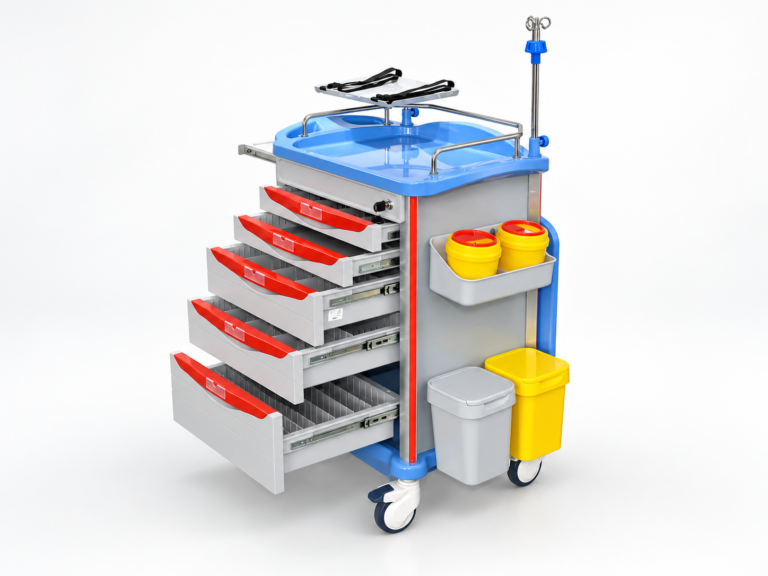
Drawer colors can help separate supply categories. Text labels explain what each drawer contains. Keeping the same drawer positions across carts also gives staff a familiar layout.
At Airomay, drawer front panels are the parts customers most often ask to recolor. Each drawer front can have a different color.
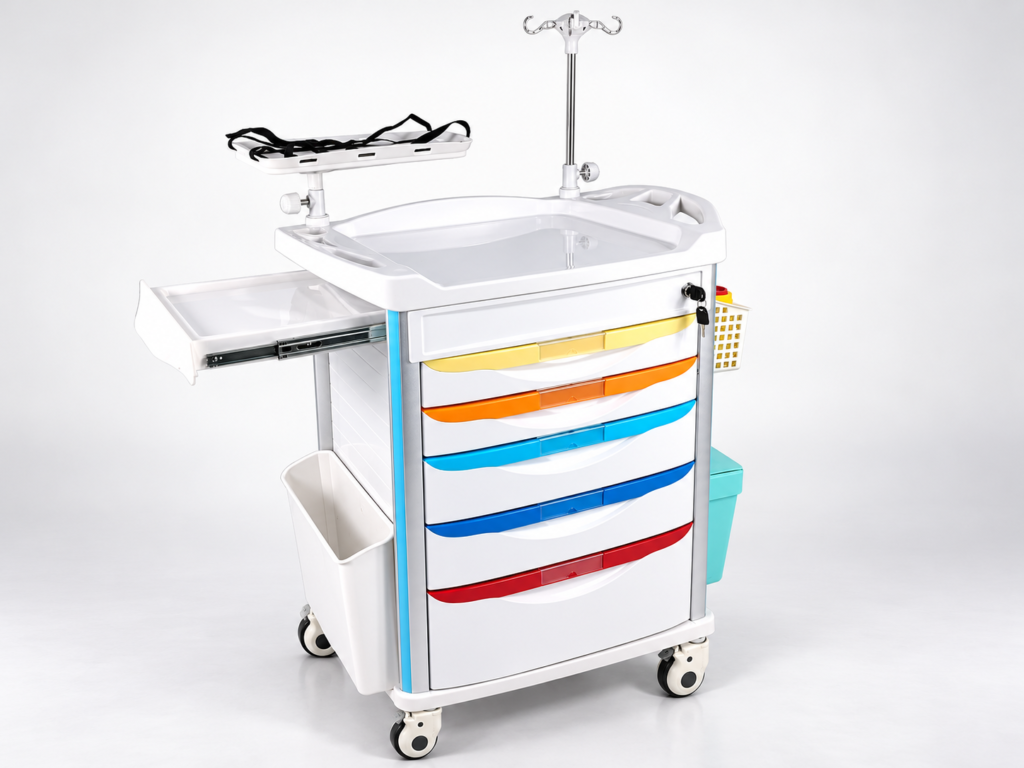
For example, a customer may request a blue top drawer, a green second drawer and a yellow third drawer. The hospital can assign these drawers to different supply groups. This is a customer-defined arrangement, not a universal clinical standard.
Color should work alongside clear text. Staff should not have to guess a drawer’s contents from its color alone. Labels are especially useful for staff who are new to the facility or unfamiliar with its color scheme.
Airomay provides two label options:
- Labels fitted before shipment: Buyers provide the approved wording, and labels are applied before the carts leave the factory.
- Blank label-card holders: Customers print and fit their own labels after receiving the carts.
The second option gives hospitals more control over local wording and later updates. In either case, buyers should confirm the label language, drawer order and wording before use.
Changing a drawer color should not change its meaning without updating the labels and the facility’s instructions.
How Is Pediatric Crash Cart Color Coding Different?
Pediatric crash cart color coding can link supplies to patient-size zones. In a Broselow system, the cart’s colors correspond to zones in the system adopted by the clinical team.
This differs from ordinary category coding. A general cart may use colors to separate medications, airway supplies or other equipment. A pediatric size-based system uses colors to help locate supplies for the relevant patient-size zone.
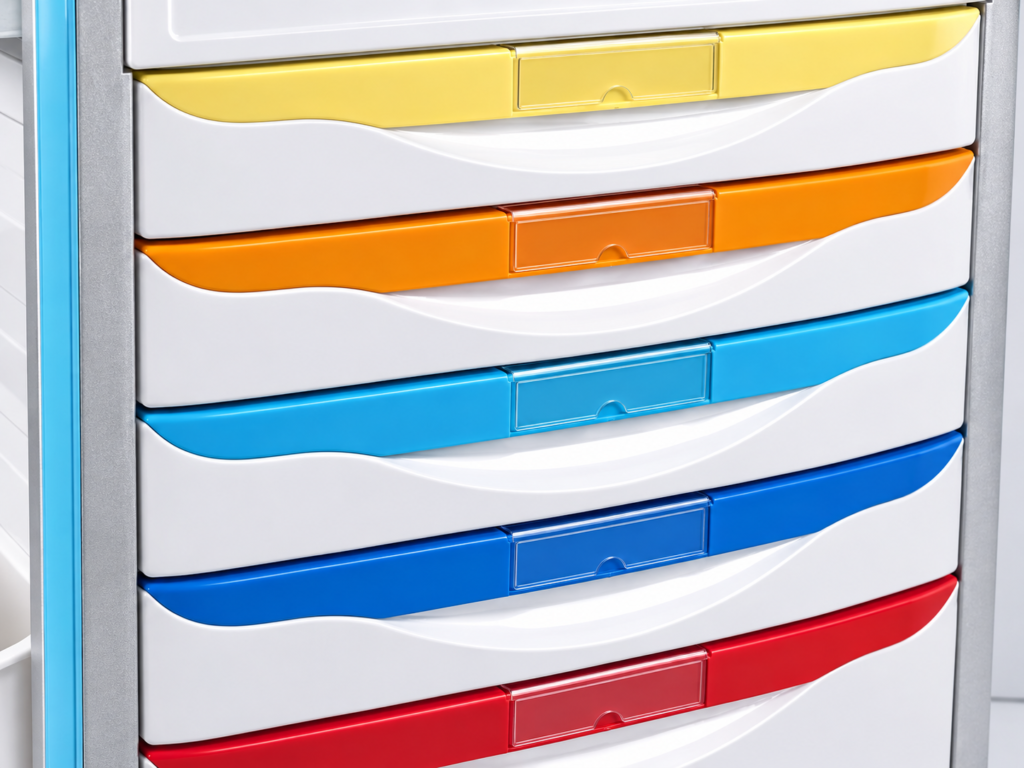
Metro’s pediatric crash cart range includes colored drawers designed to help identify supply sizes. This illustrates why pediatric drawer colors have a specific purpose.
A cart with several colored drawers is not automatically a Broselow-compatible cart. Buyers must confirm the required colors, drawer layout and labels. Simply choosing a range of bright colors does not establish a pediatric coding system.
Airomay offers a cart model with multicolor drawer fronts. For pediatric projects, buyers should provide the required color sequence, drawer layout and labels. These details must match the system approved by the hospital’s clinical team.
Confirm drawer sizes as well as colors, so the approved supply layout fits the cart. The clinical team should define the contents and approve the final setup. The supplier can then check the requested cart