How to Use a Crash Cart?
Knowing how to use a crash cart can help hospital staff access emergency equipment quickly when time matters.The alarm sounds. The team needs to act fast. A crash cart is moved to the patient, but it only helps when it is ready and easy to use.
To use a crash cart, move it close to the patient and lock the wheels. Open the seal or lock and get the supplies needed for the emergency. Keep the cart in a clear area so staff can reach the drawers and equipment easily. After use, check the cart, replace missing items, and prepare it for the next emergency.
Good crash cart use starts before the alarm. The cart should be easy to find, easy to move, and ready at all times.
If you are new to emergency carts, read our guide What Is a Crash Cart? for an overview of typical contents, drawer organization, and common applications.
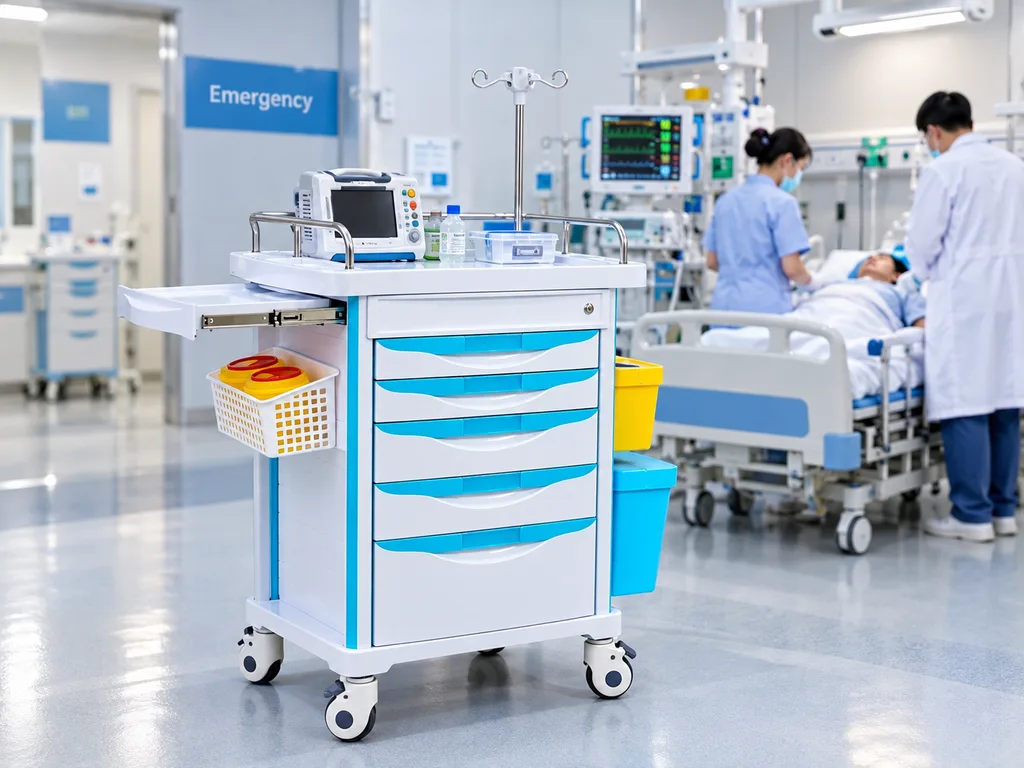
When Do You Use a Crash Cart?
A crash cart is used when a patient needs emergency care and medical supplies must be reached quickly.
Common situations include cardiac arrest, serious breathing problems, severe allergic reactions, seizures, choking, and other sudden changes in a patient’s condition.
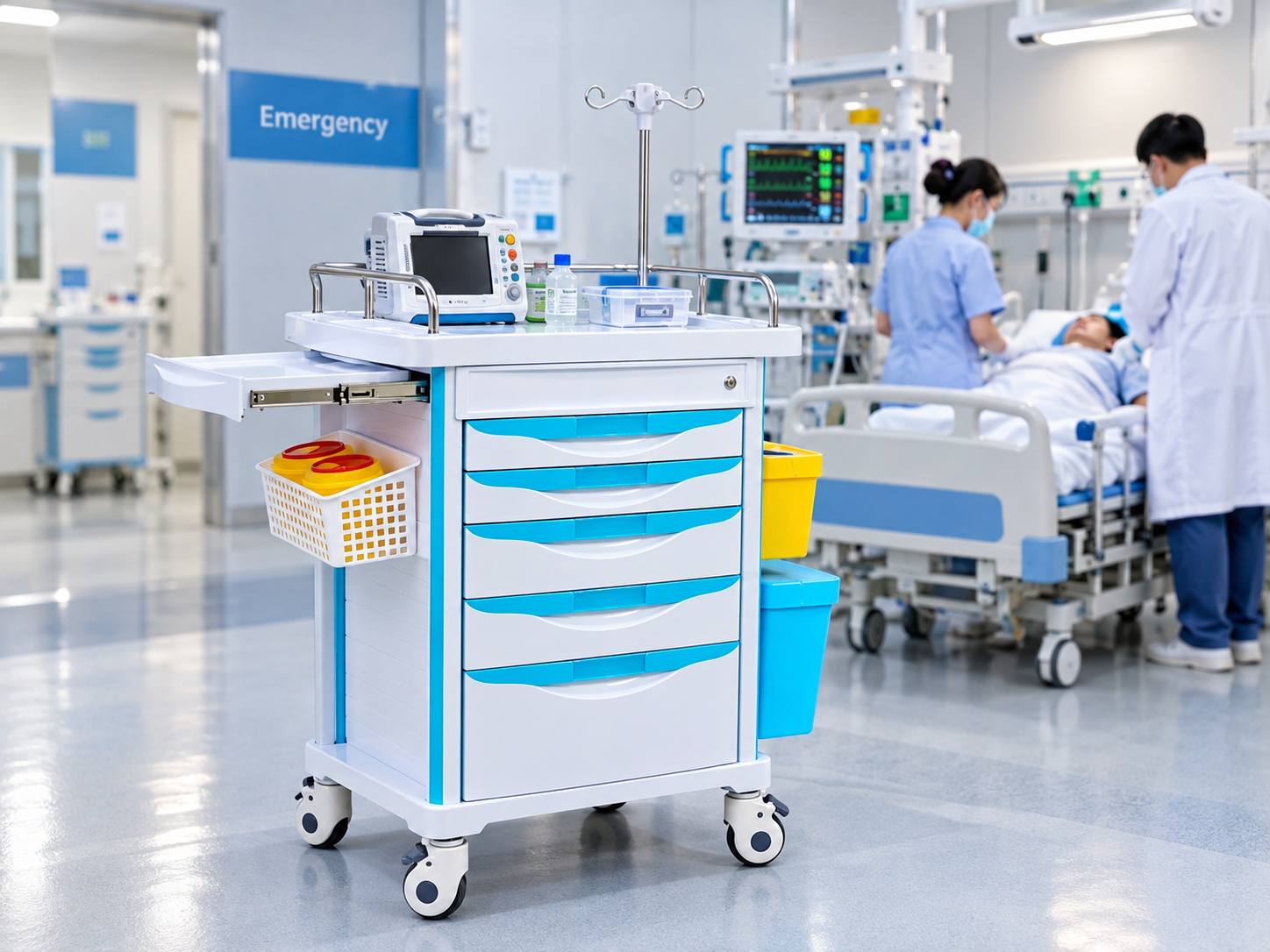
Crash carts are often kept in emergency rooms, ICUs, operating rooms, recovery areas, and hospital wards.1 They bring emergency equipment and supplies close to the patient when time matters.
The exact use of a crash cart may be different from one hospital to another. Staff should always follow their hospital’s emergency plan and training.
How to Prepare a Crash Cart Before an Emergency
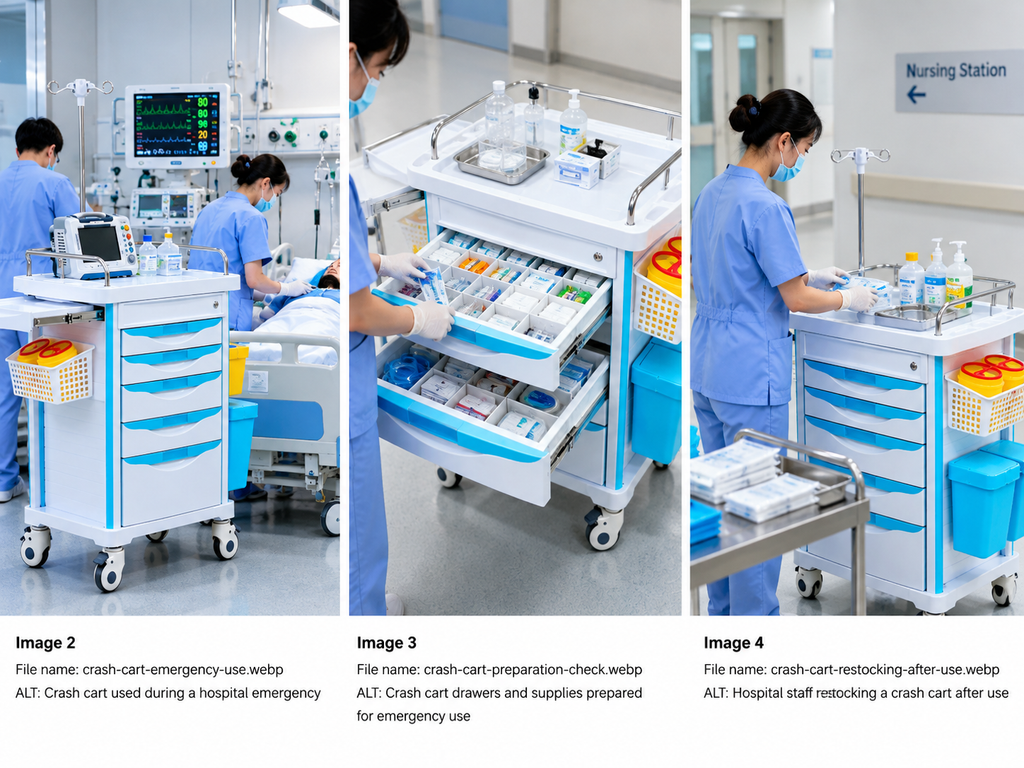
Before learning how to use a crash cart during an emergency, staff should make sure it is ready and easy to access.
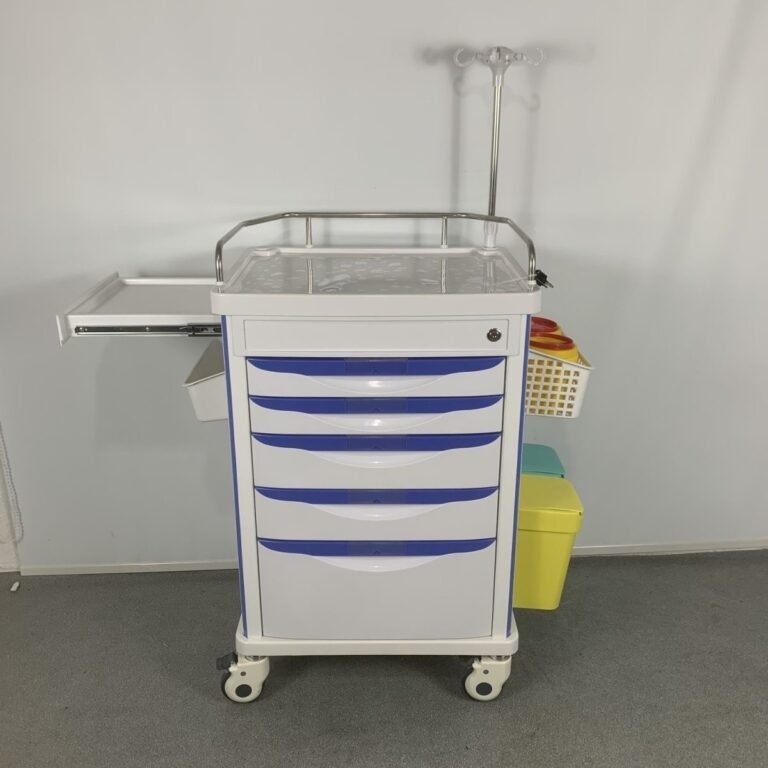
Staff should make sure the cart is in the correct place and that nothing blocks it. The seal or lock should be checked. Supplies should be organized, and items with expiry dates should be checked as part of the hospital’s normal routine.
The wheels and brakes also matter. The cart should roll smoothly when it needs to move. Once parked, the brakes should keep it in place.
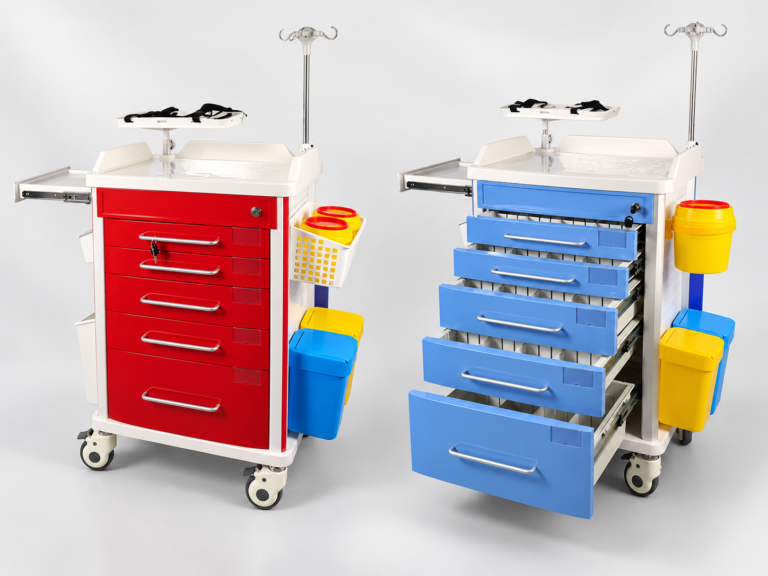
The top surface should stay clean and clear. Drawers should open easily, and labels should be simple to read.
A well-organized cart helps staff spend less time searching for supplies when every second matters.
What Are Common Errors in Crash Cart Use?
Small problems can cause delays during an emergency.
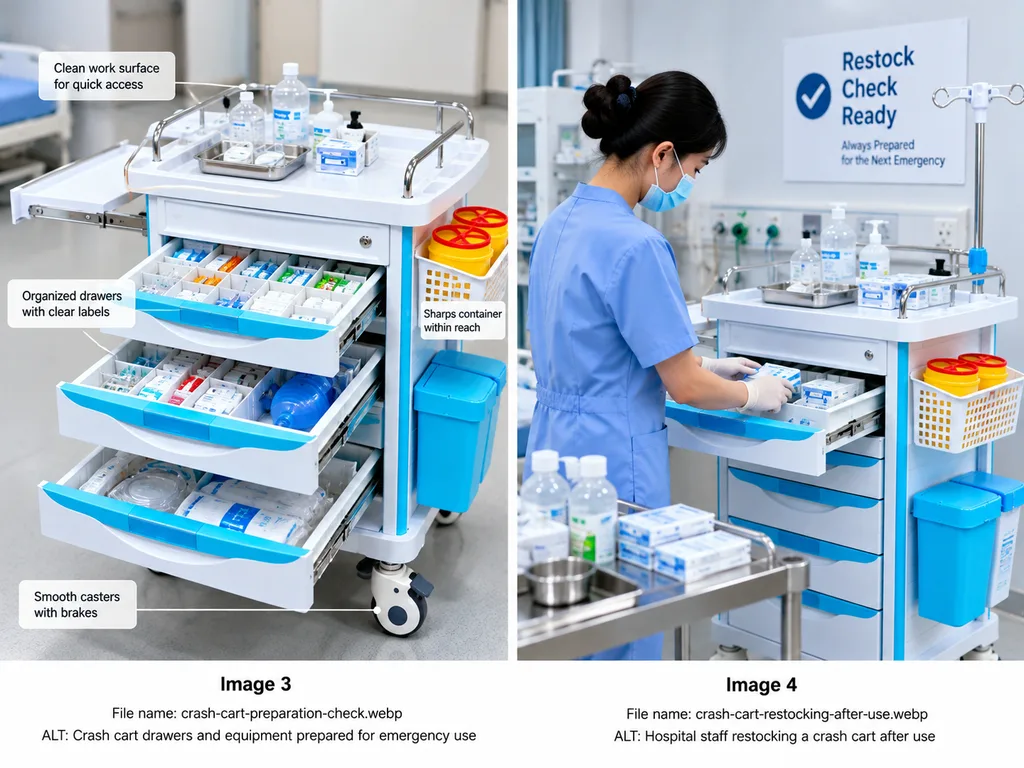
Common errors include missing supplies, expired items, poor drawer organization, blocked access, unfamiliar drawer layouts, and failure to restock the cart after use.
For example, a used item may not be replaced. Supplies may be placed in the wrong drawer. Other hospital equipment may block the cart. Staff may also lose time if different carts use very different layouts.
These problems can often be reduced with regular checks, clear labels, organized drawers, and a simple restock process.
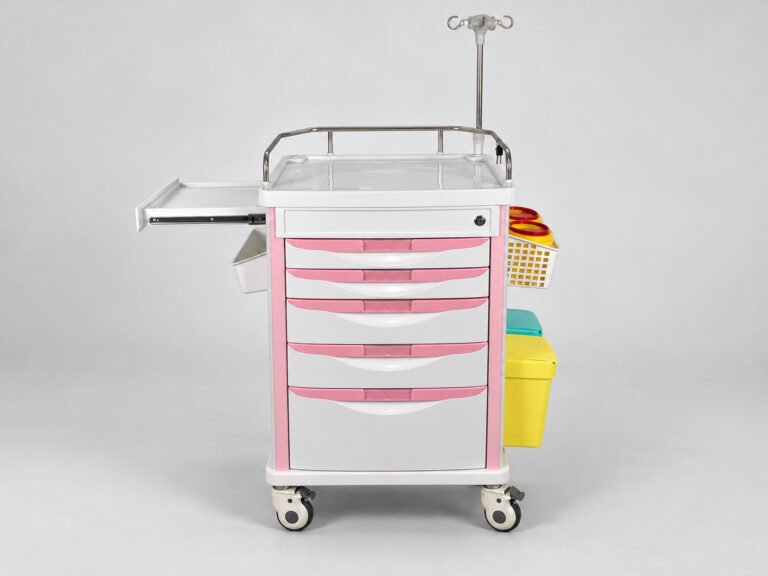
The cart itself should also be easy to use. Smooth drawers, good wheels, working brakes, and a simple locking system can support a faster and clearer workflow.
What Should You Do After Using a Crash Cart?
The work is not finished when the emergency ends.
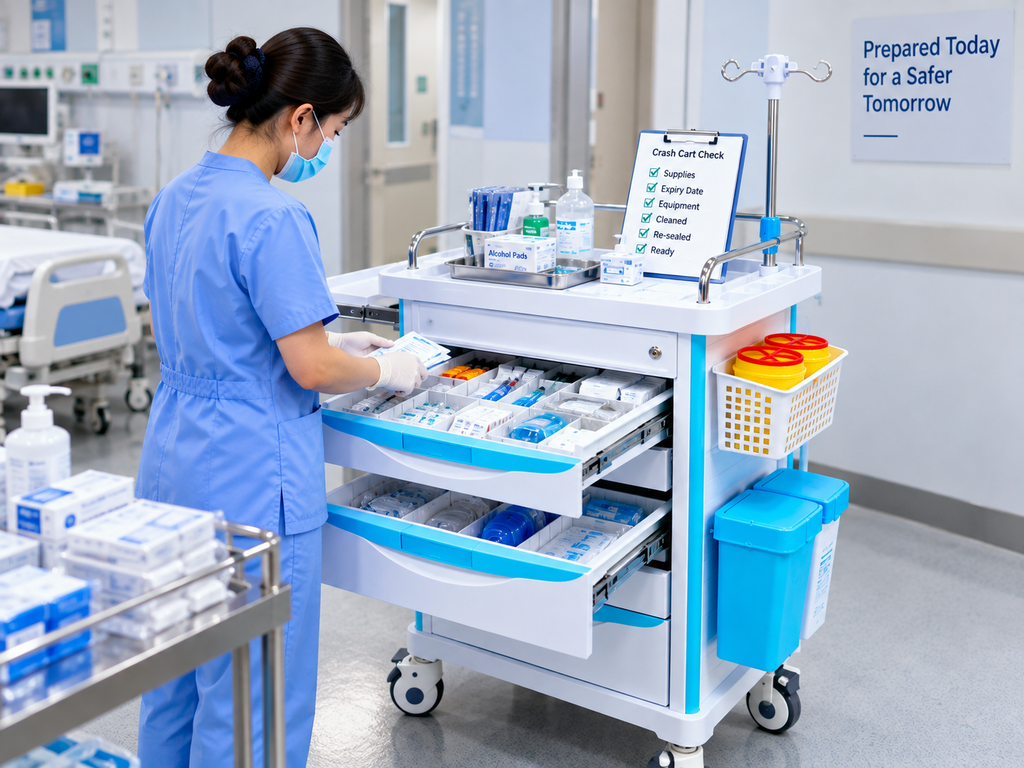
After use, missing or used supplies should be replaced. Drawers should be put back in order, and the cart should be cleaned according to the hospital’s normal process.
Equipment should also be checked before the cart returns to its normal place.
If the hospital uses a security seal or lock, the cart can be resealed after the required checks are complete.
A simple restock routine helps make sure the crash cart is ready for the next emergency.
Conclusion
A crash cart should be simple to reach, move, open, and organize.
Good preparation starts before an emergency. Keep the cart clear and ready. Check the supplies, wheels, brakes, drawers, and lock. After use, restock and prepare it again.
A crash cart works best when staff can find what they need without wasting time.
1. “The Emergency Department Crash Cart: A systematic review and …”, https://pmc.ncbi.nlm.nih.gov/articles/PMC5847507/. Crash carts are essential in various hospital settings, including emergency rooms, ICUs, operating rooms, recovery areas, and hospital wards, to provide immediate access to emergency medical supplies. Evidence role: general_support; source type: government. Supports: Crash carts are often kept in emergency rooms, ICUs, operating rooms, recovery areas, and hospital wards.. Scope note: The information is general and may vary by institution.