
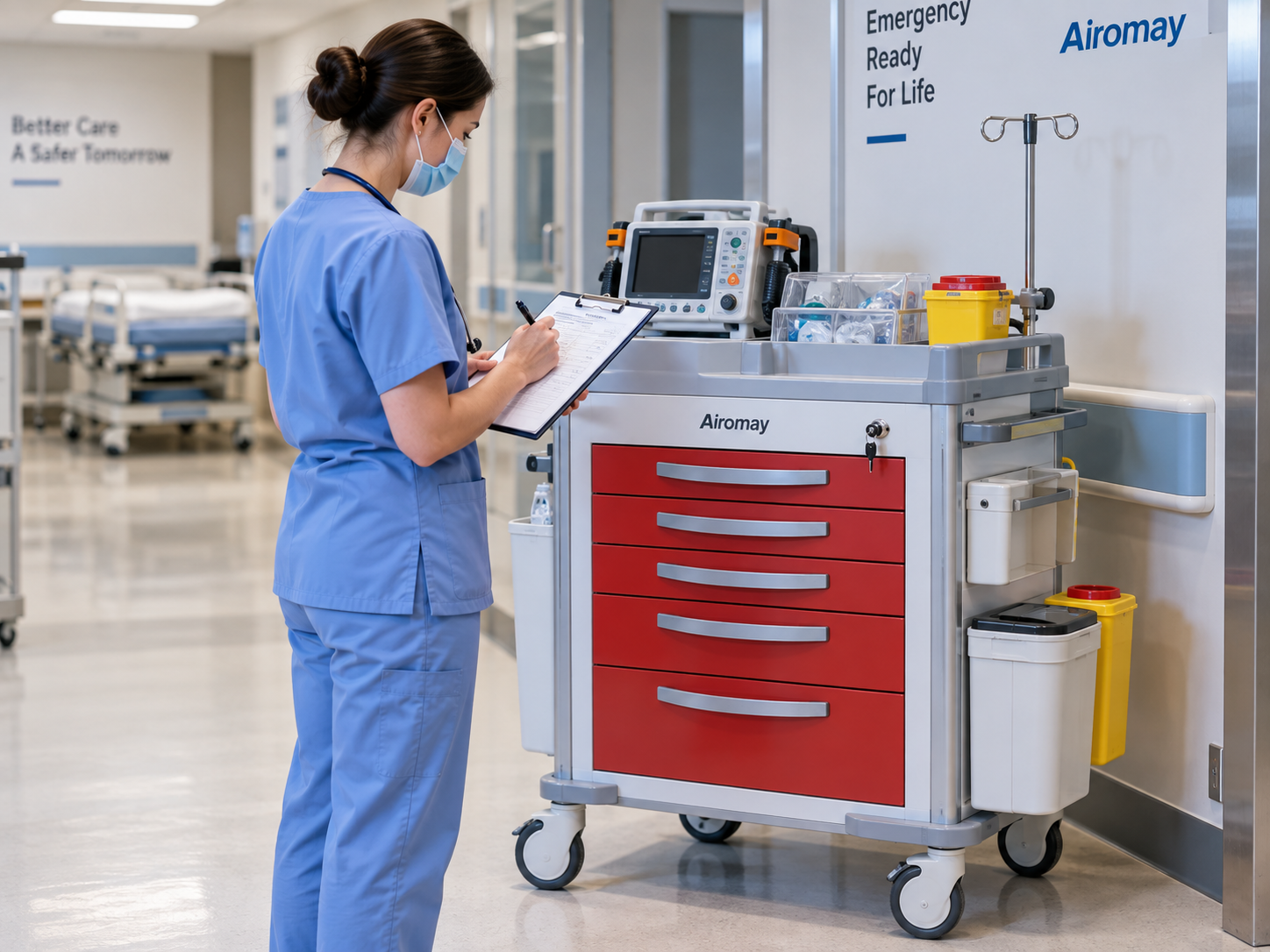
Crash Cart Checklist: How to Check a Crash Cart
A crash cart only helps when it is ready. If supplies are missing or a seal is broken, staff may lose time during an emergency. A crash cart checklist helps staff confirm that the cart is organized, easy to reach, stocked, and ready for use.
A crash cart checklist is a written list of items and conditions to check before an emergency. It can cover the seal or lock, supplies, expiry dates, drawer order, equipment, wheels and brakes, and check records.
For a general overview of what a crash cart is and what it usually holds, see our guide What Is a Crash Cart?. This article focuses on checking the cart and keeping it ready.
What Is a Crash Cart Checklist?
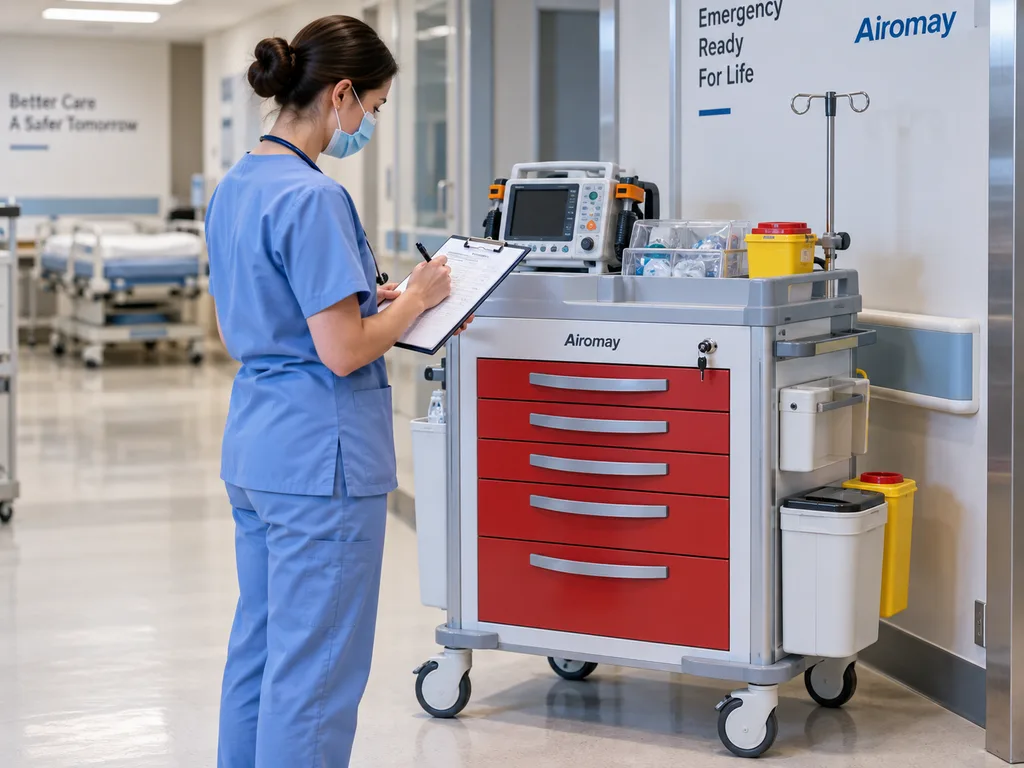
A crash cart checklist is a simple tool that helps staff check an emergency cart in the same way each time.
It can help staff find missing supplies, expired items, broken seals, or problems with the cart before an emergency happens.
The Pennsylvania Patient Safety Authority provides an emergency crash cart checklist as a reference for monitoring emergency supplies and equipment.
The checklist can also record who checked the cart and when the check was completed. This gives the hospital a clear record of the cart’s condition.
Each hospital may have different needs. The checklist should follow the hospital’s own policy, local rules, and the equipment used in the facility.
What Should Be Included in a Crash Cart Checklist?
A useful checklist should cover both the supplies and the condition of the cart.
The table below shows practical points that can be included in a crash cart checklist.
| Check Point | What to Look For | Why It Matters |
|---|---|---|
| Seal or lock | Seal is intact and lock works | Helps show whether the cart has been opened |
| Supplies | Required items are present | Helps find missing supplies |
| Expiry dates | Check dates on items that require them | Helps find items that need replacement |
| Drawer order | Items are in their assigned locations | Helps staff find supplies quickly |
| Equipment | Equipment is ready based on hospital procedure | Helps keep the cart ready for use |
| Work surface | Surface is clean and clear | Provides an organized work area |
| Casters and brakes | Wheels move smoothly and brakes work | Helps the cart move and stay in place |
| Records | Required check details are recorded | Provides a record of the check |
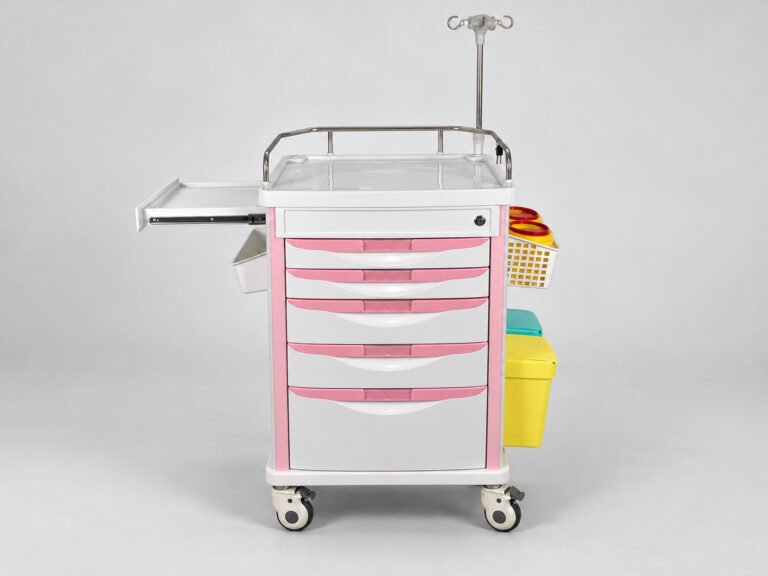
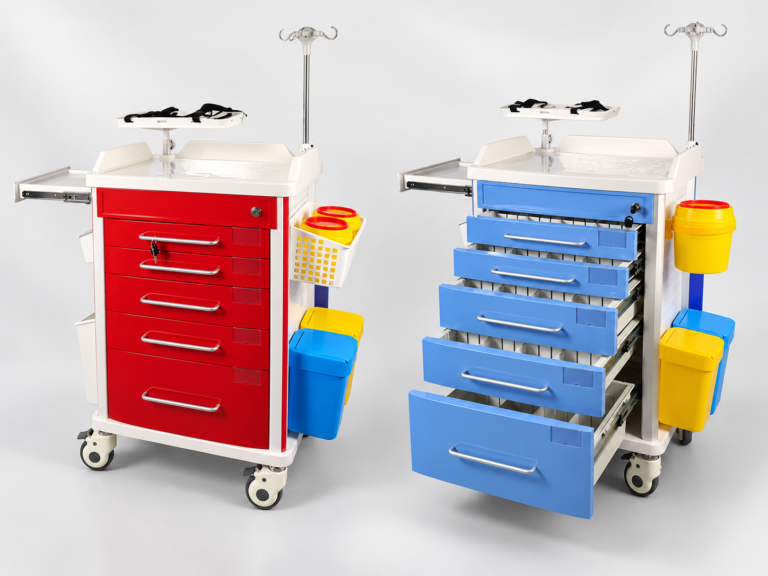
Cart design can also make the checking process easier. Organized drawers, dividers, clear labels, a simple locking system, smooth casters, and working brakes can help staff complete checks with less confusion.
Hospitals should still follow their own written procedures when checking the cart.

How to Check a Crash Cart
The exact process may vary between hospitals. However, a simple checklist for crash cart inspection can include these steps:
- Make sure the cart is in its assigned location and easy to reach.
- Check the seal or lock for signs that the cart has been opened.
- Check supplies against the hospital’s approved list.
- Review expiry dates on items that require them.
- Make sure supplies are in the correct drawers.
- Check equipment based on hospital procedures and the manufacturer’s instructions.
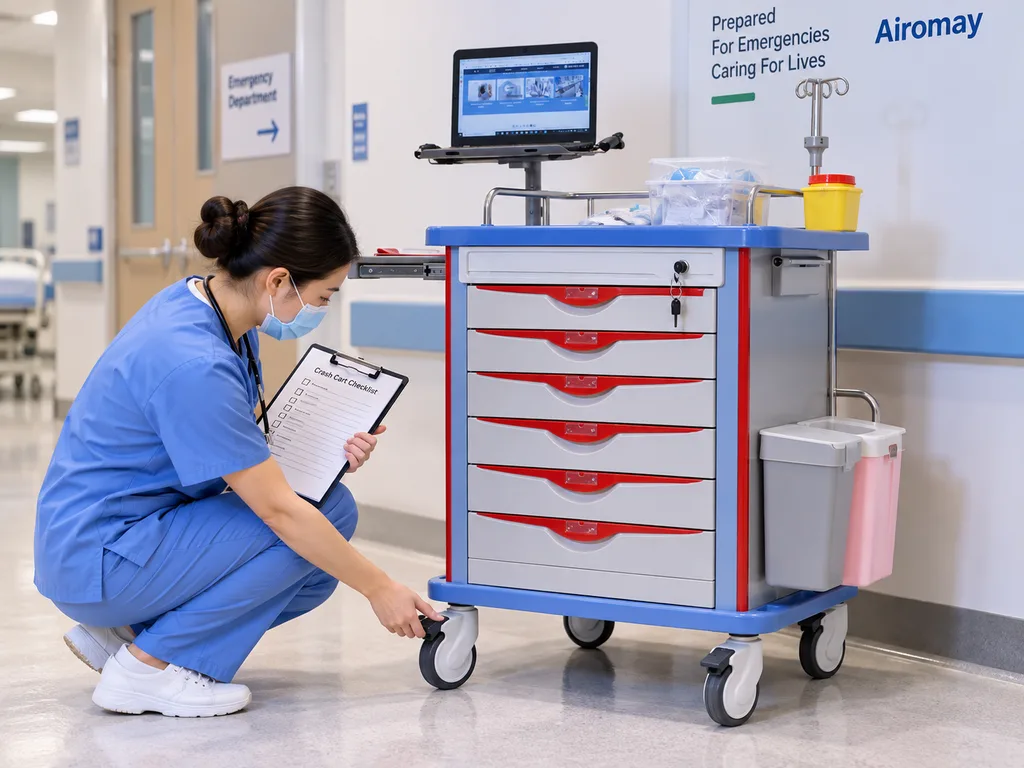
- Check the wheels, brakes, handles, drawers, and work surface.
- Record the check according to hospital policy.
The Joint Commission notes that emergency cart security should protect the contents without creating a barrier to quick access during an emergency.
Using the same process each time can make it easier to find missing items or problems with the cart.
The goal is to make sure the crash cart is ready before it is needed.
How Often Should a Crash Cart Be Checked?
How often should a crash cart be checked? There is no single schedule that applies to every hospital.
The frequency can depend on hospital policy, local rules, the type of check, and the equipment stored on the cart.
Some facilities perform frequent seal and basic readiness checks. Supply checks, expiry-date checks, and equipment checks may follow different schedules.
A crash cart should also be checked and restocked after use according to the hospital’s normal procedure.
Hospitals should set a clear checking schedule. Staff should know what needs to be checked and when each type of check should be completed.
Common Crash Cart Checklist Mistakes
Even with a checklist, small problems can be missed.
Common problems include:
- Missing supplies
- Expired items
- Items placed in the wrong drawer
- Missing or incomplete check records
- Failure to restock after use
- Damaged seals or locks
- Wheels or brakes that do not work properly
A clear checklist can make these problems easier to find. Using the same drawer layout can also help staff know where each item should be.
What to Do After the Check
After checking the cart, replace missing items and return supplies to their correct locations.
Expired items should be handled according to hospital policy. The check should be recorded, and any problems should be reported.
If the hospital uses a security seal or lock, secure the cart again after the required checks are complete.
Then return the crash cart to its assigned location so it is ready when needed.
If there is a problem with the cart itself, such as a damaged wheel, drawer, or brake, report it according to the hospital’s normal process.

Conclusion
A crash cart checklist helps hospitals keep emergency carts organized and ready for use.
Check the seal or lock, supplies, expiry dates, drawers, equipment, wheels, brakes, and records. Follow the hospital’s own checking schedule and local rules.
After the check, restock the cart, record the result, secure it, and return it to its assigned location.
A clear and simple crash cart checklist can help staff find problems before an emergency happens.

[…] the cart is stocked, regular inspection helps make sure supplies stay complete and ready. See our Crash Cart Checklist: How to Check a Crash Cart for the inspection […]
[…] checks are a different topic. For that process, see our crash cart checklist […]
[…] For routine readiness checks, see the Crash Cart Checklist. […]
[…] For routine readiness checks, see the crash cart checklist. […]
[…] For the inspection tasks themselves, see the crash cart checklist. […]