
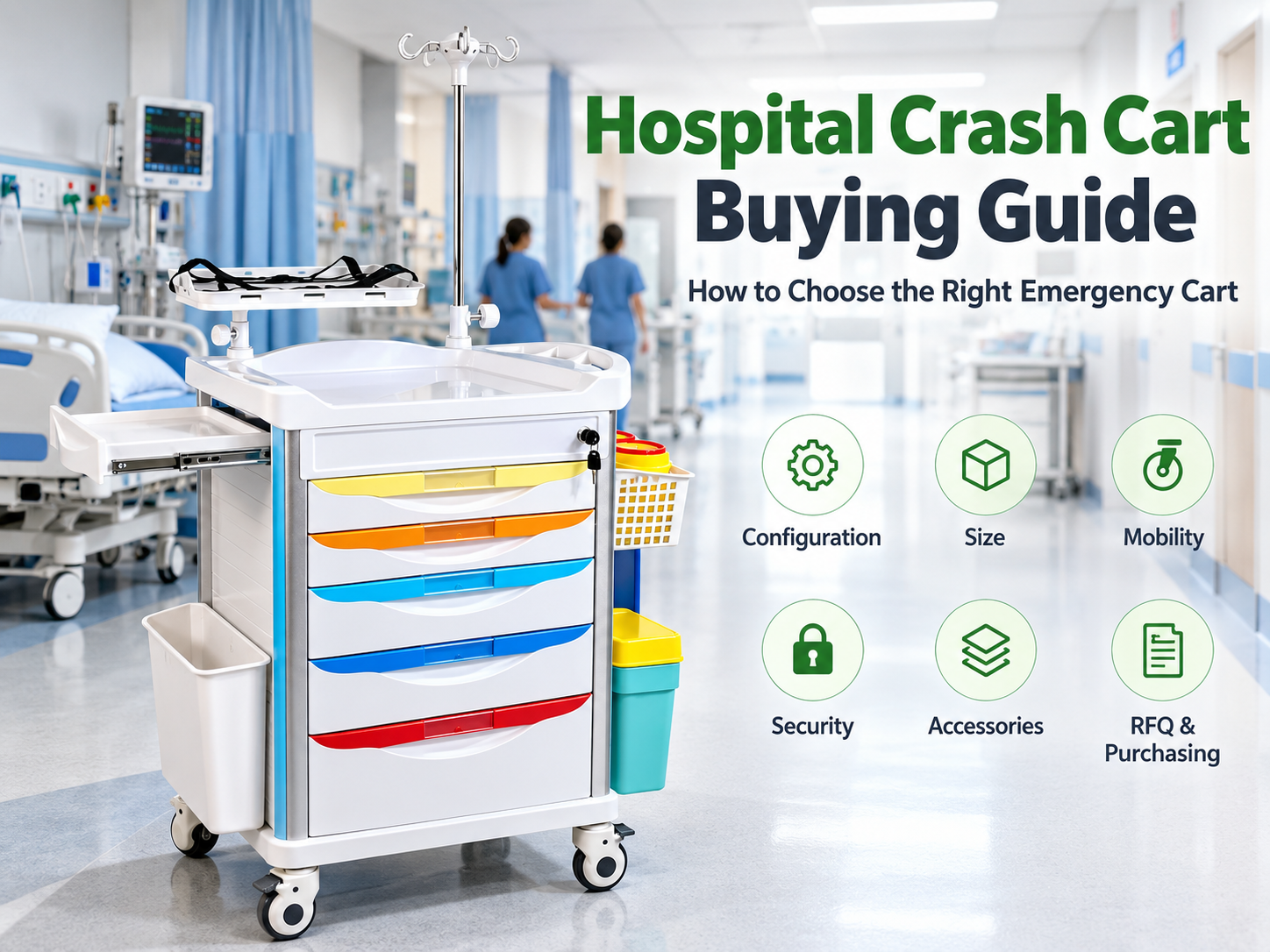
Hospital Crash Cart Buying Guide: How to Choose the Right Emergency Cart
Choosing a hospital crash cart is not only about comparing price or appearance. Buyers should first define where the cart will be used and what the hospital needs.
Size, drawer layout, mobility, security, accessories, and customization can all affect the final choice.
This buying guide is for hospital buyers, distributors, importers, and healthcare project teams. It focuses on the decisions to make before asking for a quotation or placing an order.
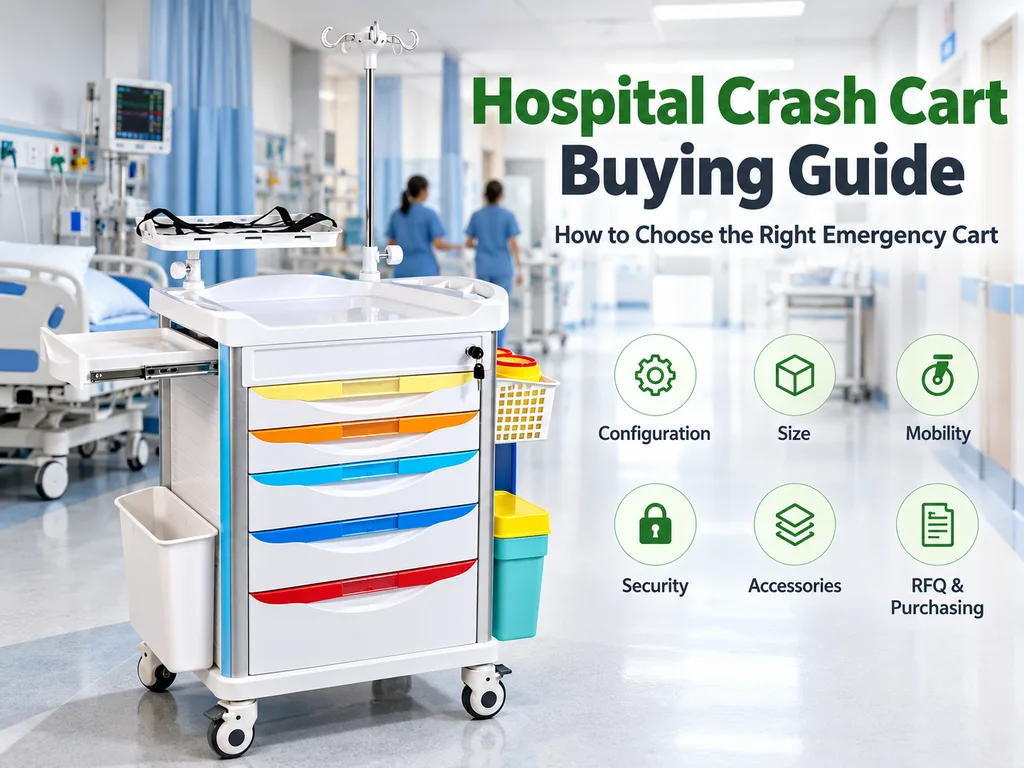
Start With the Hospital’s Actual Requirements
The first step is simple. Define where the cart will be used and what the hospital needs.
Start with a few practical questions:
- Which department will use the cart?
- How many carts are needed?
- Does the hospital have its own specifications?
- Is there a tender document to follow?
- Are there limits on cart size?
- Are there preferred materials or drawer layouts?
- Does the project need the same model for several facilities?
Requirements can vary by hospital, country, and project.
Some buyers work with a detailed tender document. Others build their own specifications. There is no single crash cart setup that fits every hospital.
Write down the main requirements before contacting a supplier. This gives both sides a clear starting point.
Choose the Cart Configuration Around the Workflow
The next step is to turn the hospital’s needs into cart specifications.
Buyers should consider:
- Number of drawers
- Drawer depth
- Divider requirements
- Top work surface
- Accessory mounting positions
- Overall storage capacity
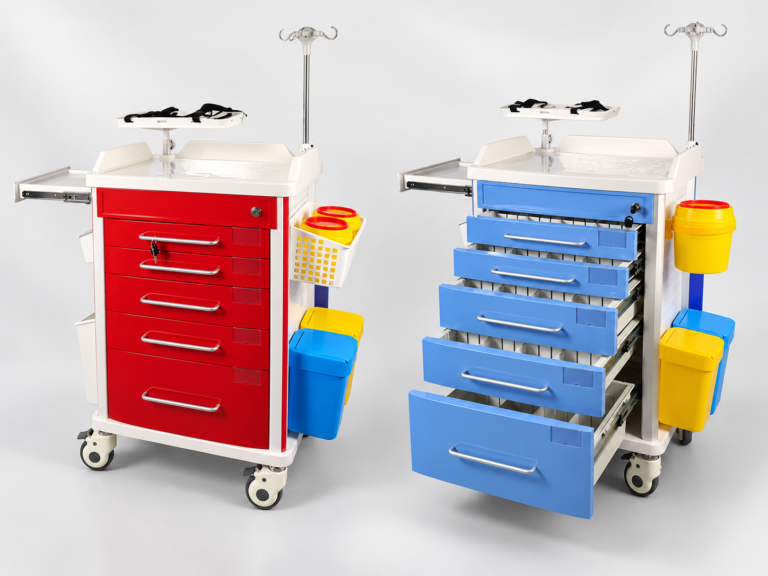
Drawer design should match the hospital’s needs. Some buyers need several drawer sizes. Others prefer a simpler layout.
Dividers can help separate items inside a drawer. Buyers should confirm whether they are included or sold as an option.
The top work surface also matters. It should provide enough working space without making the cart too large for the hospital environment.
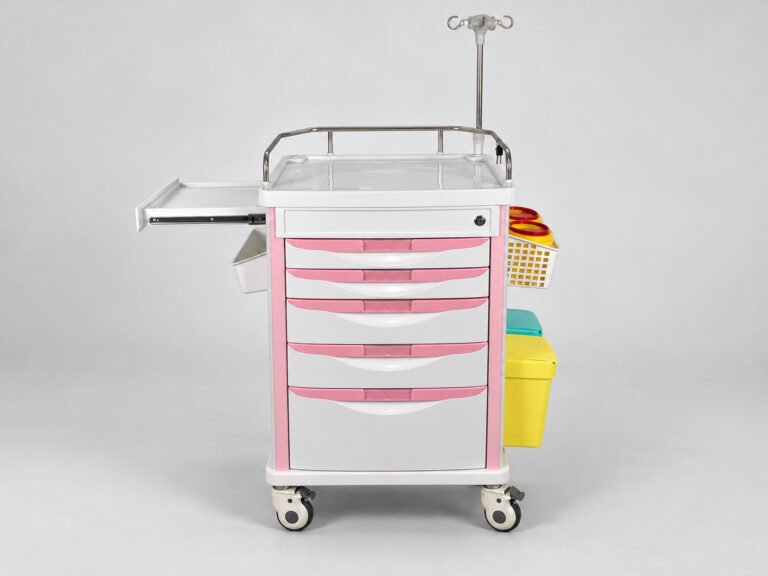
Accessory positions should also be considered before ordering. An IV pole, oxygen cylinder holder, CPR board, or defibrillator shelf can change the final size and layout of the cart.
This article focuses on the cart itself. For information about the medical items stored inside, see our guide to crash cart contents.
Evaluate Mobility in the Real Hospital Environment

A product photo cannot show whether a cart will fit a real hospital.
Before ordering, buyers should consider the route the cart will travel.
Check:
- Corridor width
- Doorway width
- Elevator space
- Turning space
- Floor transitions
- Space between beds and walls
Do not look only at the main cart dimensions. Side accessories can increase the total width.
Casters are another important part of the specification. Buyers should confirm caster diameter, wheel material, load requirements, and braking method.
The braking arrangement should also match the hospital’s needs.
A cart may look suitable on a product page but still be difficult to move through a narrow doorway or patient area.
Checking the real environment before ordering can prevent this problem.
Check Security and Emergency Access
A hospital crash cart needs fast access during an emergency. At the same time, hospitals may need a way to control access to the drawers.
Common options include:
- Breakaway seals
- Key locks
- Central locking systems
A breakaway seal can show whether the cart has been opened. It can also be removed quickly when access is needed.
A key lock provides another level of control, but the hospital needs a clear process for managing the key.
A central lock can control several drawers through one locking point.
The best option depends on the hospital’s workflow and project requirements. There is no single locking system that is right for every facility.
The Joint Commission also notes that emergency cart security should not create a barrier or delay when emergency medications and supplies are needed.
Buyers should confirm the required locking method before placing an order.
Routine checks are a different topic. For that process, see our crash cart checklist guide.
Match the Material to the Working Environment
Material should be selected for the environment where the cart will be used.
Common choices include ABS, stainless steel, coated steel, and mixed-material designs.
When selecting the material, consider:
- Cleaning needs
- Frequency of movement
- Cart weight
- Corrosion resistance
- Expected working conditions
- Budget
For example, a buyer who moves the cart often may place more importance on weight. Another project may place more importance on corrosion resistance or cleaning needs.
The goal is not to choose one material as the best for every hospital. It is to choose a material that fits the project requirements.
Material can also affect price. For a detailed discussion of this topic, see our crash cart cost guide.
Decide What Should Be Standard and What Should Be Optional
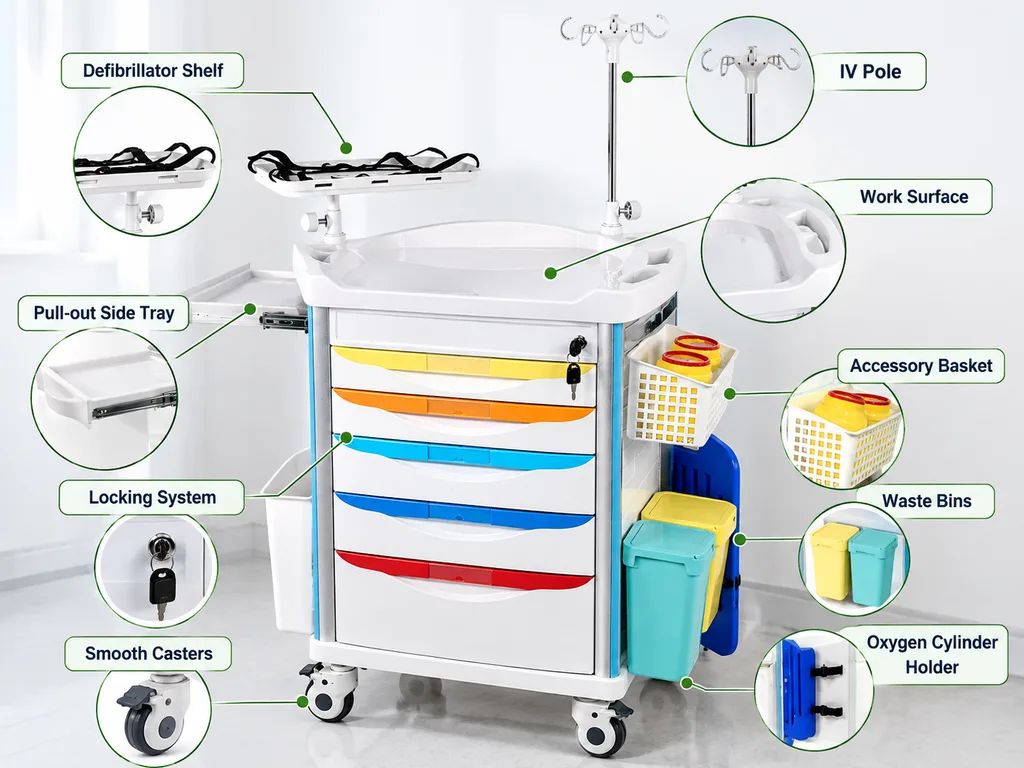
Two crash carts can look similar but include different accessories.
This can make supplier quotations difficult to compare.
Common cart accessories may include:
- CPR board
- IV pole
- Oxygen cylinder holder
- Defibrillator shelf
- Waste bins
- Drawer dividers
- Accessory rails
Some suppliers include certain accessories in the standard configuration. Others sell them separately.
Buyers should ask for a clear accessory list with each quotation.
The list should show:
- What is included as standard
- What is optional
- What has an extra cost
- What can be customized
This makes it easier to compare quotations on the same basis.
It also prevents a buyer from choosing a lower price and later finding that important accessories were not included.
What Information Should Buyers Send in an RFQ?
A clear RFQ helps a supplier understand the project.
It can also reduce repeated emails and make quotations easier to compare.
The World Health Organization highlights the importance of technical specifications when planning the procurement of medical devices.
Before asking for a price, buyers should prepare the main product requirements.
| Requirement | Example Information to Send | Why It Matters |
|---|---|---|
| Quantity | Number of units required | Helps with production and quotation planning |
| Material | Preferred material or construction | Defines the basic cart structure |
| Size | Required size or maximum width | Helps make sure the cart fits the hospital |
| Drawers | Number, depth, or preferred layout | Defines the cart configuration |
| Lock | Required locking or sealing method | Matches the hospital’s access needs |
| Casters | Caster and brake requirements | Affects movement and stability |
| Accessories | Required accessory list | Confirms what should be included |
| Customization | Logo, color, or other requests | Helps the supplier check customization options |
| Destination | Country, port, or delivery location | Helps with packing and shipping planning |
| Project | Hospital or tender requirements | Gives the supplier project context |
| Packing | Any special packing request | Helps confirm export packing needs |
If there is a tender document, send it with the RFQ.
Buyers should also mention any important delivery target or project schedule.
The clearer the information is, the easier it is for a supplier to prepare a quotation based on the same requirements.
Questions to Ask a Crash Cart Supplier Before Ordering
Price is only one part of a supplier discussion.
Buyers should also confirm what the supplier can provide.
Useful questions include:
- Can the drawer configuration be customized?
- Which accessories are included as standard?
- Which accessories are optional?
- Can the dimensions be adjusted?
- Are different colors available?
- Can a hospital or distributor logo be added?
- What information is needed for an accurate quotation?
- How is the crash cart packed for export?
- What is the expected production lead time?
- Can the supplier support bulk or project orders?
- How are final specifications confirmed before production?
- Are replacement parts such as casters, locks, or drawer slides available?
Written answers can make later communication clearer.
Buyers can also compare available crash cart models before sending an RFQ. This can help them decide which configuration is closest to their needs.
Final Purchase Specification Checklist
Before placing an order, check the final specification.
- Application and department
- Material
- Overall dimensions
- Drawer configuration
- Locking system
- Casters and brakes
- Standard accessories
- Optional accessories
- Logo or color customization
- Quantity
- Packing
- Delivery requirements
- Tender or project requirements
This is a purchase specification checklist. It is different from the routine checklist used after a crash cart enters service.
When these points are clear, the buyer can send a more complete RFQ and compare supplier quotations more easily.
Final Thoughts
A good hospital crash cart purchase starts with a clear specification, not only a low price.
Buyers should define where the cart will be used, its size and configuration, how it should move, how it should be secured, and which accessories are needed.
A clear specification makes it easier to compare quotations, confirm configurations, and avoid changes after the order is placed.
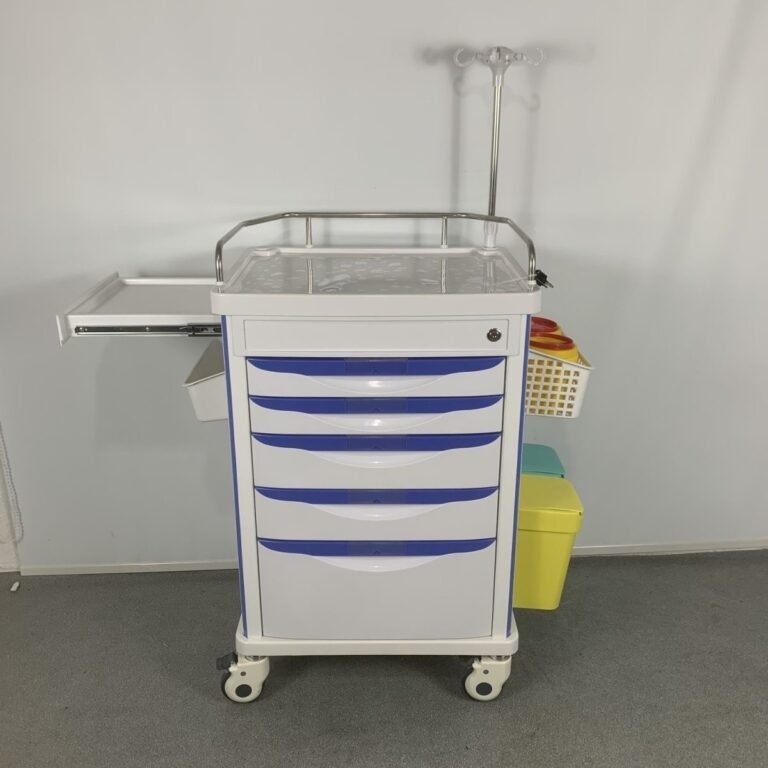

[…] For broader purchasing advice, see our hospital crash cart buying guide. […]
[…] For help preparing these details, see the hospital crash cart buying guide. […]
[…] Use the material breakdown together with the model’s stated limits. For the wider purchase process, read the hospital crash cart buying guide. […]