
Crash Cart Locks and Security Seals Explained
Crash cart locks control access to stored items. Security seals help reveal signs of opening or tampering at the sealed point. A cart may use both.
The full opening method matters when choosing a cart. A breakable seal does not always mean the drawers open without a key. Buyers should confirm how the complete system works.
For a basic overview, see What Is a Crash Cart?.
What Is the Difference Between Crash Cart Locks and Security Seals?
A key lock controls access. It holds drawers closed until the correct key releases the lock. A security seal helps staff spot signs of opening or tampering.
A central lock controls several drawers together. The term describes the lock layout. It does not tell buyers whether the system uses a key, a code, or another release method.
| Component | Main function | What buyers should confirm |
|---|---|---|
| Key lock | Controls drawer access | Which drawers it secures and how it opens |
| Security seal | Helps reveal opening or tampering | How it fits, how it is checked, and how it is replaced |
| External locking bar | Holds drawers or doors closed | How it releases and which areas it secures |
These parts can work together. Buyers should confirm the role of each part on the selected cart.
How Do Common Crash Cart Locking Arrangements Work?
Central Key Lock
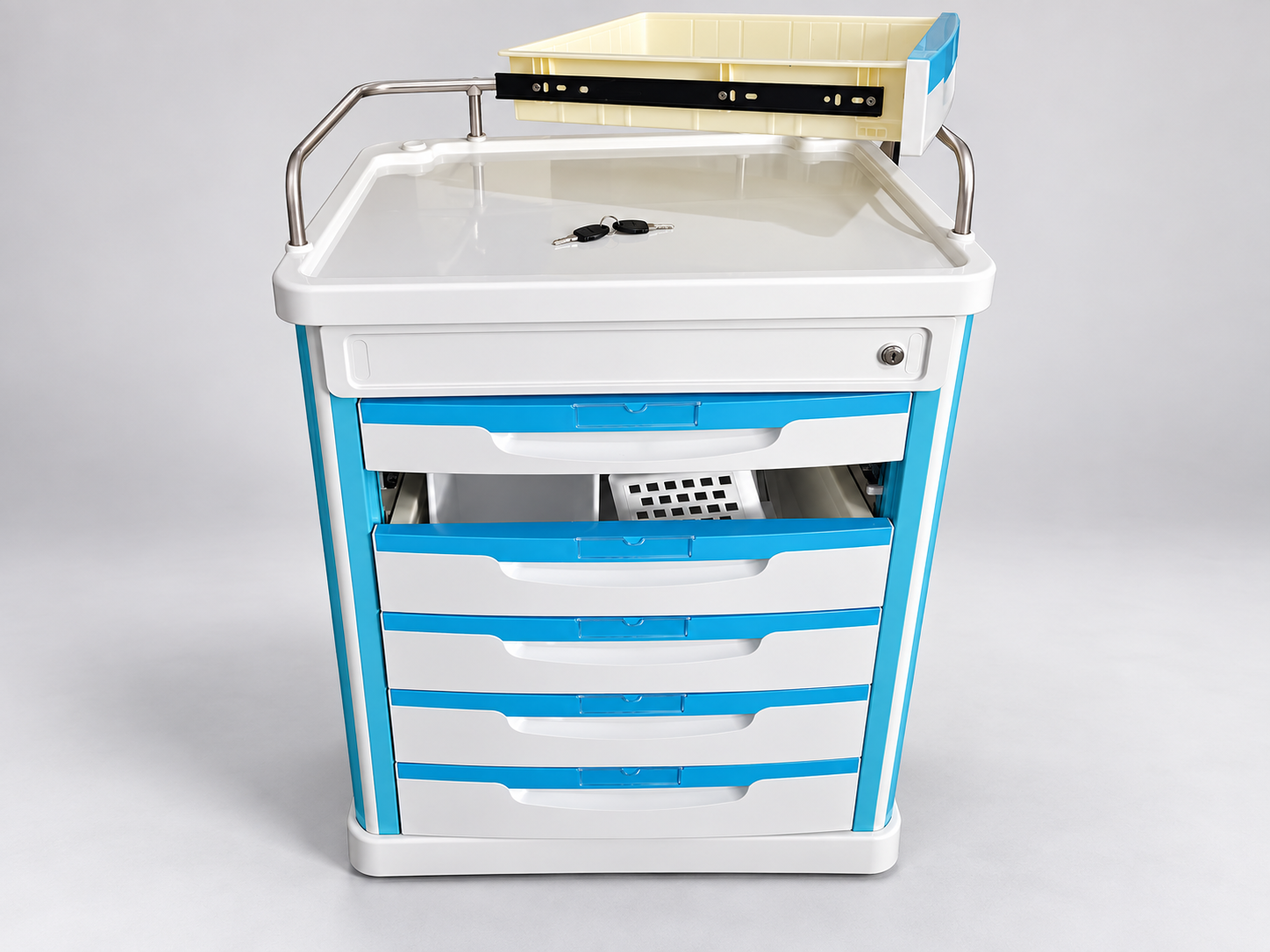
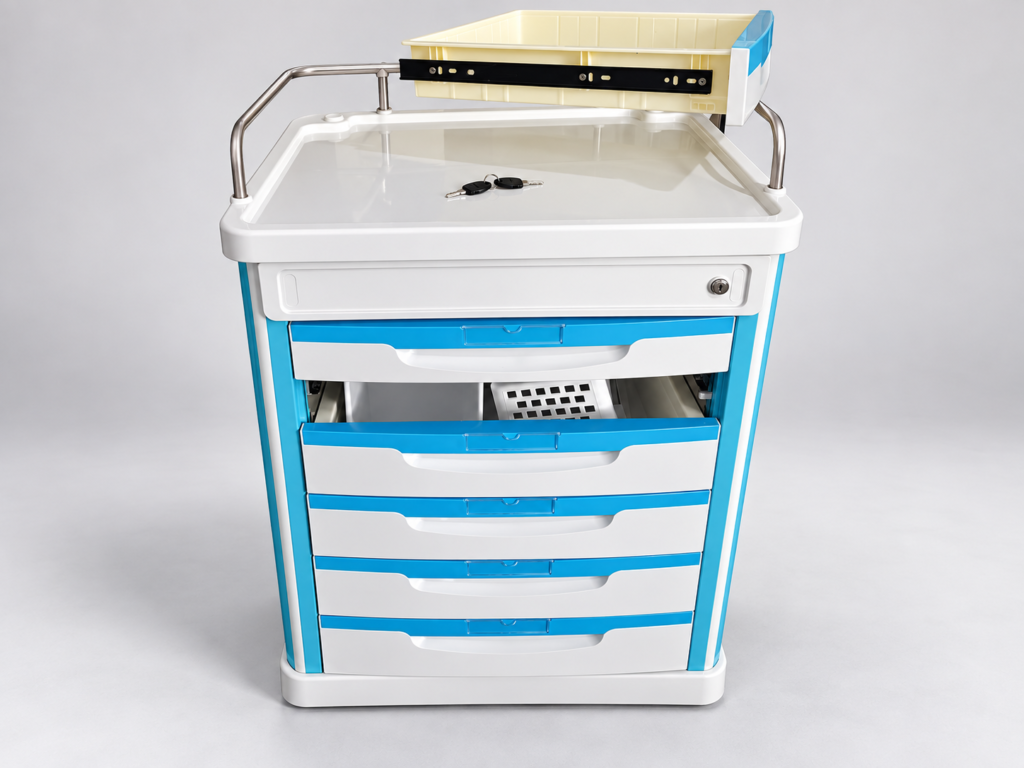
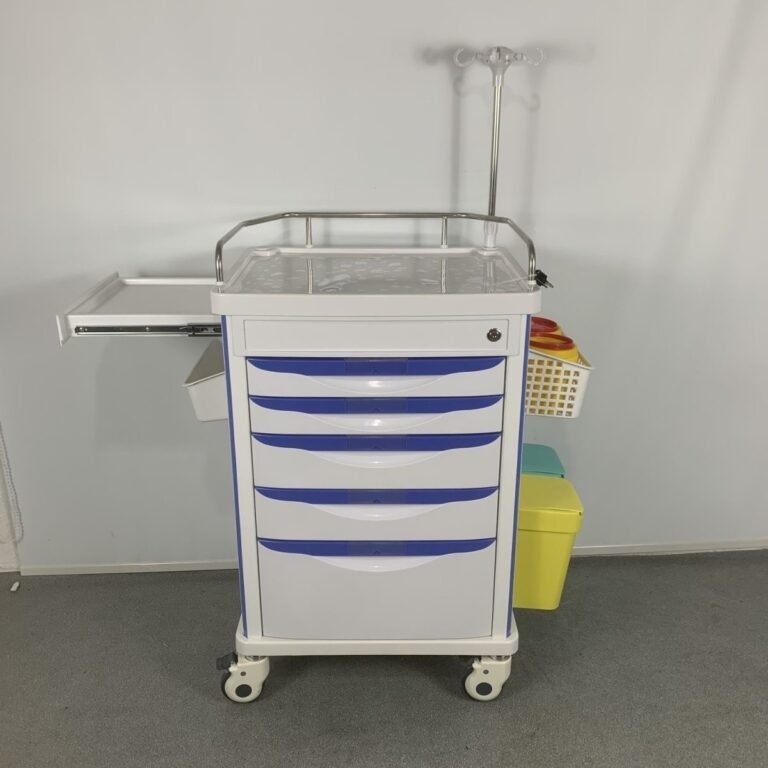
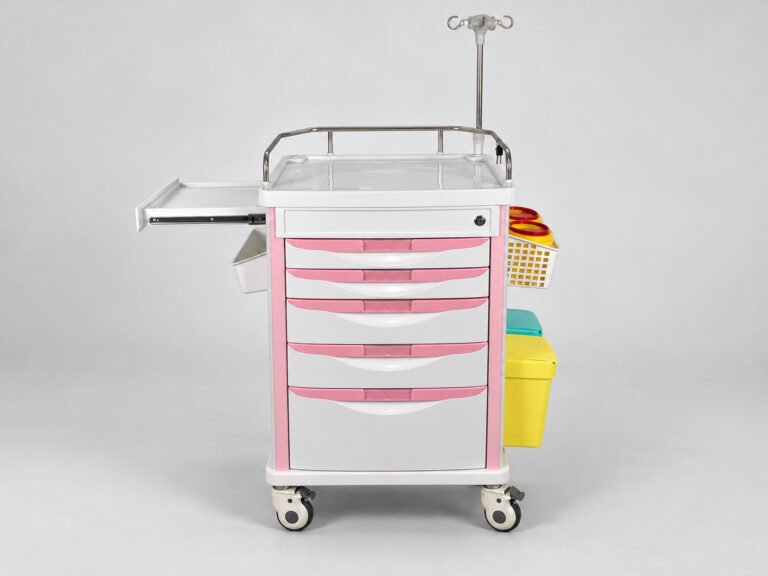
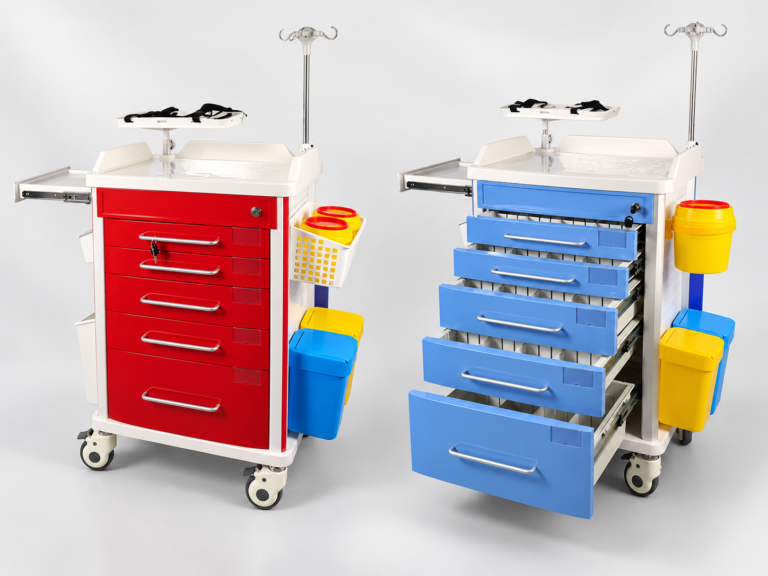
A central key lock controls several drawers through one locking mechanism. In the Airomay configuration described here, one key lock controls all drawers.
Buyers should confirm which drawers are secured on the selected model. Side bins, doors, or other storage areas may use separate arrangements.
The facility should also define how authorized staff can reach the key when needed, including during an emergency.
Key Lock with a Separate Security Seal
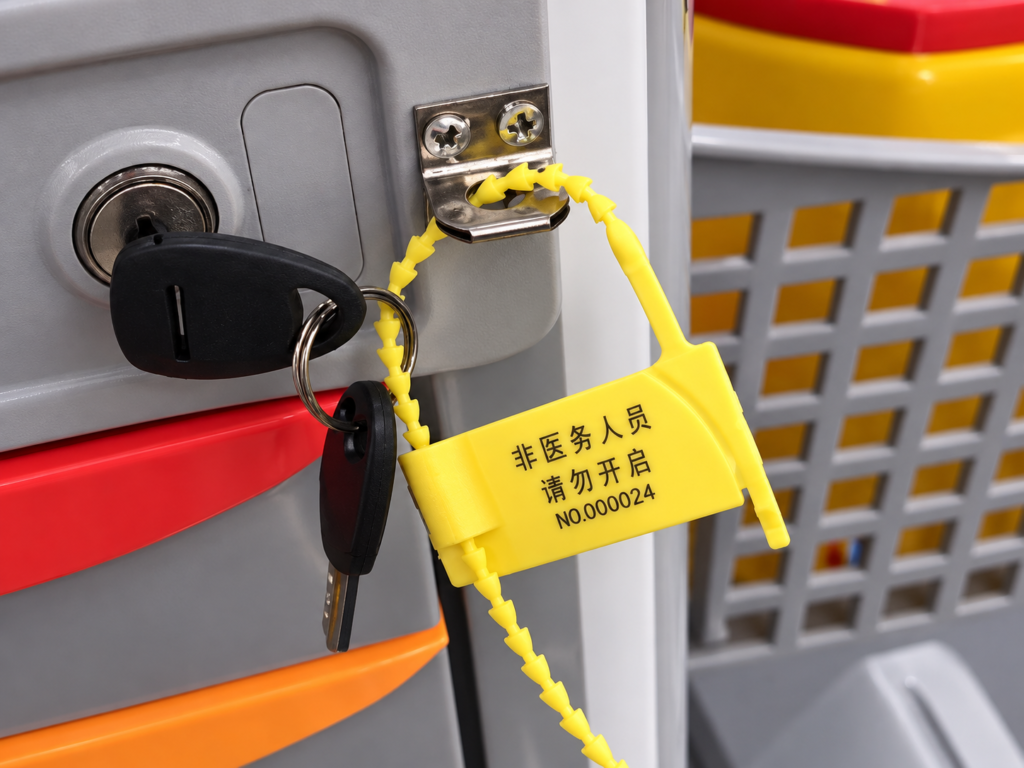
Airomay can supply a central key lock with a separate yellow plastic security seal.
When the key lock is engaged, the opening sequence has two steps:
- Break or remove the yellow seal.
- Use the key to release the key lock before opening the drawers.
Breaking the yellow seal does not unlock the drawers. The key is still required.
The seal and key lock serve different purposes. The seal helps reveal opening or tampering. The key lock controls drawer access.
Purpose-Designed Breakaway Systems
Some carts use a locking bar designed for a breakable security seal. Staff break the seal and release the bar using the method specified for that model.
For example, Harloff supplies disposable numbered seals for compatible breakaway lock bars. These seals cannot be reused after breaking.
This arrangement differs from a key lock with a separate seal. Buyers should confirm whether any additional lock must be released.
External Locking Bars
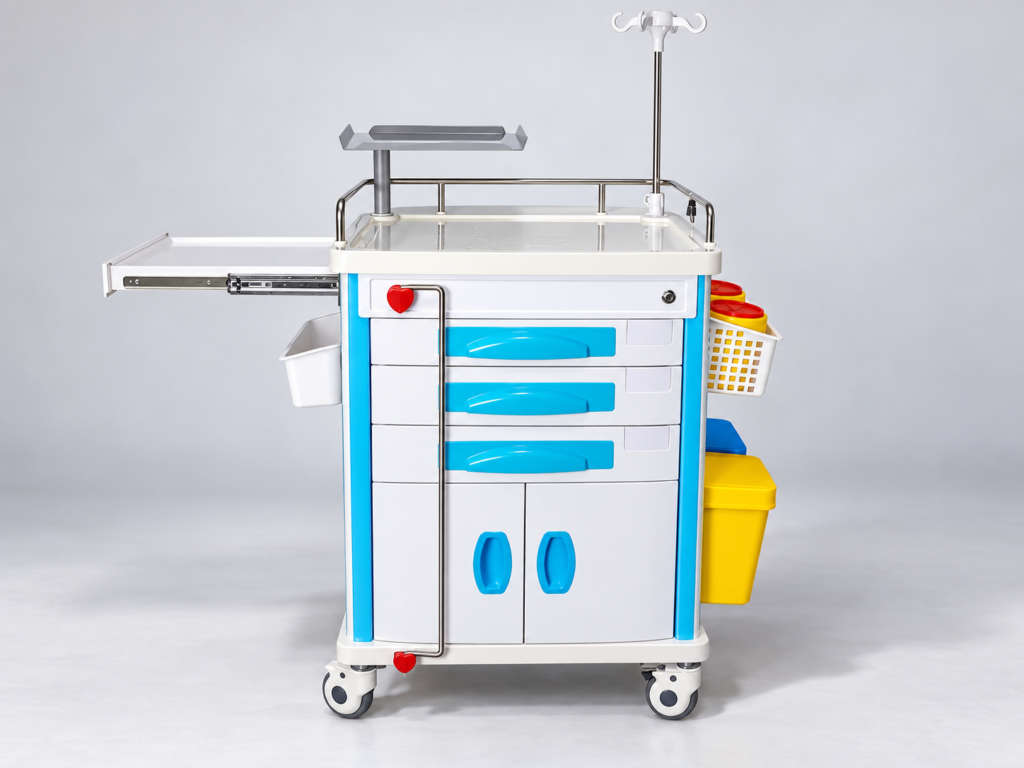
An external locking bar sits in front of drawers or doors and helps hold them closed. Its release method depends on the design.
Airomay can customize an external front locking bar. Before ordering, buyers should confirm how it releases, which drawers or doors it secures, and whether a key or separate seal is required.
The presence of a front bar alone does not prove that the system opens without a key.
Does Breaking a Seal Unlock the Crash Cart?
It depends on the locking arrangement.
For Airomay’s key-lock-plus-seal configuration described here, breaking the seal does not release the key lock. Staff must still use the key when the lock is engaged.
A purpose-designed breakaway system may work differently. Staff should follow the instructions for the exact model.
A product photo cannot show the full opening sequence. It may show a keyhole, seal, or bar, but it does not show how these parts work together.
Ask for a demonstration on the configuration you intend to order. The demonstration should show the cart secured, each release step, and the drawers opening.
What Can a Security Seal Tell You?
Staff can check whether a seal is intact, broken, cut, or missing. Where numbered seals are used, they can also compare the visible number with the recorded number.
Recording seal numbers can help link a seal to a cart, location, and check date. A number alone does not provide that record.
A broken or missing seal signals that the sealed point needs checking. It does not explain why the seal changed or what happened inside.
An intact seal also has limits. It does not prove that:
- All required items are present.
- Medicines and supplies are within their expiry dates.
- Stored equipment works.
- The cart is ready for use.
A plastic seal is not a theft-proof lock. Its value depends on proper fitting and a clear checking process.
Use a seal suited to the cart’s locking system and intended opening method. Do not assume that an ordinary cable tie or shipping seal is a suitable replacement.
Joint Commission guidance on emergency cart medication security emphasizes security while keeping emergency supplies readily accessible. It accepts numbered breakaway tags when a defined process monitors their integrity. It also states that medication-containing carts in departments not staffed 24 hours a day must be secured in a locked location.
This guidance applies within its own context. It is not a global rule for every hospital.
For routine readiness checks, see the crash cart checklist.
What Should Buyers Confirm Before Ordering?
Start with the facility’s access needs. Then confirm that the selected locking arrangement fits those needs.
| Item to confirm | Why it matters |
|---|---|
| Drawers and doors secured | Shows which storage areas the lock covers |
| Full opening sequence | Reveals every step needed to reach supplies |
| Key or tool requirements | Helps the facility plan access |
| Keys included and replacement options | Helps plan spare-key arrangements |
| Seal type and fitting | Confirms that the seal suits the system |
| Seal supply and replacement source | Helps maintain supplies after delivery |
| Side-bin security | Identifies storage outside the main lock |
| Demonstration on the selected model | Shows how the ordered configuration works |
For example, a buyer may see a plastic seal and assume key-free access. A supplier demonstration may show that a central key lock must also be released.
Checking this before ordering helps avoid a mismatch between the cart and the facility’s access procedure.
A clear request is more useful than simply asking for a “cart with a lock.” State which storage areas need securing and what opening method the facility requires.
For broader purchasing details, see the hospital crash cart buying guide.
Airomay Lock and Seal Options
Airomay can supply the following arrangements, subject to confirmation for the selected model:
- A central key lock that controls all drawers in the configuration described here.
- A key lock with a separate yellow plastic security seal.
- A customized external front locking bar.
For the key-lock-plus-seal arrangement described here, breaking the seal does not unlock an engaged key lock. A key is still needed.
Security seals can be supplied with the cart by agreement. Customers may also source and fit suitable seals after delivery.
Confirm the locking arrangement, release method, storage coverage, and seal supply before placing an order.
Frequently Asked Questions
Can One Key Lock Control All Crash Cart Drawers?
Yes. In the Airomay configuration described here, one central key lock controls all drawers. Buyers should confirm drawer coverage for the selected model.
Does Breaking a Security Seal Open the Drawers?
It depends on the system. In Airomay’s key-lock-plus-seal configuration described here, staff must still use the key to release an engaged lock.
Does an Intact Seal Prove the Cart Is Ready?
No. It provides a visible sign of seal condition at the time of checking. It does not prove that contents are complete, within their expiry dates, or ready for use.
Can Security Seals Be Supplied with the Cart?
Yes, by agreement. Customers may also source and apply suitable seals after delivery. Confirm the seal type and supply details for the order.
Confirm the Opening Method Before Ordering
Crash cart locks and seals serve different purposes. Buyers should check how they work together on the exact model being ordered.
Review the Airomay crash cart range. Send the preferred model, quantity, locking arrangement, and seal requirements to sales@airomay.com.

[…] The hospital should decide how staff will reach the key when needed. For more details, read Crash Cart Locks and Security Seals Explained. […]