Crash Cart Casters and Brakes: What Should Buyers Check?
Before ordering a crash cart, buyers should check its crash cart casters: wheel diameter, tread material, swivel layout, brake function and load limits. The hospital route also matters.
A product photo shows the outside. It does not show how the loaded cart moves or how its brakes work. For a basic overview, see What Is a Crash Cart?.
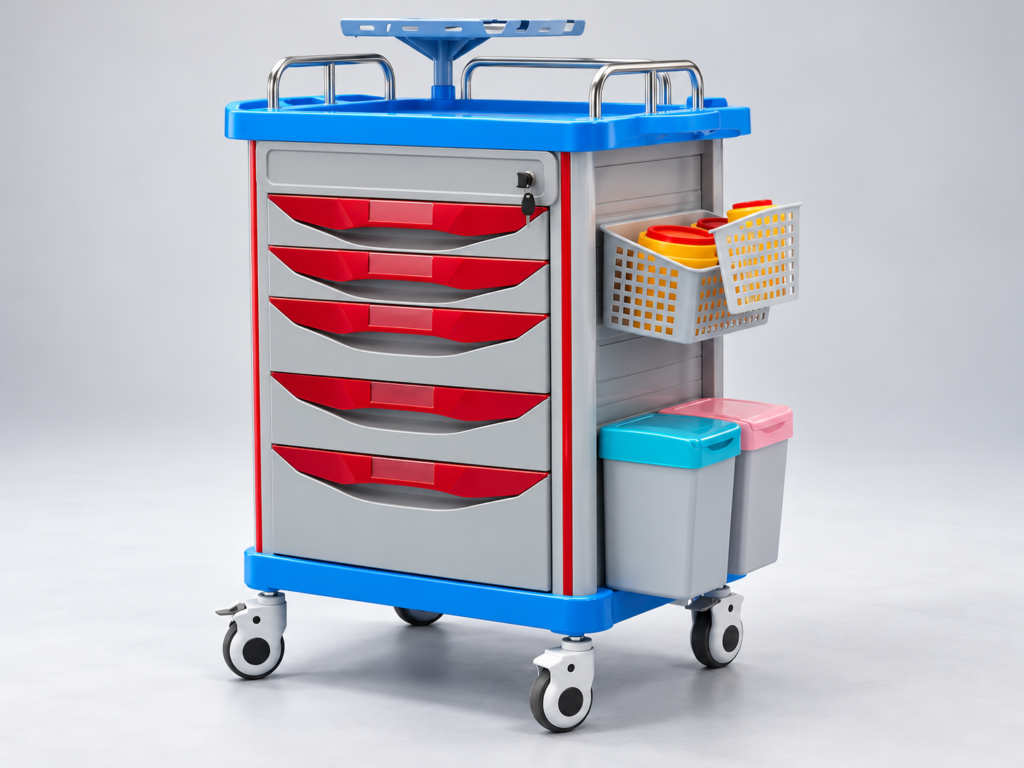
What Should Buyers Check About Crash Cart Casters?
A caster is the wheel assembly and its mounting. A swivel caster has a mechanism that lets it change direction. A fixed caster follows a fixed direction. Some casters include a brake or lock.
Crash cart wheels are part of the caster assembly. The wheel rotates, while the mounting connects it to the cart. Some locks help hold the cart in place. Others guide its direction.
Buyers should check diameter, tread, mounting, layout and load limits. Diameter affects how the wheel crosses small obstacles. Tread affects floor contact, noise and wear. Mounting affects fit and replacement. Layout affects steering.
Terms such as “medical-grade” or “silent” need clear support. Ask which part is offered and what conditions support the claim. A Blickle selection guide explains factors such as diameter, tread, bearings, load and floor conditions.
How Do Wheel Size and PU Tread Affect Movement?
Wheel size alone does not show how easily a cart will move. Load, bearings, tread, floor surface and obstacles also matter. A larger wheel may cross small obstacles more easily. But the full cart still needs to suit the route.
PU means polyurethane. Its performance depends on the tread material, wheel design, load and floor conditions. A PU label alone does not prove quiet or smooth movement.
Changing casters can change cart height. This can change the worktop height and the space needed around the caster.
For replacement casters, ask the supplier to confirm that they fit the cart. Check the mounting, overall height, wheel diameter, load rating and brake function. Also check the offset: the distance between the swivel axis and the wheel axle.
See Crash Cart Dimensions for the wider measurements buyers should confirm.
Four Swivel Casters or Two Swivel and Two Fixed?
There is no single best layout for every hospital.
Four swivel casters allow flexible changes of direction. They can help staff position a cart in a small area. The whole cart size and available turning space still matter.
Two swivel casters and two fixed casters can help a cart follow a straight path. However, this layout may need more space to turn.
A directional lock is another possible feature. It holds a swivel caster in a set direction while the wheel keeps rolling. This can help with straight travel. Availability depends on the model.
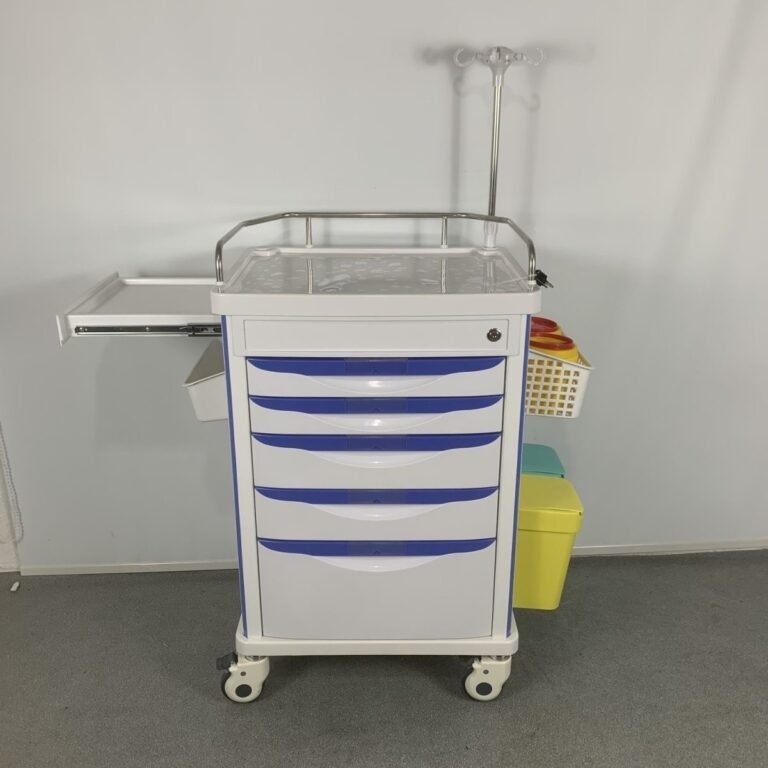
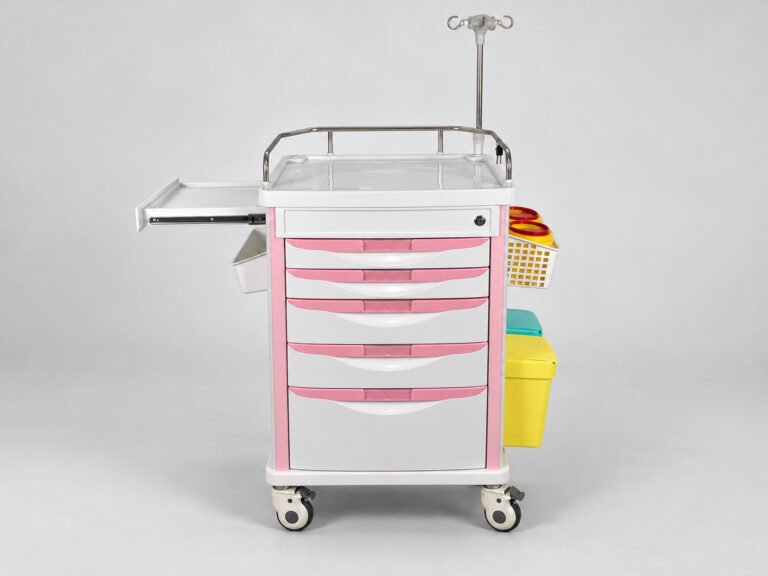
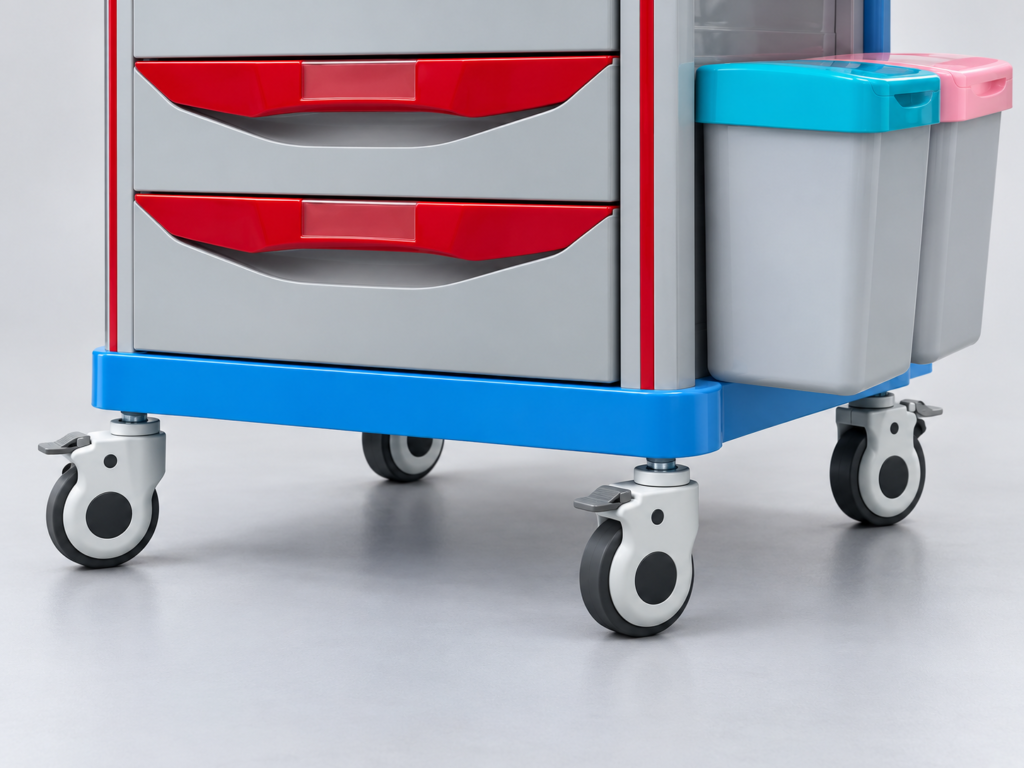
The Airomay emergency trolleys discussed here use four swivel casters. Two have total locks. Two braking casters are not the same as two fixed casters. On this Airomay setup, the braking casters can swivel when their locks are released.
The Harloff V24-5B emergency cart lists four full-swivel casters, two with brakes, and a 5-inch wheel diameter. This is one model example, rather than a standard for all crash carts.
What Is the Difference Between a Wheel Lock, Total Lock and Directional Lock?
Crash cart locks can control different movements. Buyers should confirm what each control does on the offered model.
| Arrangement | What it controls | What buyers should confirm |
|---|---|---|
| Wheel lock | Stops wheel rotation. The swivel may remain free. | Whether swivel movement is also locked |
| Total lock | Stops wheel rotation and swivel movement on that caster | Number and position of total-lock casters |
| Directional lock | Holds the swivel in a set direction while allowing rolling | Which casters it controls and how it is released |
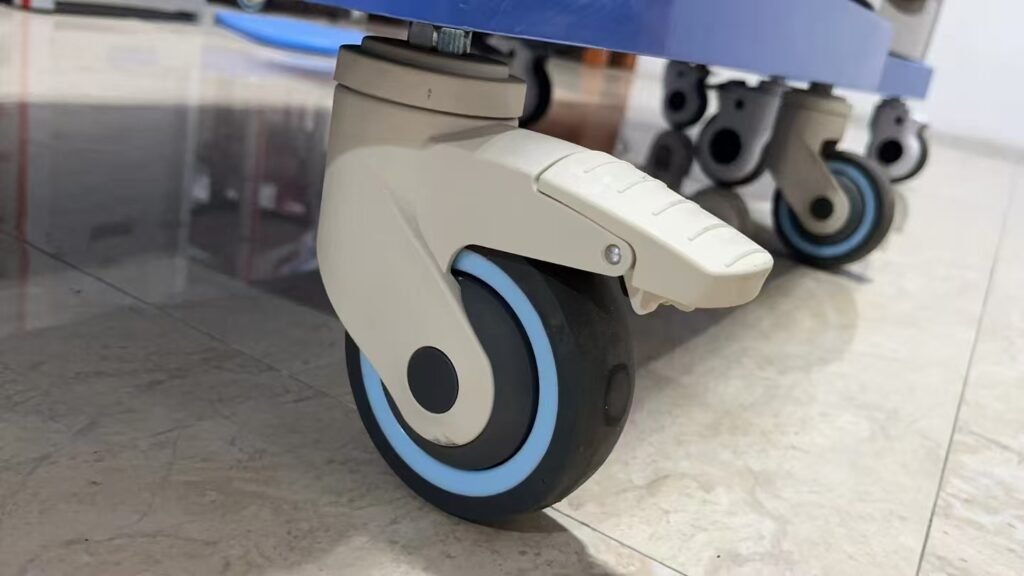
A Blickle caster options guide explains wheel-and-swivel locks and directional locks.
Central operation describes how several casters are controlled together. It does not tell buyers which movements are locked. Ask which casters the control operates and what each setting does.
Parking locks hold a stationary cart. Do not assume they can be used to slow a moving cart. Follow the instructions for the selected model.
Drawer locks are separate. They secure storage rather than park the cart. See Crash Cart Locks and Security Seals Explained.
Check Movement With the Planned Load and Route
An empty-cart video shows movement under the conditions in that video. It does not prove how the cart will perform with the hospital’s planned load.
Buyers should keep these details separate:
- Empty cart weight.
- Planned added load.
- Drawer and shelf limits.
- Caster load ratings.
- The manufacturer’s whole-cart load limit.
Do not work out whole-cart capacity by simply adding four caster ratings. The frame, mounts and other parts also have limits.
Where possible, agree on a demonstration within the model’s limits. Record the load, floor surface, route and controls used. Review starting, straight travel, turning and parking.
Send threshold measurements and photos to the supplier before arranging an obstacle demonstration. Ask the supplier to assess the route first. Avoid tests that exceed the cart’s stated limits.
My Insights: Airomay Caster Configuration and Buying Advice
The commonly sold Airomay emergency trolleys discussed here use polyurethane, or PU, tread. These quiet-running casters have a rounded tread profile. Wheel diameter is about 100 mm or 125 mm, depending on the model.
Each trolley has four swivel casters. Two have total locks. When engaged, each total lock stops both wheel rotation and swivel movement on that caster.
In Airomay’s product experience, these PU casters handle pressure well and help reduce vibration over uneven surfaces. Suitability should still be checked for the planned load and route.
Before ordering, buyers should describe raised thresholds, floor joints and other route conditions. Include the planned load and measurements where possible.
Based on Airomay’s experience, wheels generally do not need replacement in normal use. Repeated travel over high thresholds can cause wear. For the wider repair decision, see When to Replace a Crash Cart.
The caster warranty is two years. Airomay offers free replacement casters for problems covered by the warranty during that period. Shipping charges for replacement casters are not included.
Confirm the written warranty terms before ordering. The warranty period does not define the caster’s service life.
Buyer Confirmation Table
Use this table to compare caster details before approving an order.
| Detail | What to record |
|---|---|
| Diameter and tread | Wheel size, tread material and offered part reference |
| Caster layout | Number and position of swivel and fixed casters |
| Brake and lock functions | Which movements are locked on each caster |
| Mounting and replacement | Mounting dimensions and matching replacement reference |
| Load limits | Empty cart weight, allowed added load, drawer and shelf limits |
| Route and demonstration | Floor type, thresholds, turning space and demonstration load |
| Warranty | Covered problems, replacement terms, shipping charges and claim process |
Keep these details with the approved model specification. Ask the supplier to flag any proposed caster changes before production.
Frequently Asked Questions
How Do I Know What Size Casters My Crash Cart Needs?
Start with the manufacturer’s specification for the selected model. Check wheel diameter, mounting type and assembled height. Then review the floor, route and planned load. Ask the supplier to confirm any proposed change.
Are Four Swivel Casters Better Than Two Swivel and Two Fixed Casters?
Neither layout is best for every site. Four swivel casters allow flexible direction changes. Two swivel and two fixed casters can help with straight travel. Choose based on the full cart, route and available turning space.
Does a Crash Cart Brake Lock Both the Wheel and the Swivel?
It depends on the lock type. A total lock stops both movements on that caster. A wheel lock may stop rolling only. A directional lock holds direction while allowing rolling. Confirm the exact function.
Does a Two-Year Caster Warranty Mean a Two-Year Lifespan?
No. A warranty covers agreed problems for a set period. It does not predict service life. Load, floor conditions, obstacles, care and use can affect how long the casters last.
Confirm the Caster Setup Before Ordering
Send the preferred model, quantity, planned load and floor conditions to sales@airomay.com. Include photos and measurements of relevant thresholds or other route obstacles.
Review the Airomay crash cart range and ask for the caster configuration that applies to your selected model.