When to Replace a Crash Cart: Repair or Buy New?
Knowing when to replace a crash cart starts with finding the problem. One damaged part does not mean the whole cart needs replacement. First, check whether a suitable repair can restore safe function. Consider a new cart when repair cannot meet the facility’s needs.
This guide focuses on the physical trolley. Restocking supplies or exchanging a cart after use is a different process.
If you are new to emergency trolleys, read our guide to What Is a Crash Cart?.
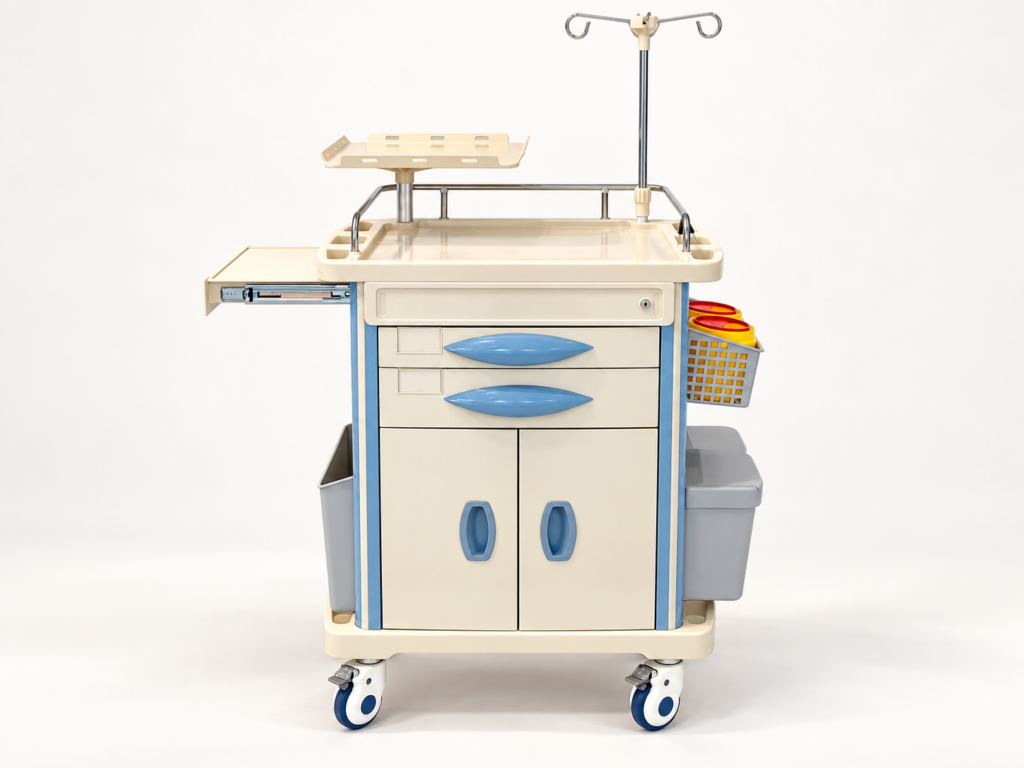
Does a Crash Cart Have a Fixed Lifespan?
Do not assume one replacement age applies to every crash cart. Check the exact model’s instructions, current condition, repair history and facility requirements.
Start with four questions:
- What does the manufacturer advise for this model?
- What is the cart’s current condition?
- Which repairs have already been made?
- Does the cart still meet the facility’s needs?
The cart body and its contents need separate reviews. Medicines have expiry dates. Batteries and attached medical devices follow their own care and service instructions. Those dates do not tell buyers when to replace the trolley itself.
Two carts bought on the same day may be in different condition. One may move only a short distance. Another may cross high door thresholds many times a day. Consider both age and working conditions.
For routine readiness checks, see the Crash Cart Checklist.
When Can Individual Parts Be Replaced?
A problem with one part may be solved without buying a whole new cart.
For the Airomay products discussed here, wheels, IV poles and drawers can be replaced separately. Buyers should confirm the exact model and matching parts before ordering.
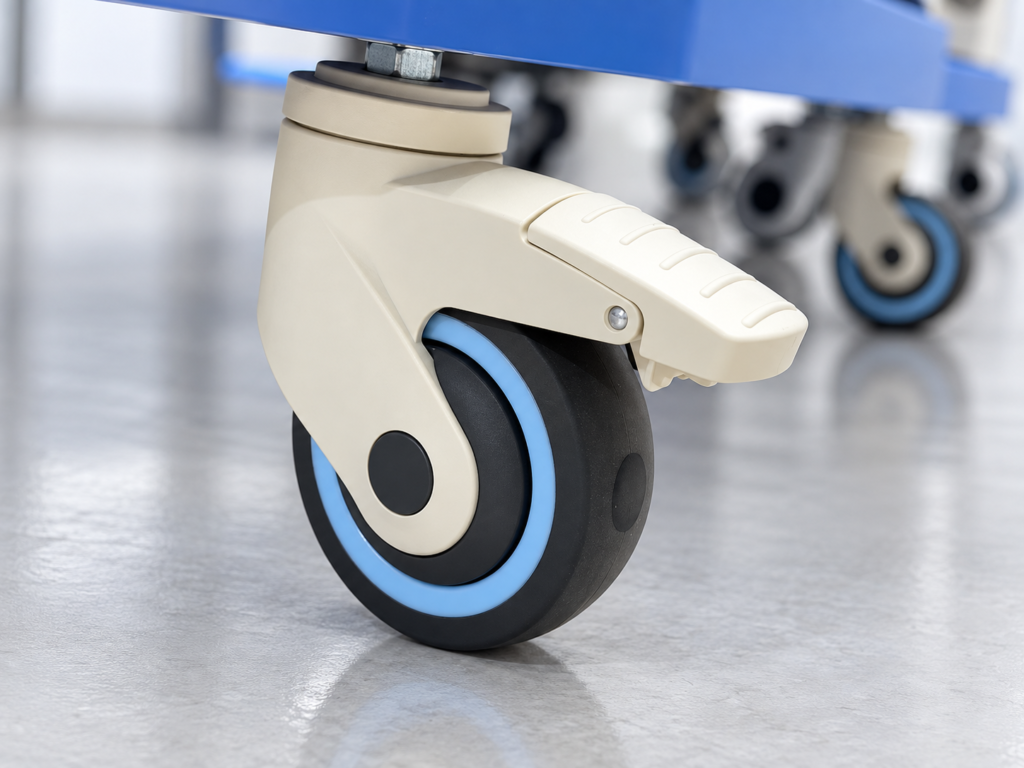
Wheels and Casters
Based on Airomay’s product experience, wheels generally do not need replacement in normal use. However, repeated movement over high door thresholds can cause wear. Worn wheels may then need replacement.
This is a practical observation, not a lifetime guarantee or a measured service life.
If wear develops, ask the supplier or maintenance team to assess the wheel and its mounting point. Confirm that the replacement suits the cart and its intended load.
IV Poles
An IV pole can be replaced separately on the products described by Airomay. Check the pole and its mount to identify the fault.
A loose pole does not always need a new pole. The mounting area may need attention instead. Ask the supplier or maintenance team to confirm the cause.
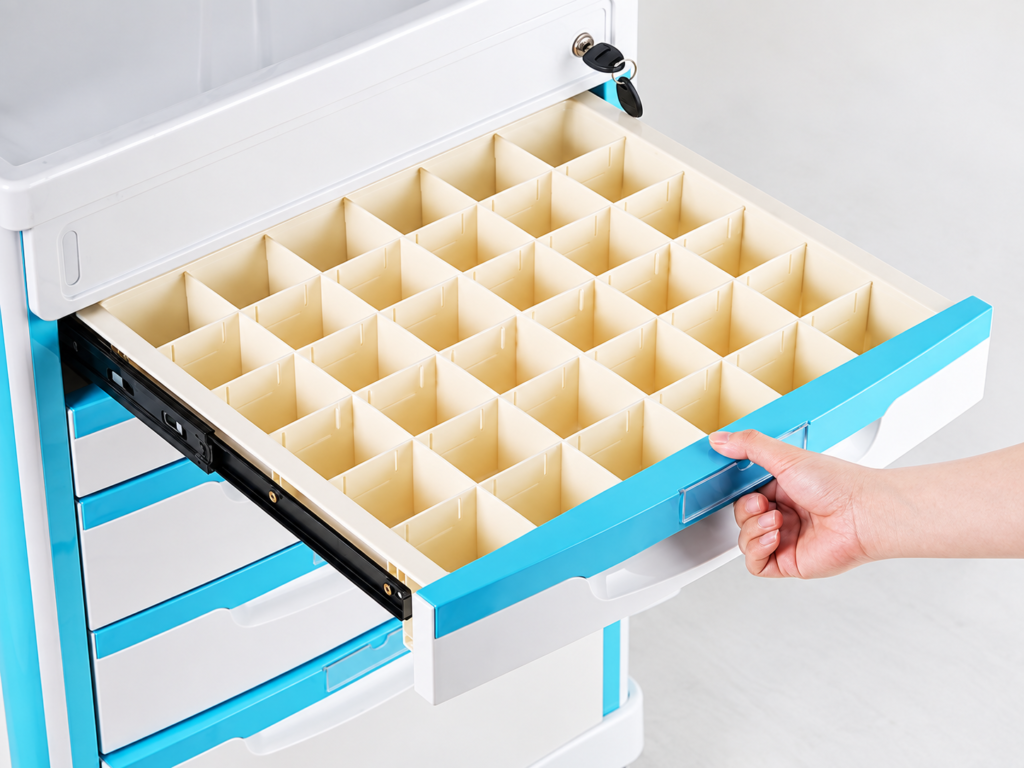
Drawers
Drawers can also be replaced separately on the products described by Airomay.
A new drawer may not solve a fault caused by damage to the cabinet or mounting area. Ask the supplier or maintenance team to identify the cause before ordering a part.
Confirm the Exact Model
Do not assume that a part will fit because it looks similar. Confirm the model, part dimensions and mounting design.
Some manufacturers also support changes within a specific product family. For example, Metro’s Lifeline range allows drawers and accessories to be added or reconfigured. CasterHQ offers hospital cart caster replacement services.
These are examples of product-specific upgrades and caster replacement services. They do not establish a service life or replacement policy for every crash cart.
When to Replace a Crash Cart: Reasons for Further Assessment
The following points can help buyers decide what needs review. They are practical buying guidance, not official retirement rules.
Damage to the Body, Base or Mounting Points
Cracks, a bent frame or damaged mounts need assessment.
Ask whether a supported repair can restore the required strength and function. If it cannot, consider a new cart. Replacing an attached part may not solve damage to the structure that holds it.
Repeated Faults After Suitable Repairs
Review the cause before buying another part. Check the repair history, part compatibility and the route the cart travels.
For example, if high thresholds keep causing wheel wear, a new wheel alone may not prevent the problem from returning.
Repeated faults do not automatically mean the whole cart is worn out. First, check whether the cause can be addressed through a suitable repair or a change in working conditions.
No Compatible Replacement Parts
A lack of matching parts can limit repair options.
Ask the supplier whether a supported alternative exists. A discontinued model does not always mean that all service options have ended.
If no suitable part or repair is available, compare whole-cart replacement with the remaining options.
Surface Damage That Prevents Required Cleaning
Have the relevant facility team assess whether damaged surfaces can still be cleaned as required.
Follow facility policy and the instructions for the exact model. Ask whether a supported repair or panel replacement can resolve the issue.
For cleaning guidance, see How to Clean a Crash Cart.
Changed Storage or Equipment Needs
New equipment or storage needs may require a different layout.
First, check whether the existing cart supports suitable changes. Confirm the available accessories, usable space and load limits.
Consider a new cart when supported adjustments cannot meet the requirements.
Assessment Is Different From Retirement
Removing a cart from use for assessment does not mean it must be replaced permanently.
If a fault may affect safe movement, stability or emergency access, follow the facility’s procedure to remove it from use for assessment. Maintain emergency readiness through the facility’s approved backup arrangements.
Repair or Replace: A Buyer Decision Table
Use this table to guide the discussion with the supplier or maintenance team. It does not replace an assessment of the exact cart.
| Observed problem | What to confirm | Possible next step |
|---|---|---|
| Worn wheels | Compatible parts, mounting condition and likely cause of wear | Assess wheel replacement and address the cause of wear |
| Damaged IV pole | Pole condition, mount condition and compatibility | Replace the pole if a matching part can restore function |
| Damaged drawer | Drawer, slides, cabinet and available parts | Confirm whether a drawer replacement or supported repair will resolve the fault |
| Damaged body or mounting points | Extent of damage and suitable repair options | Compare a supported repair with whole-cart replacement |
| Repeated faults | Repair history, root cause and working conditions | Address the cause; consider a new cart if suitable repairs cannot resolve it |
| Changed storage needs | Available options, usable space and load limits | Compare supported adjustments with a new cart |
What Should Buyers Send to the Supplier?
Clear details help the supplier identify the cart and assess the available options.
Send:
- The cart model or other identification details.
- Whole-cart photos from several angles.
- Close-ups of the damaged part and mounting area.
- A short description of the fault and when it started.
- Details of previous repairs or recurring problems.
- The quantity required and delivery destination.
For wheel wear, also describe the route the cart travels. Mention high thresholds or other conditions that may be relevant.
Ask the supplier to confirm:
- Which part matches the exact cart.
- Whether the mounting area needs further assessment.
- What installation work is required.
- What must be checked before the cart returns to service.
Photos can help identify parts and visible damage. They cannot establish safe function on their own. Fit, movement and other required checks must still be confirmed.
How Should Buyers Compare Repair and Replacement Costs?
Compare the full solution, not just the price of a part.
Parts and Freight
Ask for the correct part, its price and its delivery time. Include shipping charges when comparing options.
Do not assume that the cheapest available part is compatible. A part that does not fit can add delays and further costs.
Installation and Service Arrangements
Confirm who will fit the part and what the work will cost.
Compare repair time, spare-part delivery and new-cart delivery. Plan how the facility will maintain emergency readiness while the cart is unavailable.
Whether the Repair Will Resolve the Fault
Ask what the proposed repair is expected to fix.
A low-cost repair offers little value if it does not address the cause. Review previous repairs and any remaining problems before deciding.
Warranty and Support
Check the written terms for replacement parts and a new cart.
Confirm what is covered, what is excluded and who handles installation. Do not assume that both options have the same support.
For general pricing factors, see How Much Does a Crash Cart Cost?.
Frequently Asked Questions
Does One Worn Wheel Mean the Whole Crash Cart Needs Replacement?
Not necessarily. A compatible wheel replacement may resolve the problem if the mounting area is sound.
Check the cause of wear as well as the wheel itself.
Can an IV Pole or Drawer Be Replaced Separately?
For the Airomay products discussed here, IV poles and drawers can be replaced separately.
Confirm the exact model, compatible parts and mounting condition with the supplier.
Does Exchanging a Crash Cart After Use Mean It Has Reached the End of Its Life?
No. A post-event exchange can be part of a facility’s restocking process.
For example, the University of Missouri Health Care’s Crash Cart Exchange Program describes exchanges after an event or when contents have expired. It does not set a retirement interval for the cart body.
What Helps a Supplier Identify the Correct Replacement Part?
Send the cart model or identification details, whole-cart photos and close-ups of the affected area.
Include a clear fault description and relevant repair history.
Conclusion
Deciding when to replace a crash cart starts with identifying the problem. Check whether a matching part, suitable repair or supported adjustment can restore the required function.
Consider a new cart when those options cannot resolve the problem or meet the facility’s needs.
To discuss a specific Airomay model, send its details, photos and requirements to sales@airomay.com, or review the Airomay crash cart range. Replacement parts should be confirmed for the selected model.