
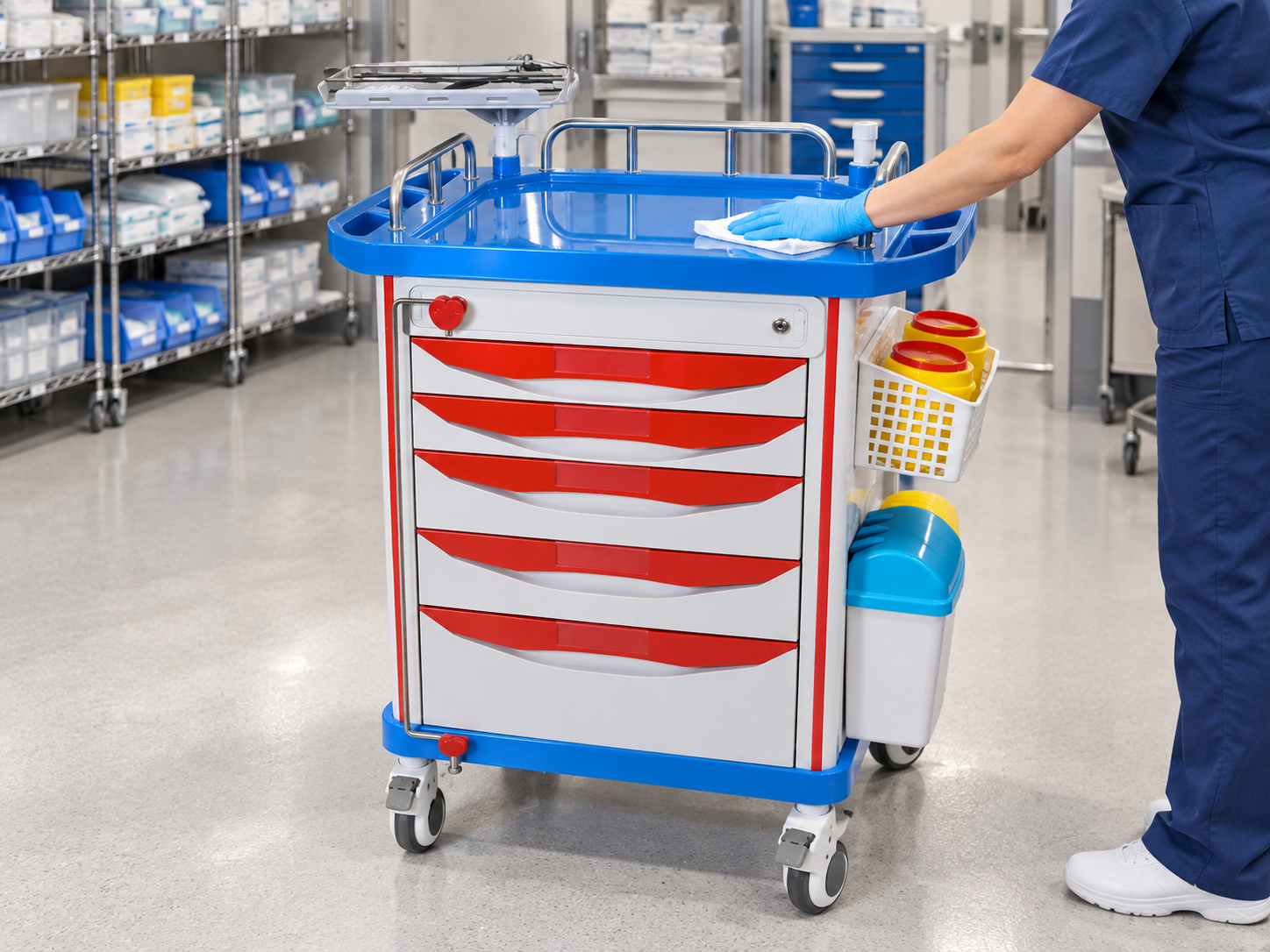
How to Clean a Crash Cart
To clean a crash cart, first check the hospital policy and the cart maker’s instructions. Then remove visible soil, clean the accessible surfaces, and apply a compatible disinfectant. Follow the product label, let the cart dry, and return it to service under hospital policy.
If you are new to emergency carts, read our guide What Is a Crash Cart?.
Cleaning vs Disinfecting a Crash Cart: What Is the Difference?
These words are often mixed up. They mean different things.
Cleaning removes dirt, dust, and spills from a surface. It is done by hand, with a cloth or wipe. Cleaning removes many germs along with the dirt.
Disinfecting reduces or inactivates the germs listed on the product label when used as directed. Follow the label, including the required time the surface must stay wet.
Sterilization is a separate process intended to eliminate all forms of microbial life, including spores. Routine wiping of a cart body is not sterilization.
For routine surface care, clean first and then disinfect according to the hospital policy and product instructions. The CDC environmental cleaning guide explains why the method and product must suit the equipment.
What Should You Check Before Cleaning?
Do not start cleaning without checking a few points first.
- Hospital policy. The facility sets the process for cart cleaning. Follow it.
- Cart model instructions. Use the guidance for the exact model. Do not assume every ABS or metal cart takes the same product.
- Compatible product. Confirm that the facility-approved cleaner or disinfectant is also compatible with the exact cart model.
- Protective measures. Wear the gloves, gown, or eye protection the policy requires. Ventilate the room if the label says so.
- Who supplies what. Know who provides the cleaning products and who handles attached devices.
- A suitable place. Choose a space where the cart can be cleaned without blocking emergency access.
Attached devices such as a defibrillator are separate equipment. They follow their own cleaning instructions.
How to Clean a Crash Cart: Step by Step
1. Prepare the Cart
Move the cart to the cleaning area if policy allows. Follow the facility process for used supplies. Access to locked drawers and sealed compartments must follow hospital policy. Do not break a security seal or open medication drawers outside the approved process.
2. Remove Visible Dirt or Spills
Wipe away visible soil first. Use the approved method and product for this step. Cleaning before disinfection helps the disinfectant work. A surface covered in dirt cannot be disinfected well.
3. Clean the Accessible Surfaces
Clean the surfaces you can reach. Pay attention to high-touch areas. These include the handle, drawer pulls, and the worktop. Work from clean areas toward dirty areas when policy advises it.
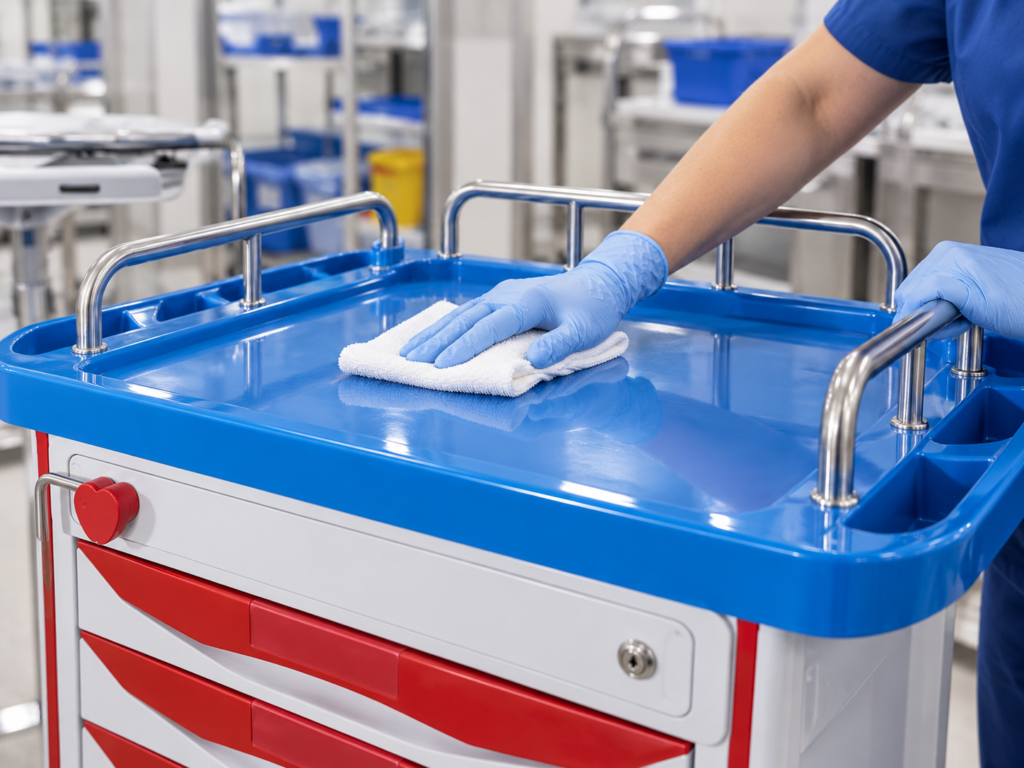
4. Apply a Compatible Disinfectant
Apply the approved disinfectant to the cleaned surfaces. Follow the product label. The label states the required wet contact time. Keep the surface wet for that full time. Do not shorten this step.
5. Let Surfaces Dry
Let the surfaces dry, or remove residue only if the product label and cart instructions require it. Do not rinse or wet attached electrical devices unless their own instructions allow it.
6. Check the Cart and Return It to Service
Check the cart’s condition after cleaning. Look for damage, loose parts, or wear. Then coordinate restocking and return to service under hospital policy. A final readiness check helps confirm the cart is ready for use. For the review steps, see our Crash Cart Checklist: How to Check a Crash Cart.
Which Areas of a Crash Cart Are Easy to Miss?
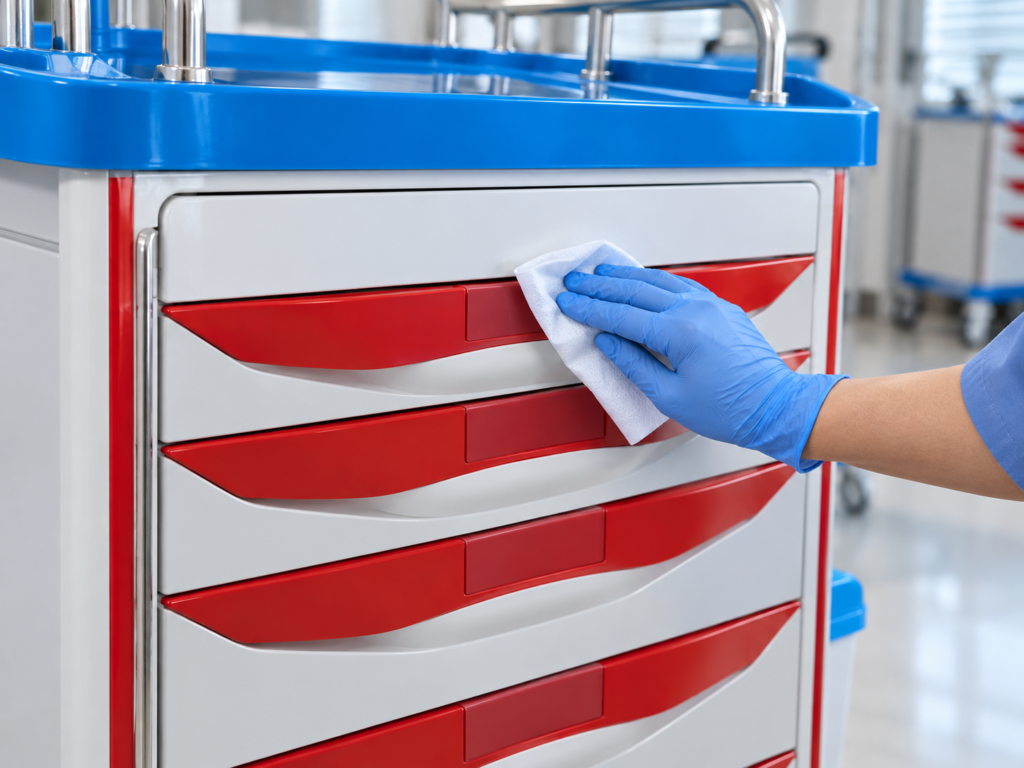
Some parts of a cart get less attention. They are still part of the cart surface.
| Cart Area | Why It Is Often Missed | What to Confirm |
|---|---|---|
| Handle | Touched often, wiped quickly | The approved method for frequent-touch parts |
| Drawer edges and pulls | Small gaps and ridges hold soil | How to reach edges without damaging the cart |
| Worktop corners | The flat center gets most attention | That corners are included in the wipe pattern |
| Accessory mounts | Around brackets and rails | Whether parts can be removed, only if the maker allows |
| Lower frame | Below the drawers, out of view | That staff can reach it without bending into a tight gap |
| Caster and brake surfaces | Low to the floor and awkward | Accessible surfaces only, per the maker’s instructions |
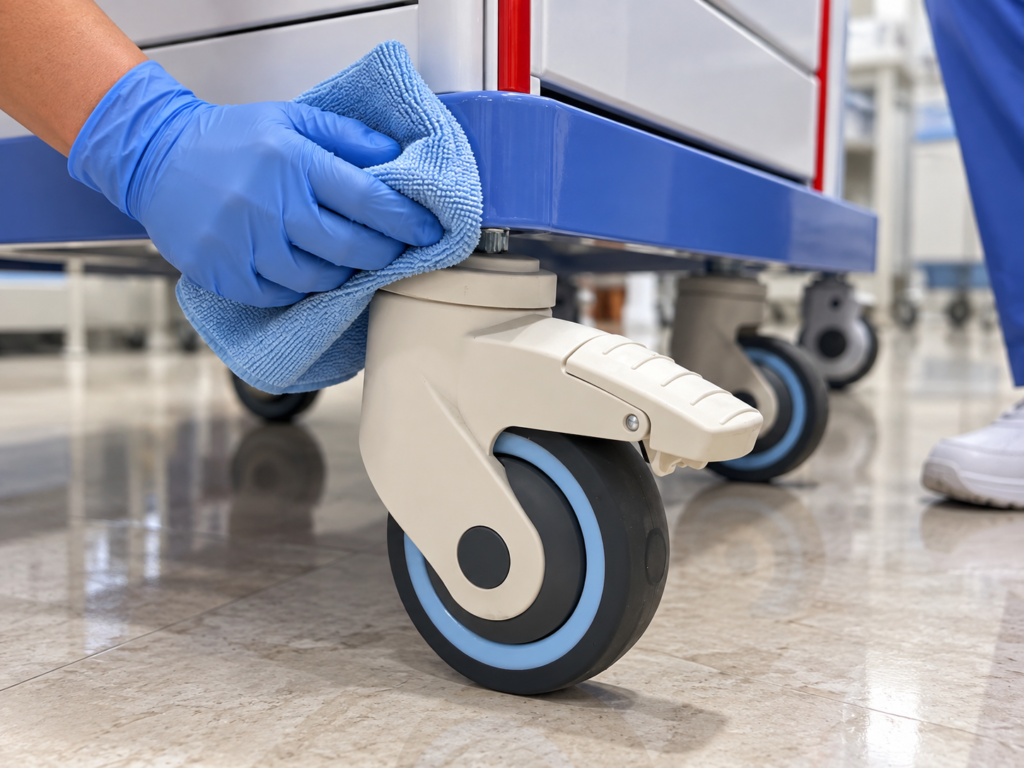
Do not dismantle parts to clean them unless the manufacturer’s instructions allow it.
Does Cart Material Change the Cleaning Method?
Different materials can react to chemicals in different ways. A method that suits one surface may harm another.
Common cart parts include:
- ABS panels. These may be used on cart bodies or drawers. Confirm the finish and cleaning instructions for the exact model.
- Coated metal. A damaged coating may expose the metal below. Ask how to care for the finish used on the specific cart.
- Stainless steel. Used on some frames and surfaces. It still needs a compatible product.
- Seals or gaskets, if fitted. Ask for their material and care instructions.
- Screens and controls, if attached. Follow the device maker’s own instructions.
The key point is compatibility. Ask for written instructions for the assembled model, including its finish and parts. The CDC advises manufacturers to provide a list of compatible cleaning and disinfectant products. Do not assume one chemical suits every cart in a material group.
When Should a Crash Cart Be Cleaned?
Cleaning frequency is set by facility policy. It also depends on the care setting and the manufacturer’s guidance.
Two common triggers are:
- After use or contamination. Follow the facility process before returning a used or soiled cart to service.
- Scheduled cleaning. The hospital sets a routine based on its infection prevention policy.
There is no single daily or monthly schedule that fits every site. Cleaning frequency and inspection frequency are also different things. Inspection looks at readiness and contents. Cleaning looks at the surfaces.
What Should Buyers Ask a Crash Cart Supplier About Cleaning?
This is where buying decisions matter. Cleaning happens again and again over the life of the cart. Buyers should ask about it before they order.
Ask these questions:
- Can you provide written cleaning instructions for this exact model? Ask for the document that covers the assembled cart, not just the body panels.
- Which products and materials are compatible? Ask about the coating and finish, not only “ABS” or “steel.”
- Which parts can be removed for cleaning? Confirm this in writing before staff remove anything.
- How do we reach narrow areas? Ask how staff should clean joins, edges, and accessory mounts.
- What about attached components? Confirm which parts follow the cart’s instructions and which follow their own.
- How do we get replacement parts and updated guidance later? This matters for long-term use and for international orders.
For an order with several models, ask for the same written information for each one. This helps the hospital compare models. It also helps train staff after delivery. Buyers who want to review models can look at the Airomay crash cart range.
For international orders, confirm who supplies the instructions, what language they use, and how the buyer can request updates later.
Frequently Asked Questions
Can the same disinfectant be used on every crash cart?
No. Cart materials, finishes, and parts can differ. Check the maker’s instructions for the exact model and the disinfectant label.
Should a crash cart be cleaned after use?
After use or visible contamination, follow the facility’s cleaning policy and the cart maker’s instructions before returning the cart to service.
Is cleaning a crash cart the same as sterilizing it?
No. Cleaning removes soil. Disinfection reduces or inactivates germs as stated on the product label. Sterilization is a separate process. Routine cart surface care involves cleaning and disinfection.
Who should clean and restock the cart?
This depends on hospital policy. Some sites assign it to nursing staff. Others assign it to a cleaning or central supply team. The policy should state who cleans, who restocks, and who checks the seals.
Conclusion
Cleaning a crash cart follows a clear path. Check the instructions. Remove soil. Clean the surfaces. Apply a compatible disinfectant and follow its label. Let the cart dry. Then return it to service under hospital policy. Buyers should confirm cleaning details before they order, because the same cart will be cleaned for years. If you need cleaning guidance for a specific cart model, contact Airomay and ask for the details that apply to that model.
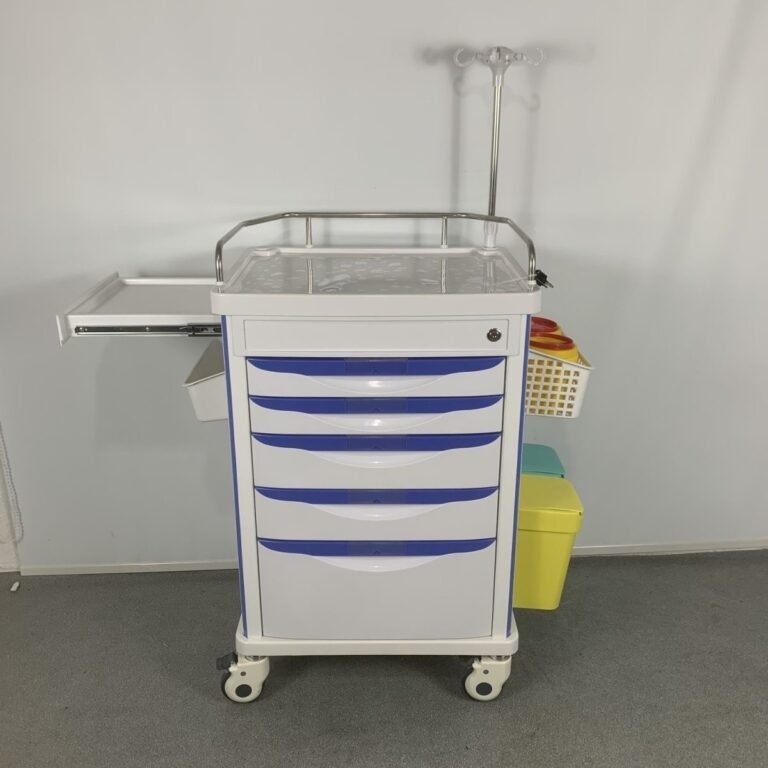
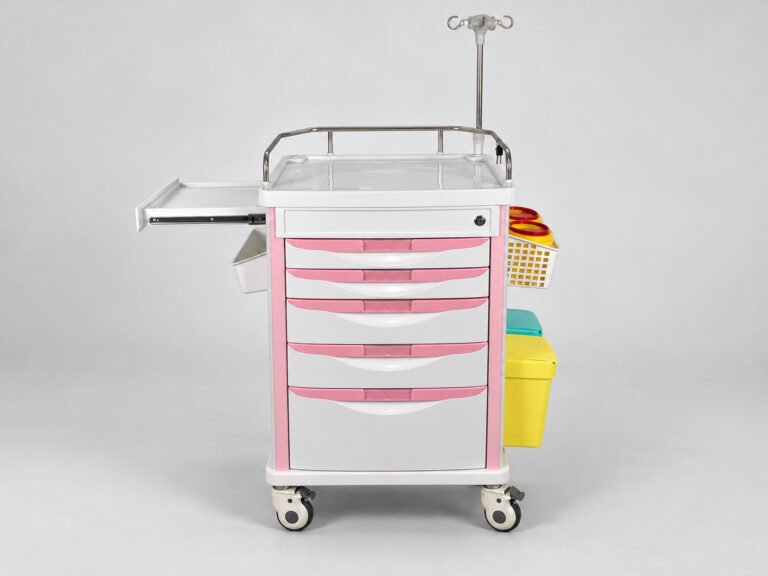
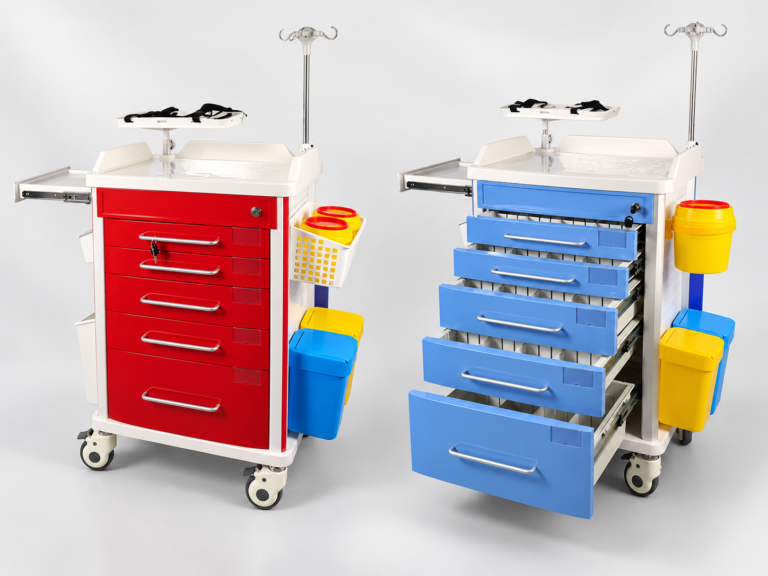

[…] cleaning steps, see How to Clean a Crash Cart. Before ordering, confirm that the hospital’s planned cleaning products suit the exact cart and […]